
QUARRO BLOG
Practical notes on digital operations.
Original articles on workflow automation, custom software, integrations, reporting, and applied AI.
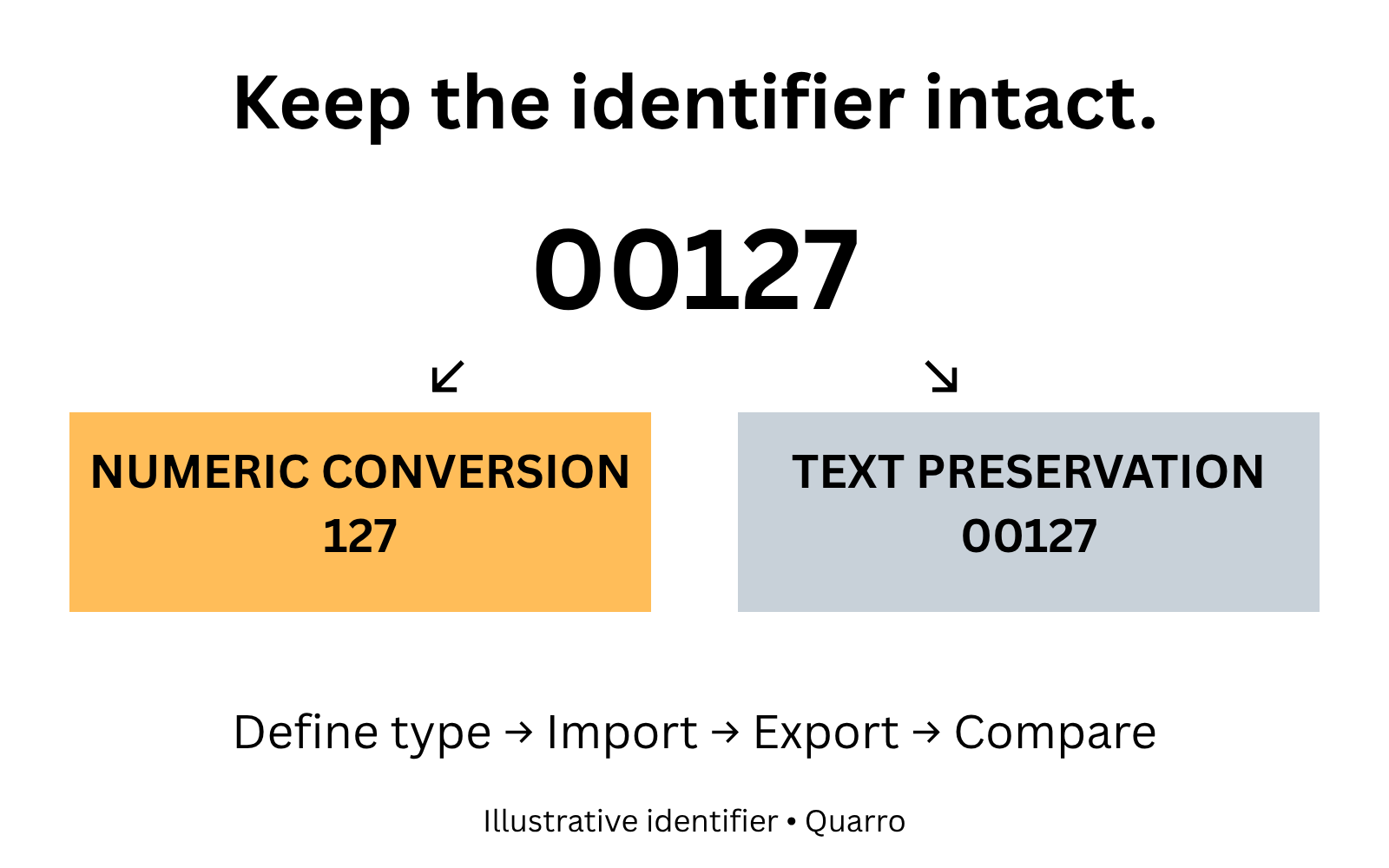
Keep the zeros in a product code before the spreadsheet removes them
Preserve product identifiers as text across imports and exports. Display formatting cannot reliably restore characters lost during numeric conversion.
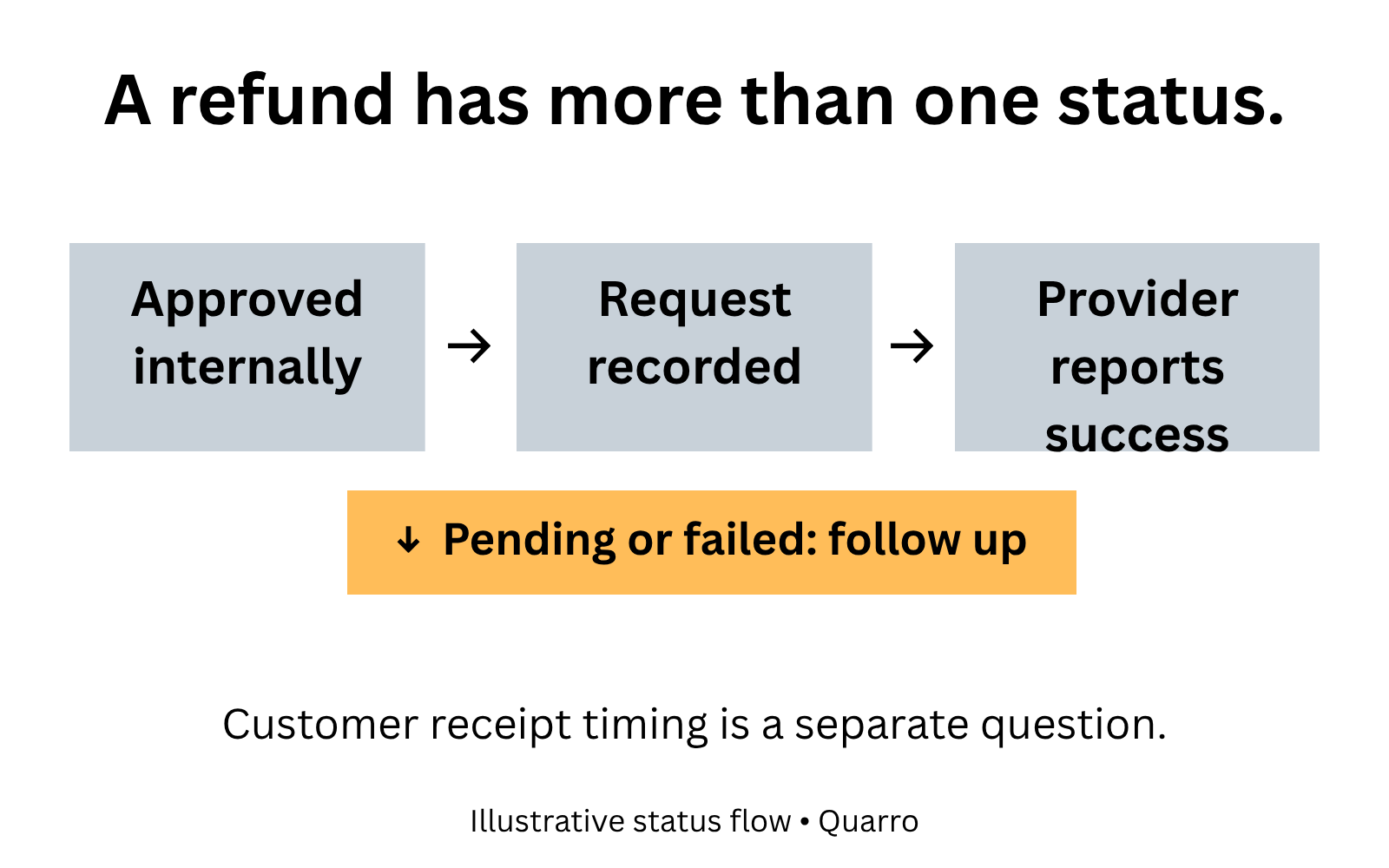
A refund button needs a status trail before support closes the case
Separate internal refund approval, the provider request and its reported outcome so support can explain pending or failed work without promising completion.
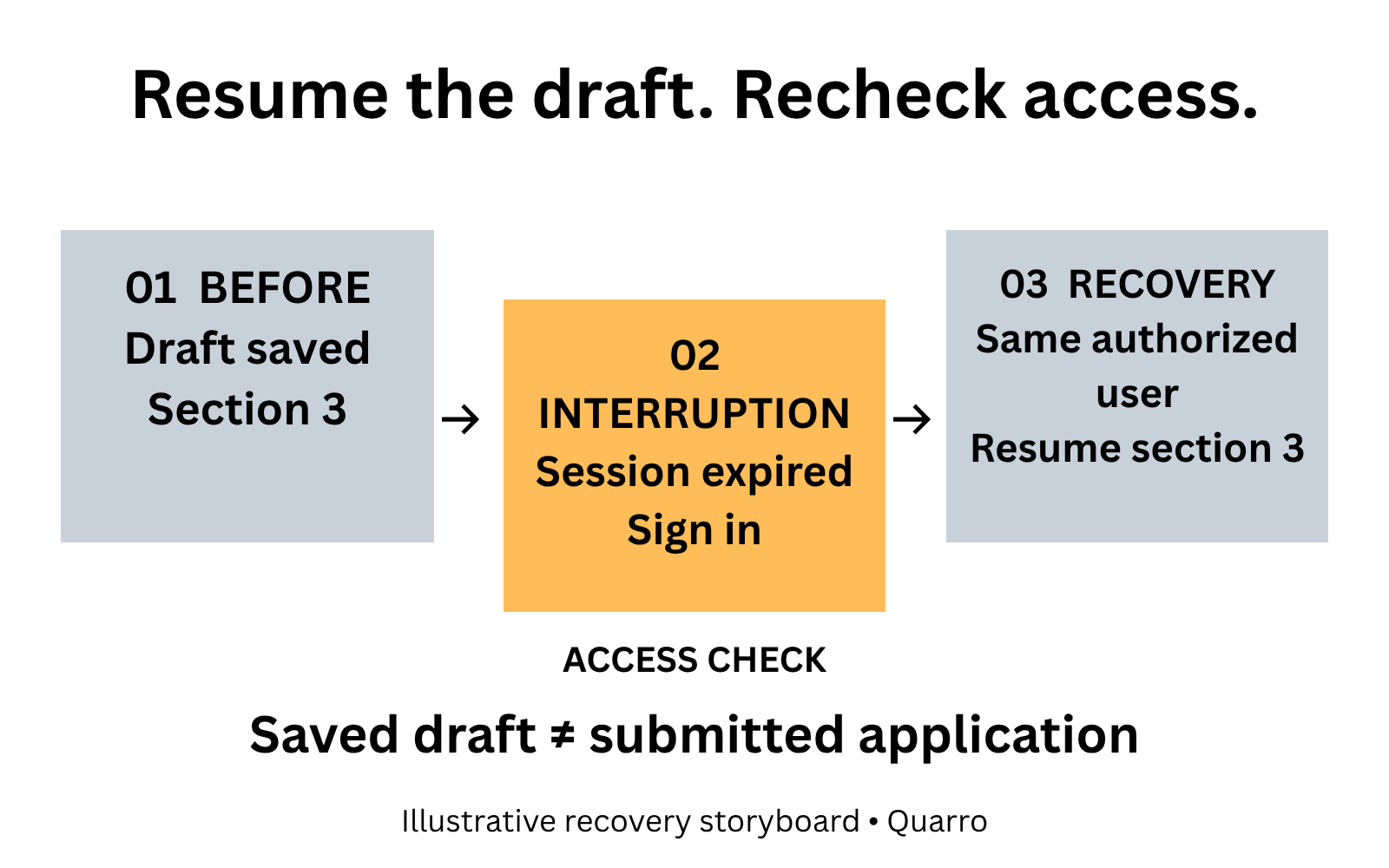
Signing in again should not erase a half-finished application
Separate the lifetime of an authenticated session from the lifetime of saved work, then restore a draft only after checking the current user and access.
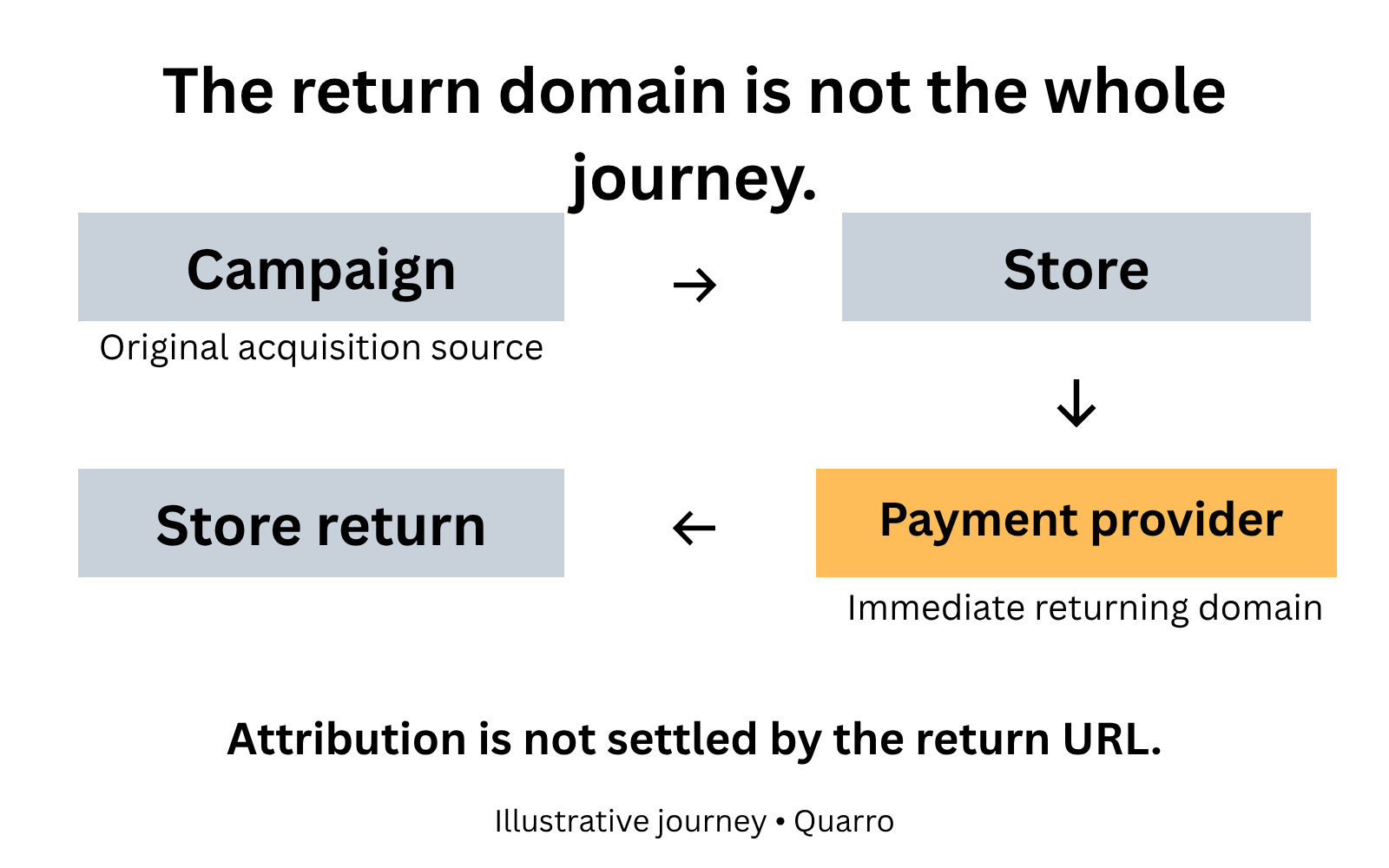
When a payment provider appears to be your best referral source
Trace the checkout journey before changing referral rules. The domain a customer just returned from may not explain how they first found the store.
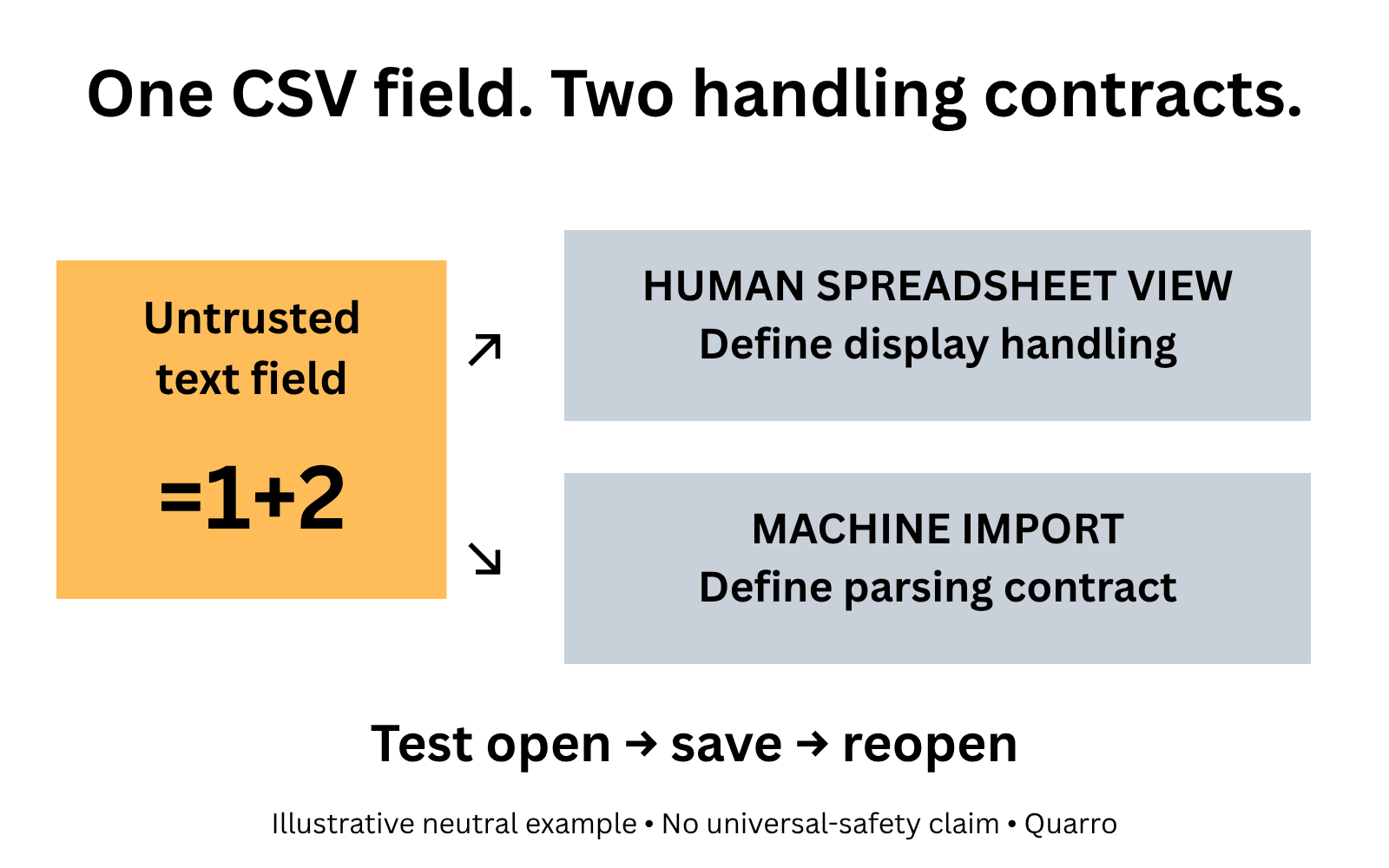
A CSV export can turn customer text into a spreadsheet formula
Review CSV exports for the application that will open them. Valid field quoting alone does not establish safe treatment of formula-like customer text.
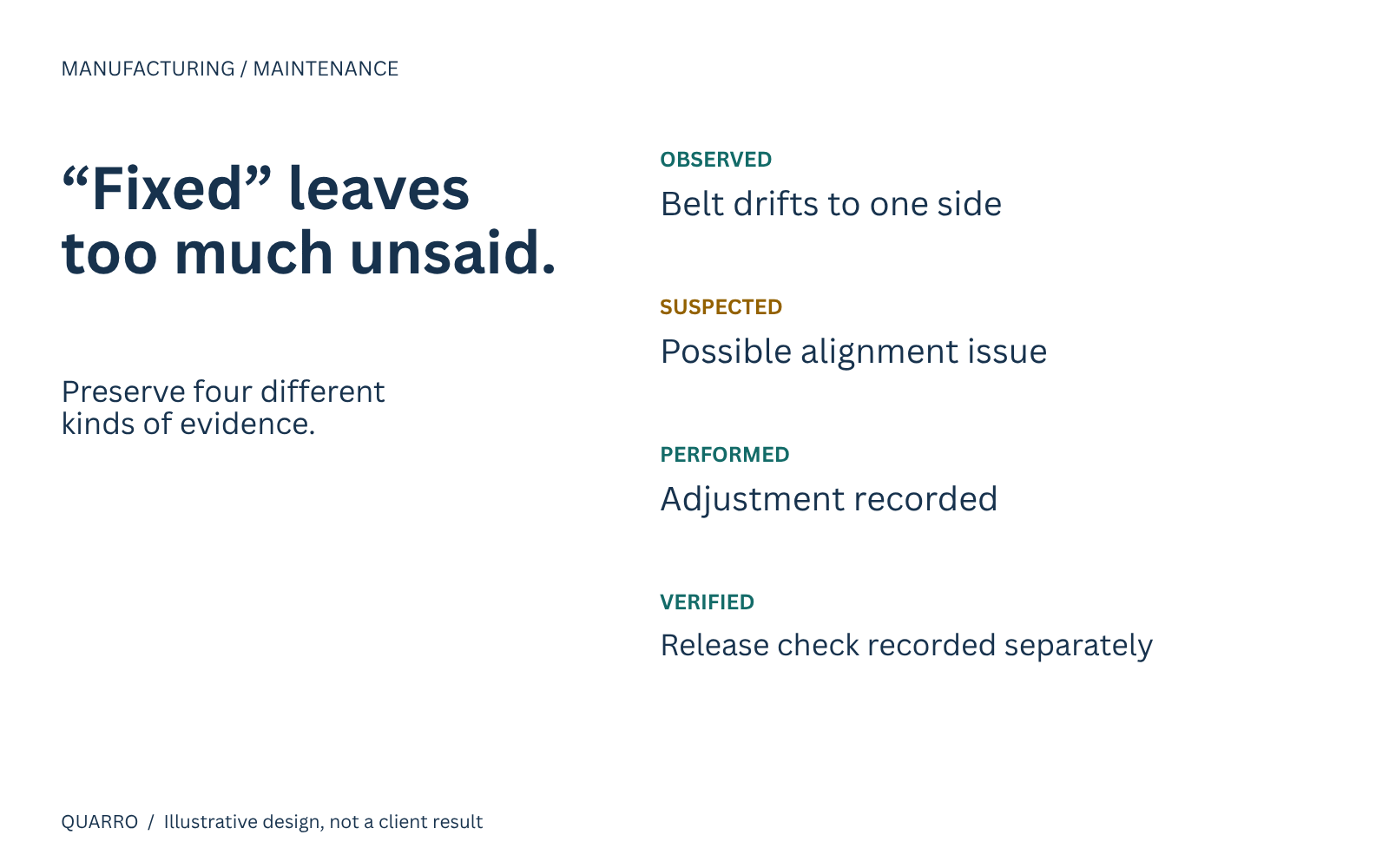
A maintenance log should distinguish the symptom, the repair and the release
Make a maintenance record useful to the next shift by separating observations, working diagnoses, actions and verification of return to service.
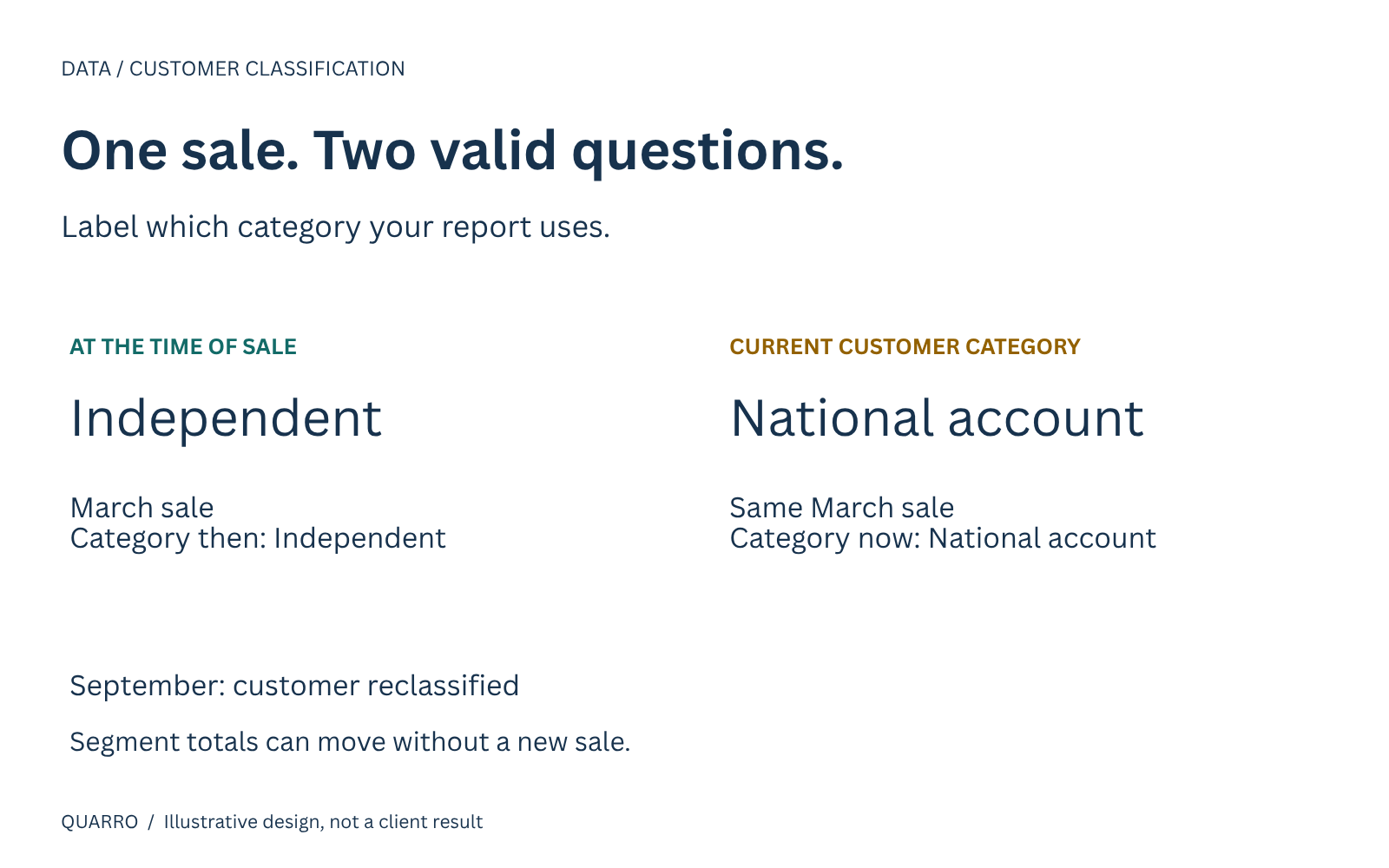
Why changing a customer category can rewrite last year's sales report
Separate sales by the customer's category at the time from sales by the customer's current category, so a business reclassification does not become unexplained growth.
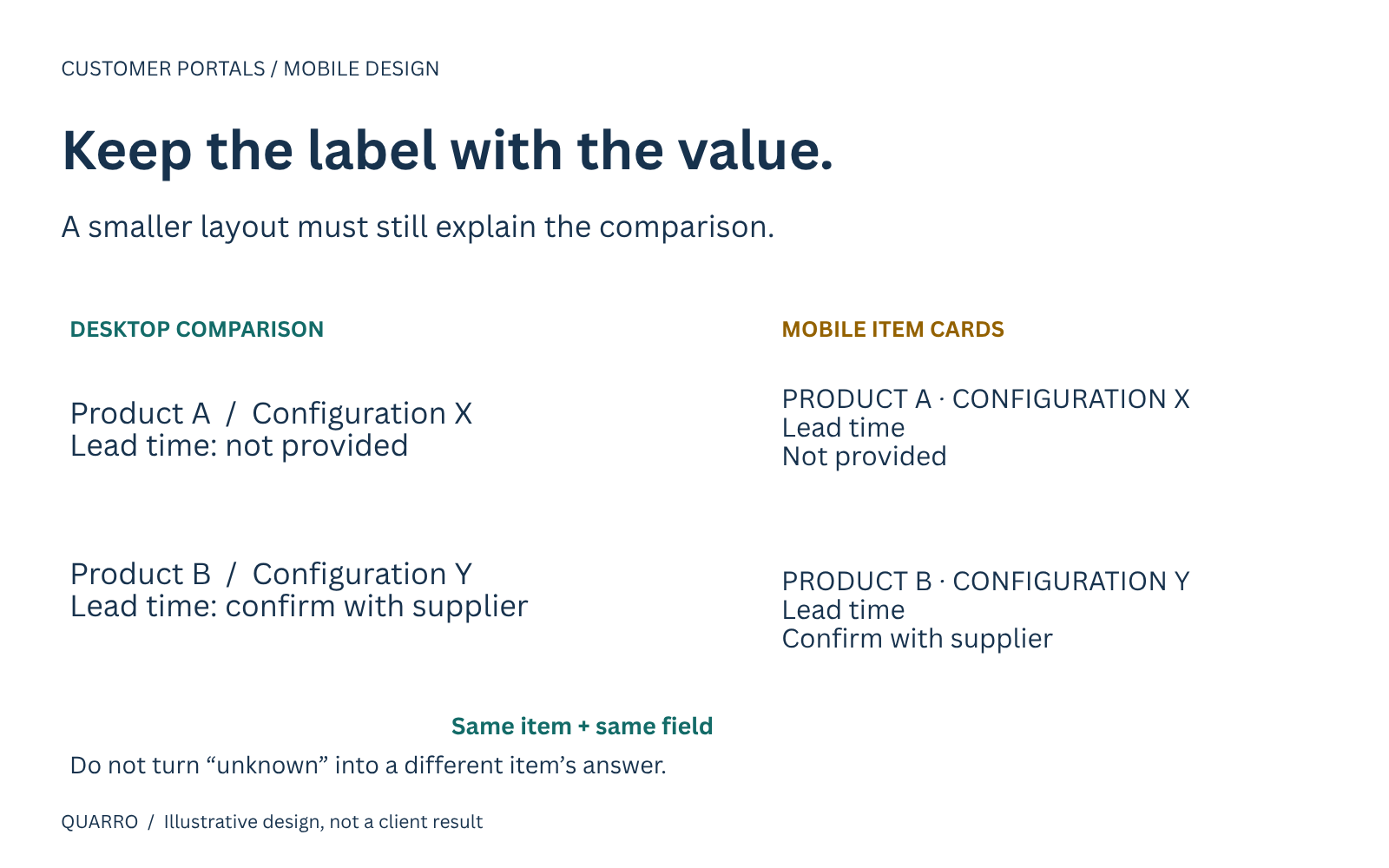
A mobile customer portal should preserve what each table value means
Keep product, unit and status relationships clear when a customer portal changes from a desktop table to a smaller-screen layout.
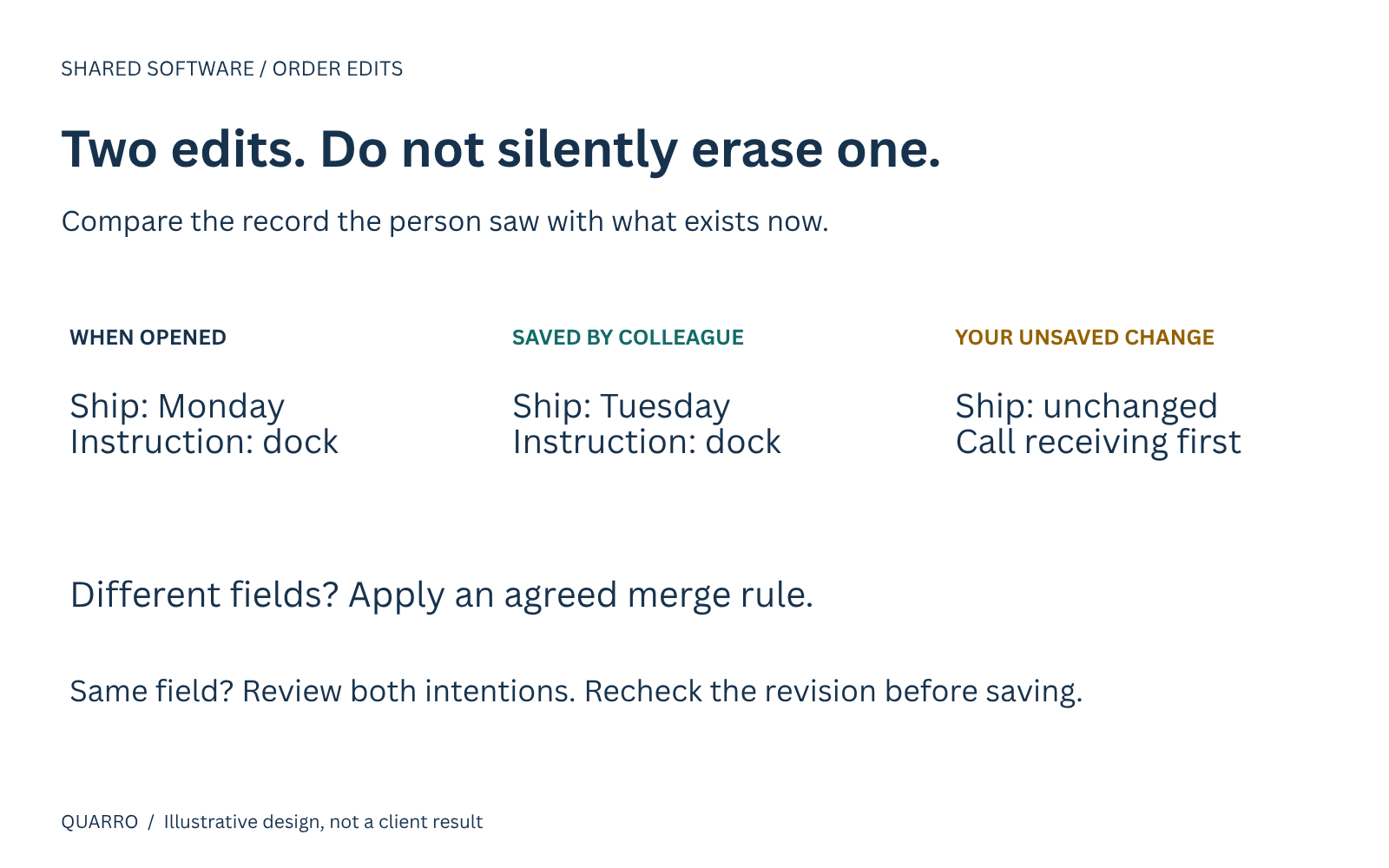
Two people changed the same order. Which edit should survive?
A practical approach to concurrent order changes: detect stale edits, show the difference and let the right person resolve the business decision.
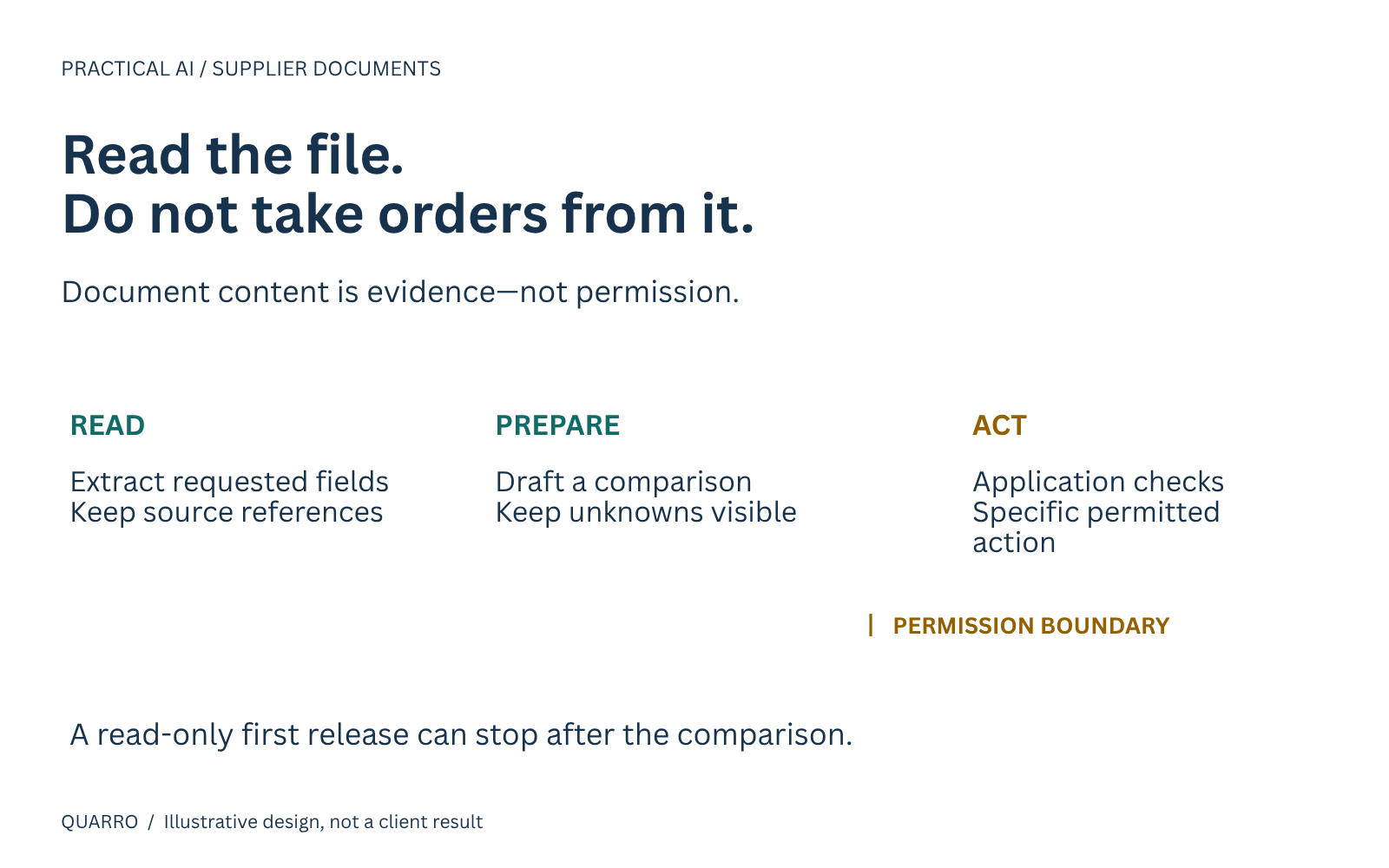
An AI assistant should read a supplier document—not take orders from it
Keep document reading separate from permission to act when adding AI to supplier intake and purchasing support.
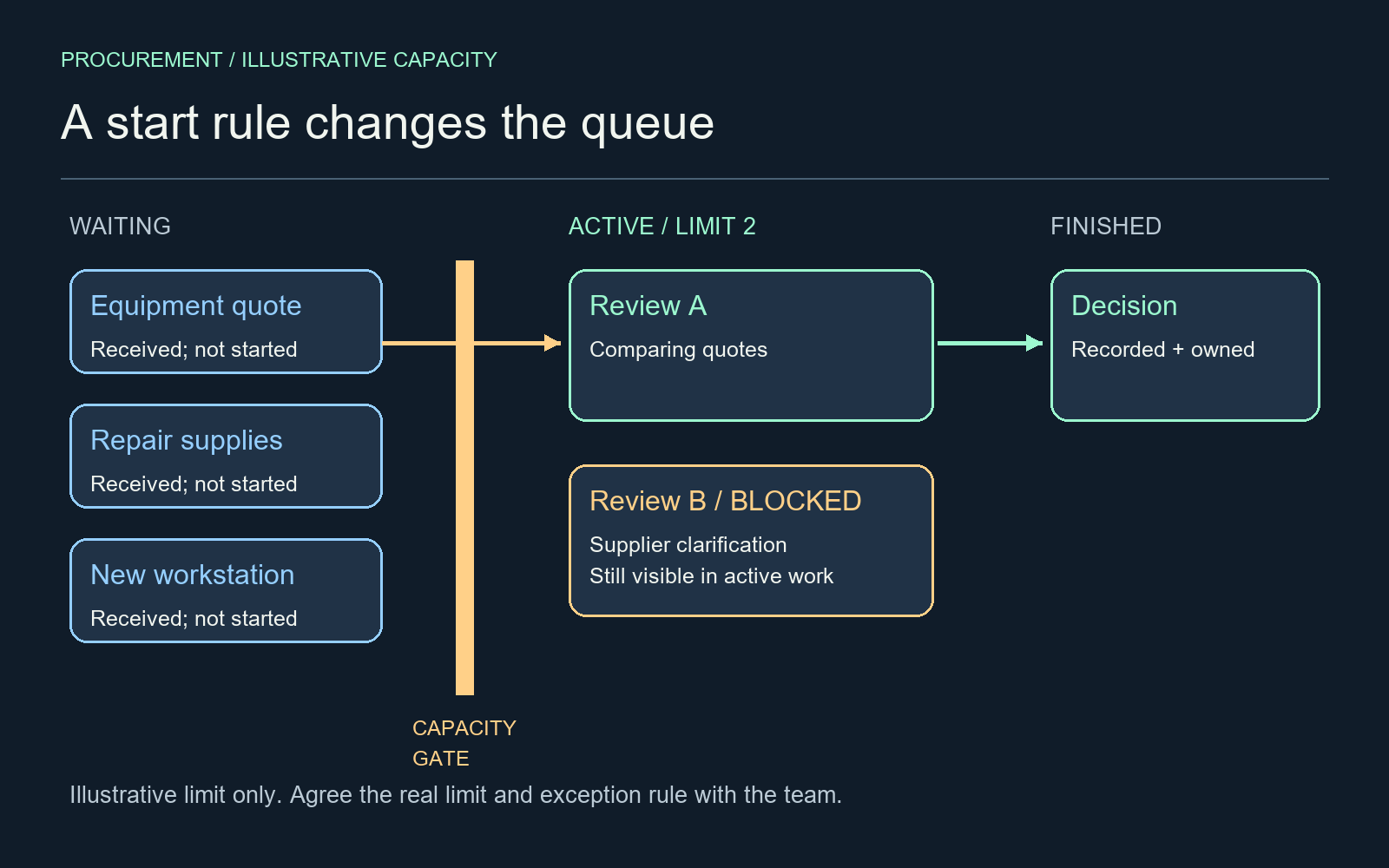
Stop procurement intake from overloading the review queue
Give quotation reviews a clear start rule, visible work limits and an explicit exception path before automating procurement intake.
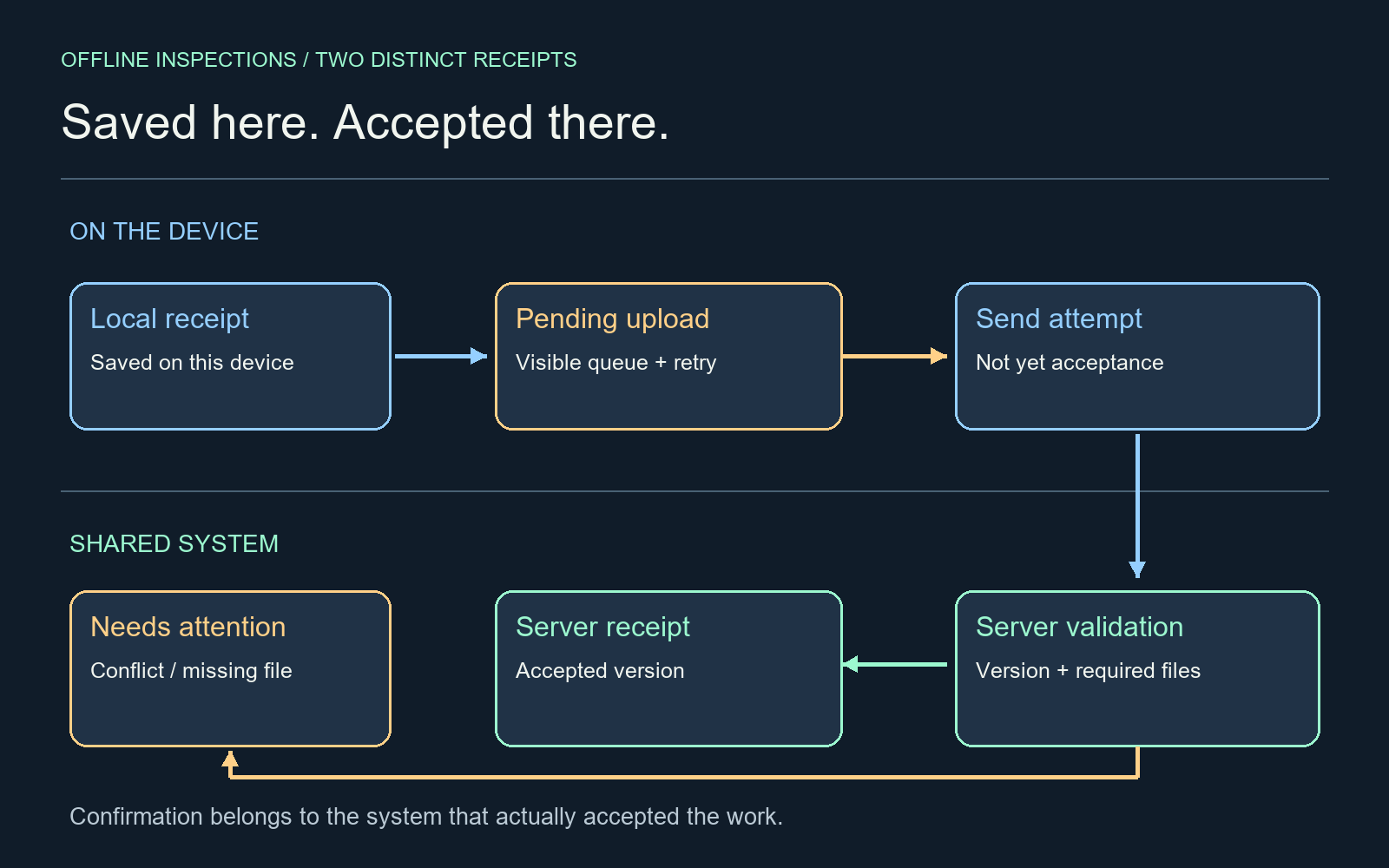
An offline inspection form needs two receipts: saved and accepted
Design offline inspection forms so staff can distinguish a local save, pending upload, server acceptance and a conflict that needs review.
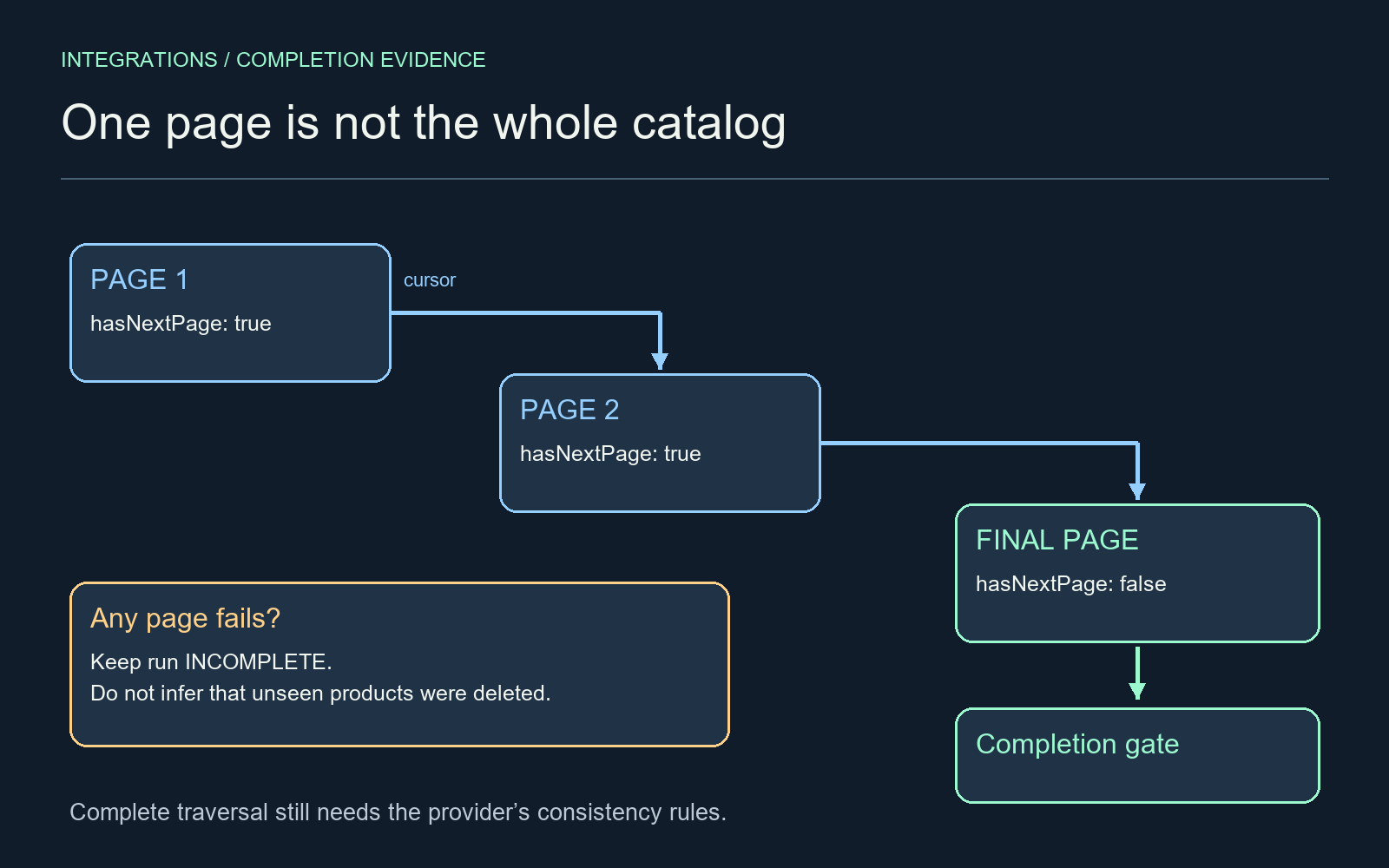
Why a successful catalog import can still be missing products
Separate successful API pages from a complete catalog traversal using cursor progress, terminal evidence and an incomplete-run status.
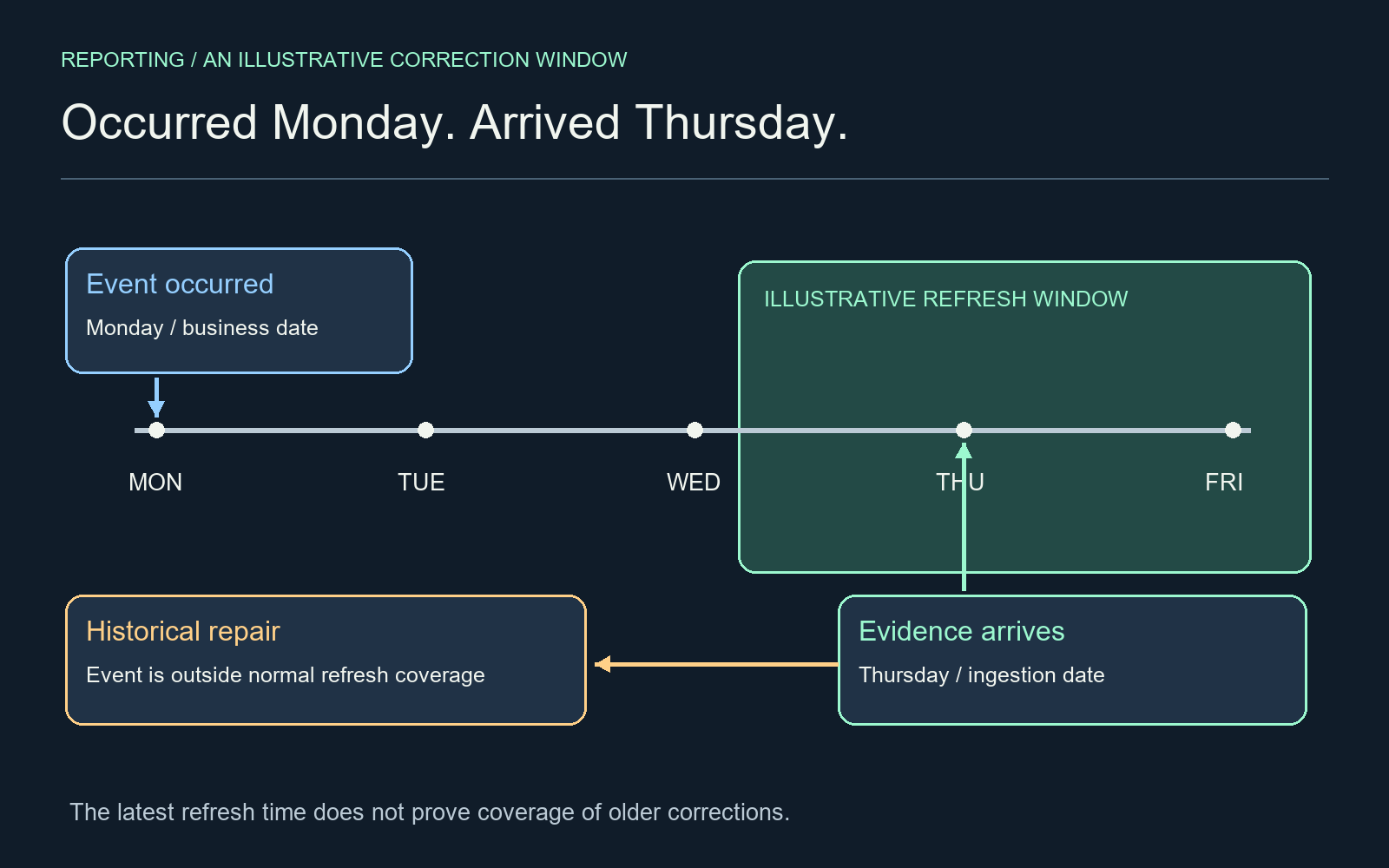
Late records need a correction window in operational reports
Plan for late records and historical corrections by separating occurrence time, arrival time and the period your report actually refreshes.
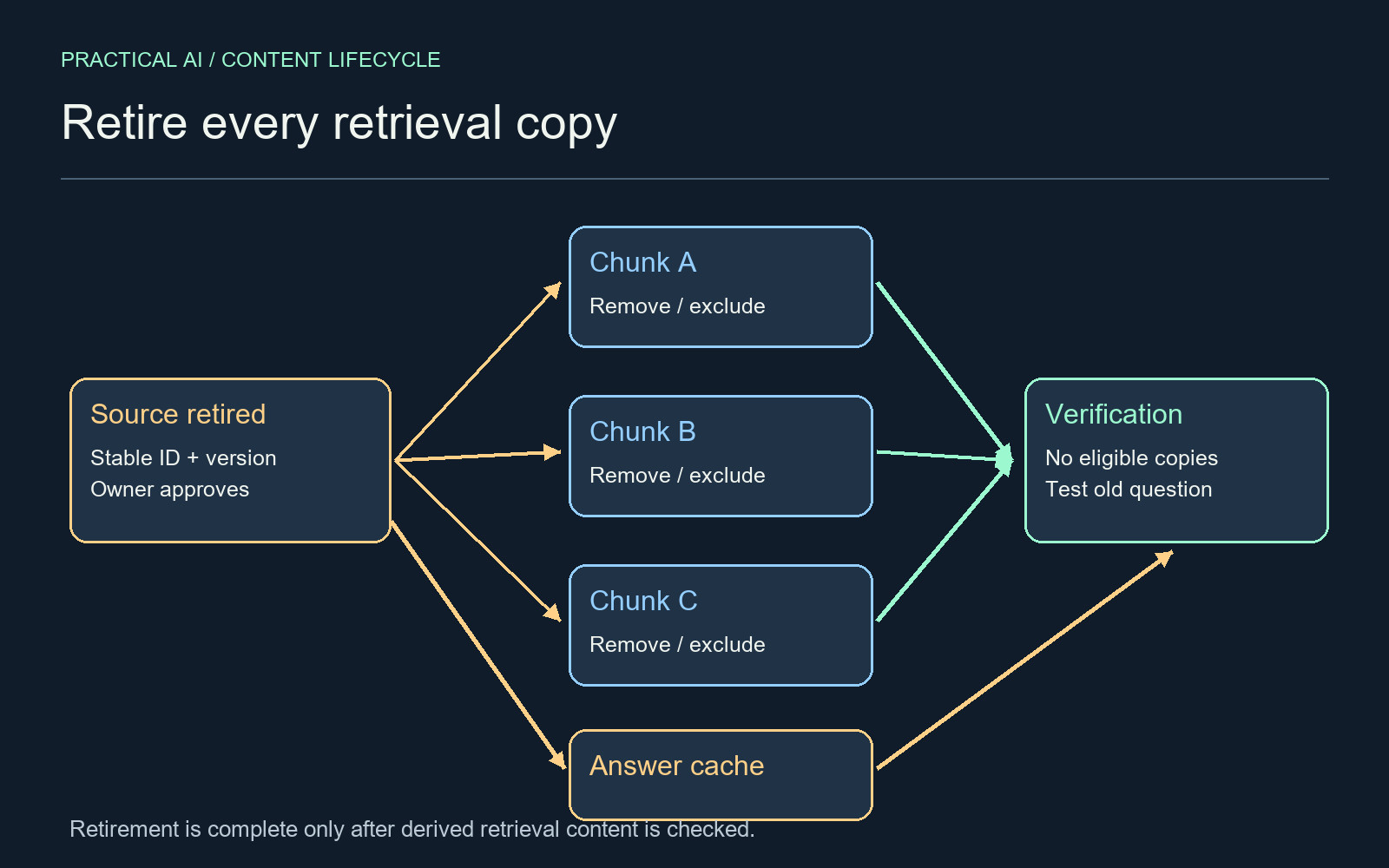
Retire an obsolete procedure from the AI index, not just the folder
Give withdrawn procedures a retirement path through source records, derived search chunks and answer caches before an assistant uses them again.
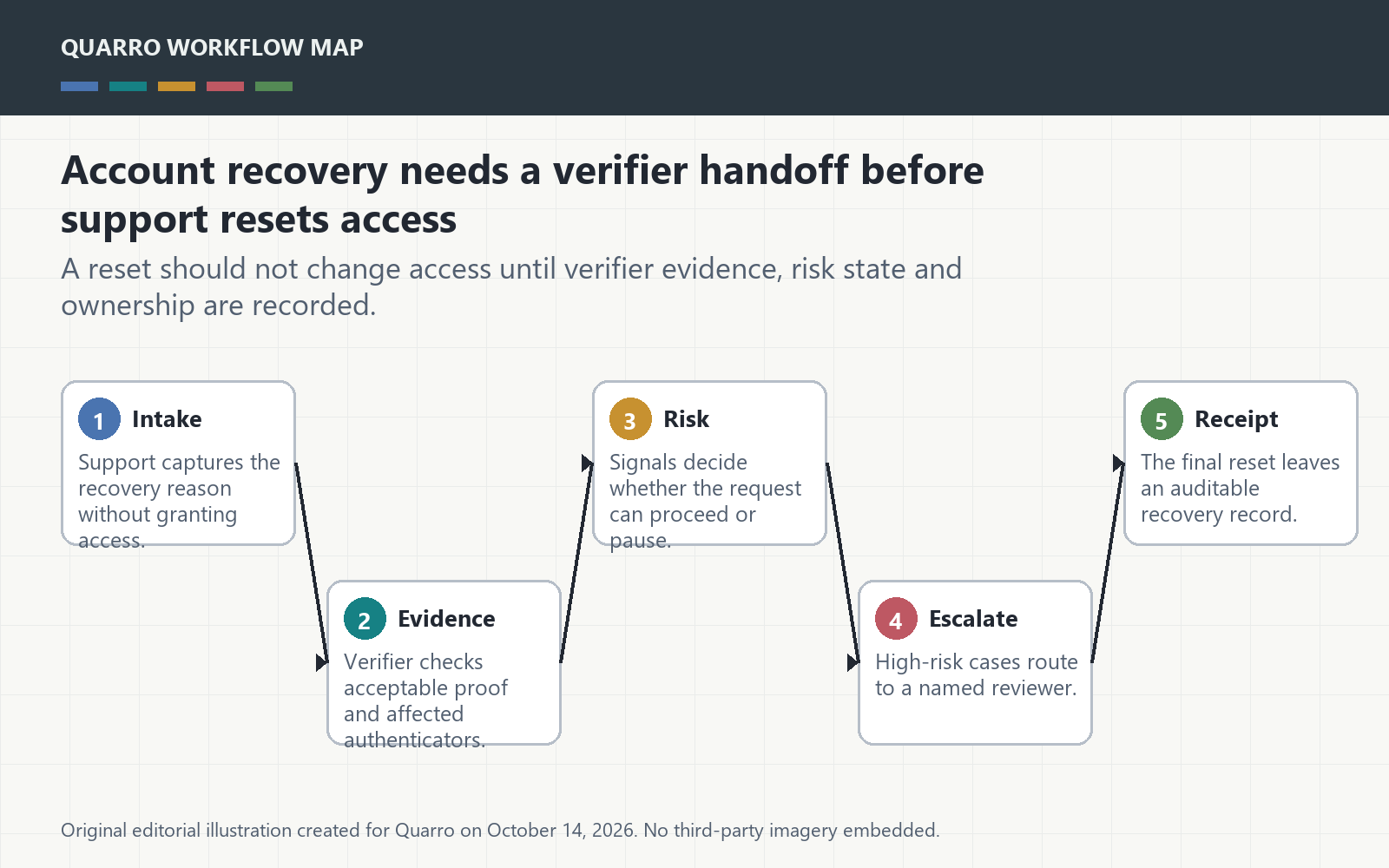
Account recovery needs a verifier handoff before support resets access
Design account recovery support around verifier evidence, risk flags and auditable handoff before a manual reset changes access.
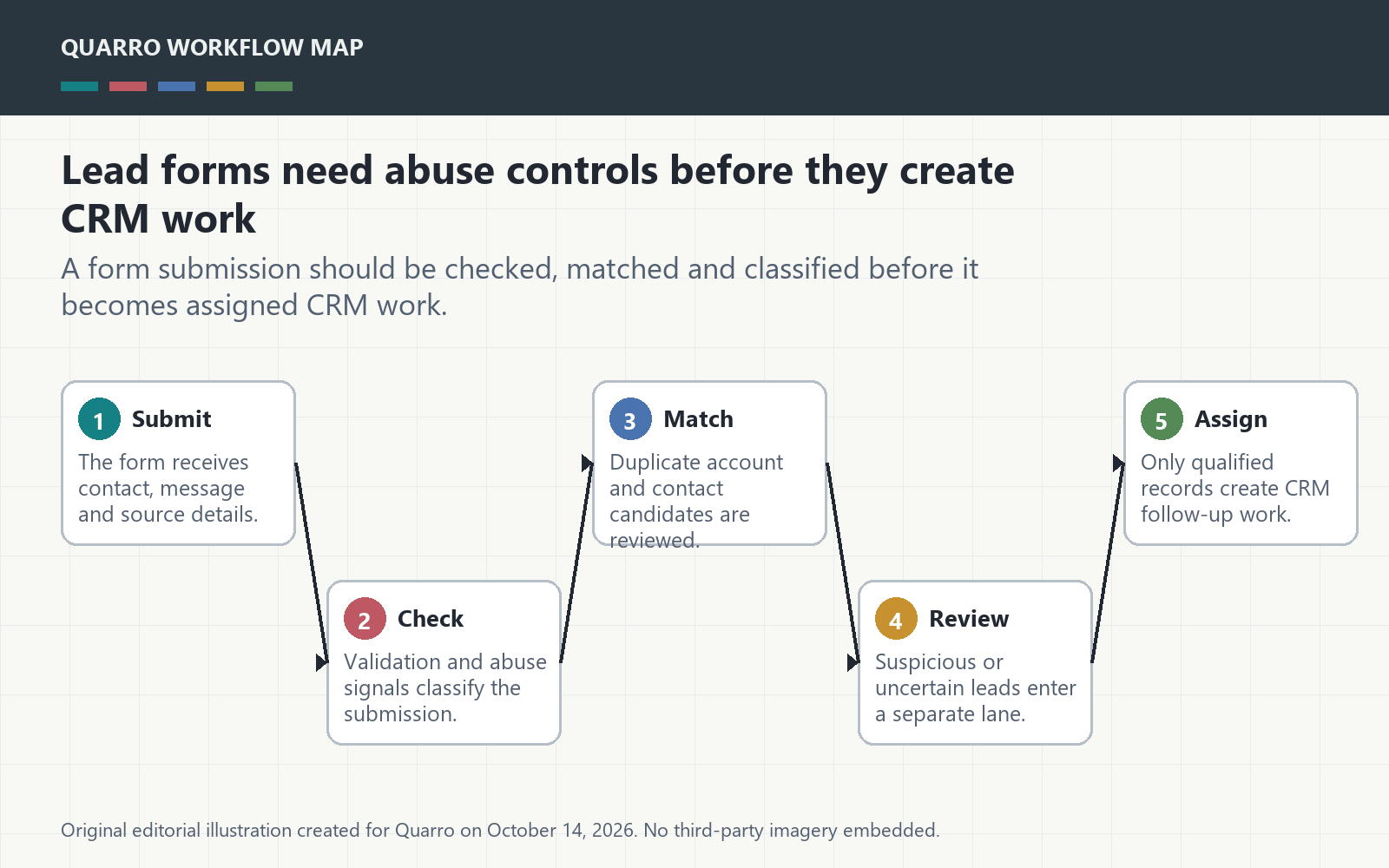
Lead forms need abuse controls before they create CRM work
Protect inbound lead workflows from bot submissions, duplicates and routing noise before forms create CRM tasks.
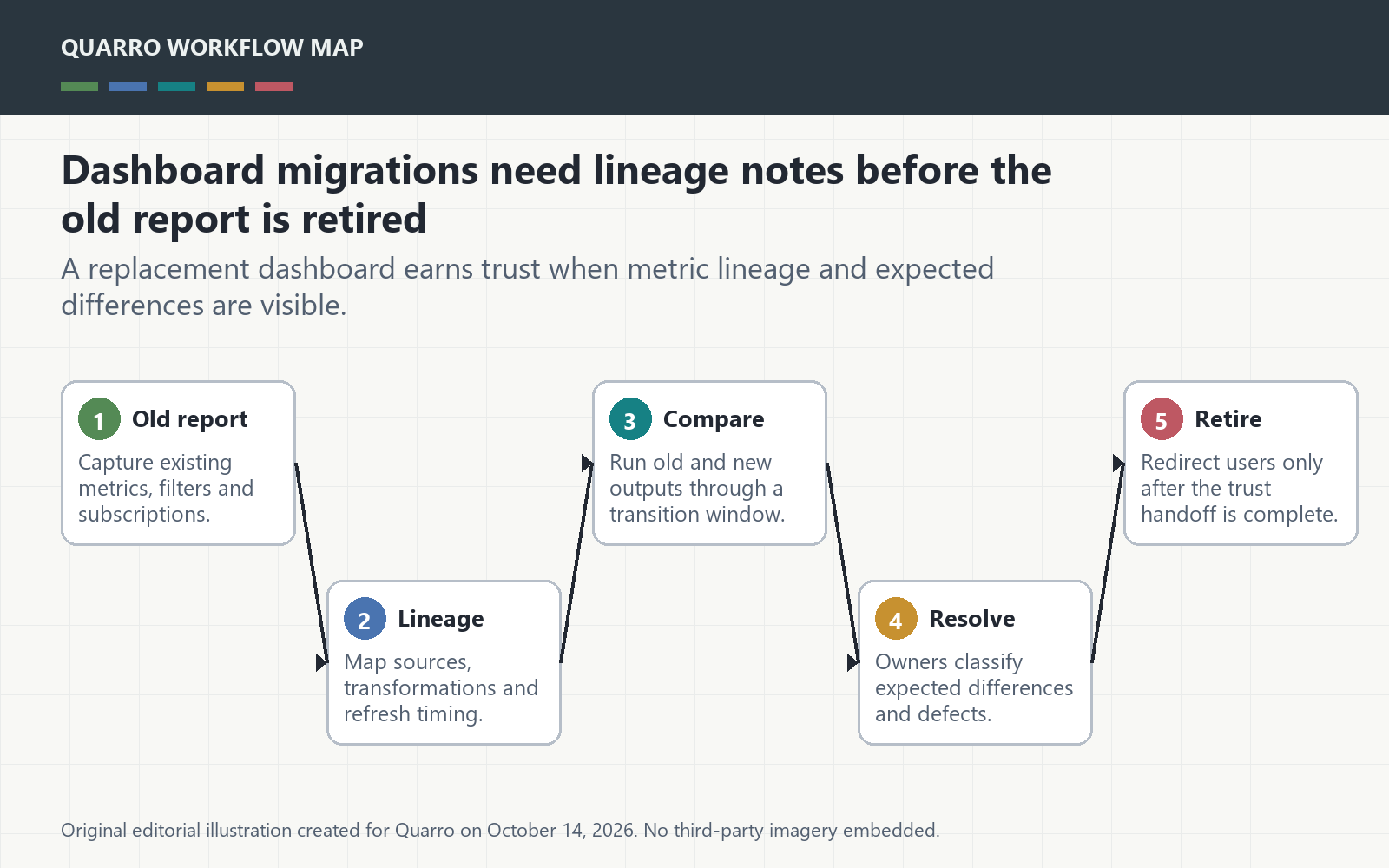
Dashboard migrations need lineage notes before the old report is retired
Use lineage notes, owner checks and comparison windows before replacing a trusted dashboard with a new reporting stack.
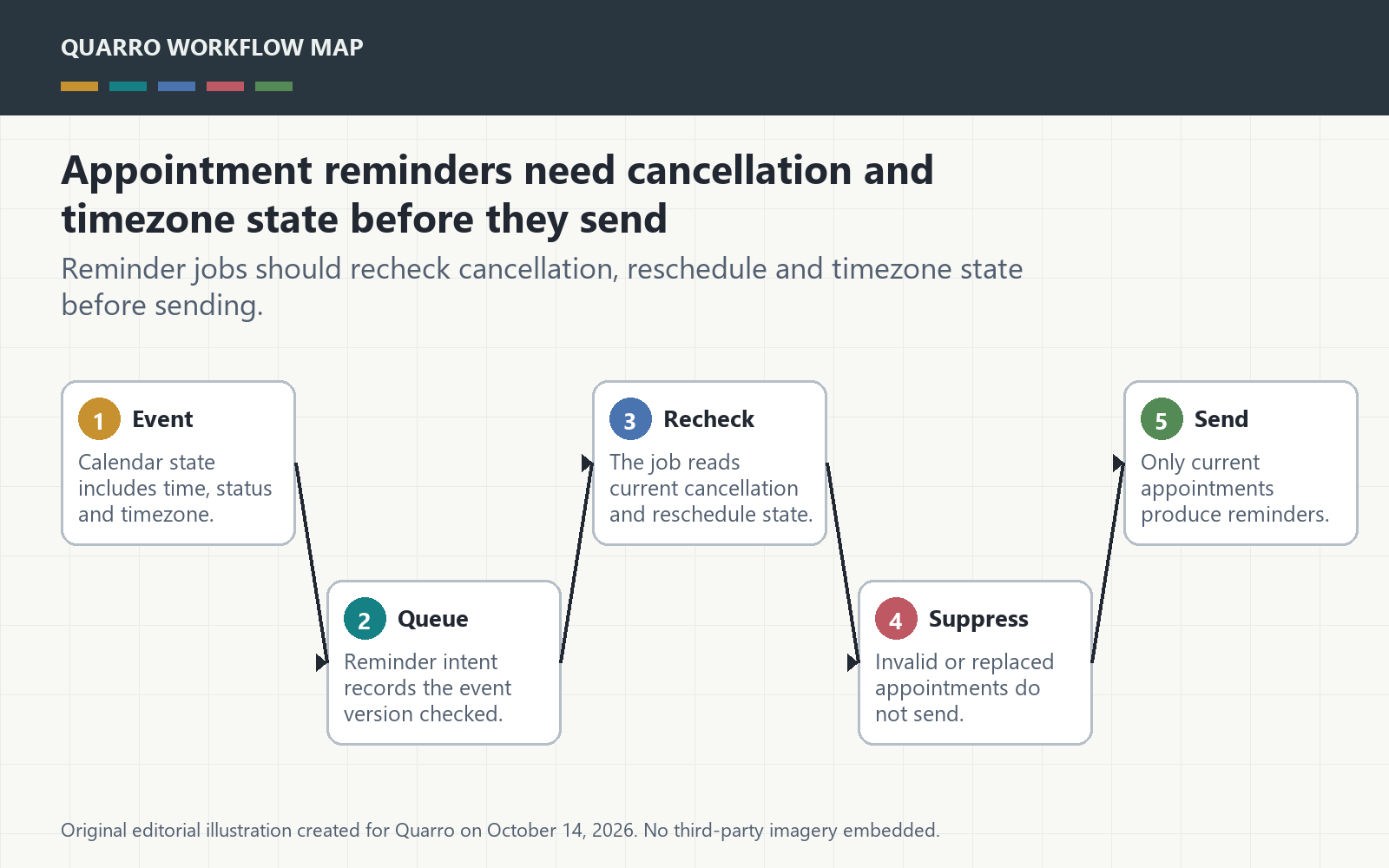
Appointment reminders need cancellation and timezone state before they send
Design appointment reminder automation around cancellation, reschedule and timezone state so messages match the current event.
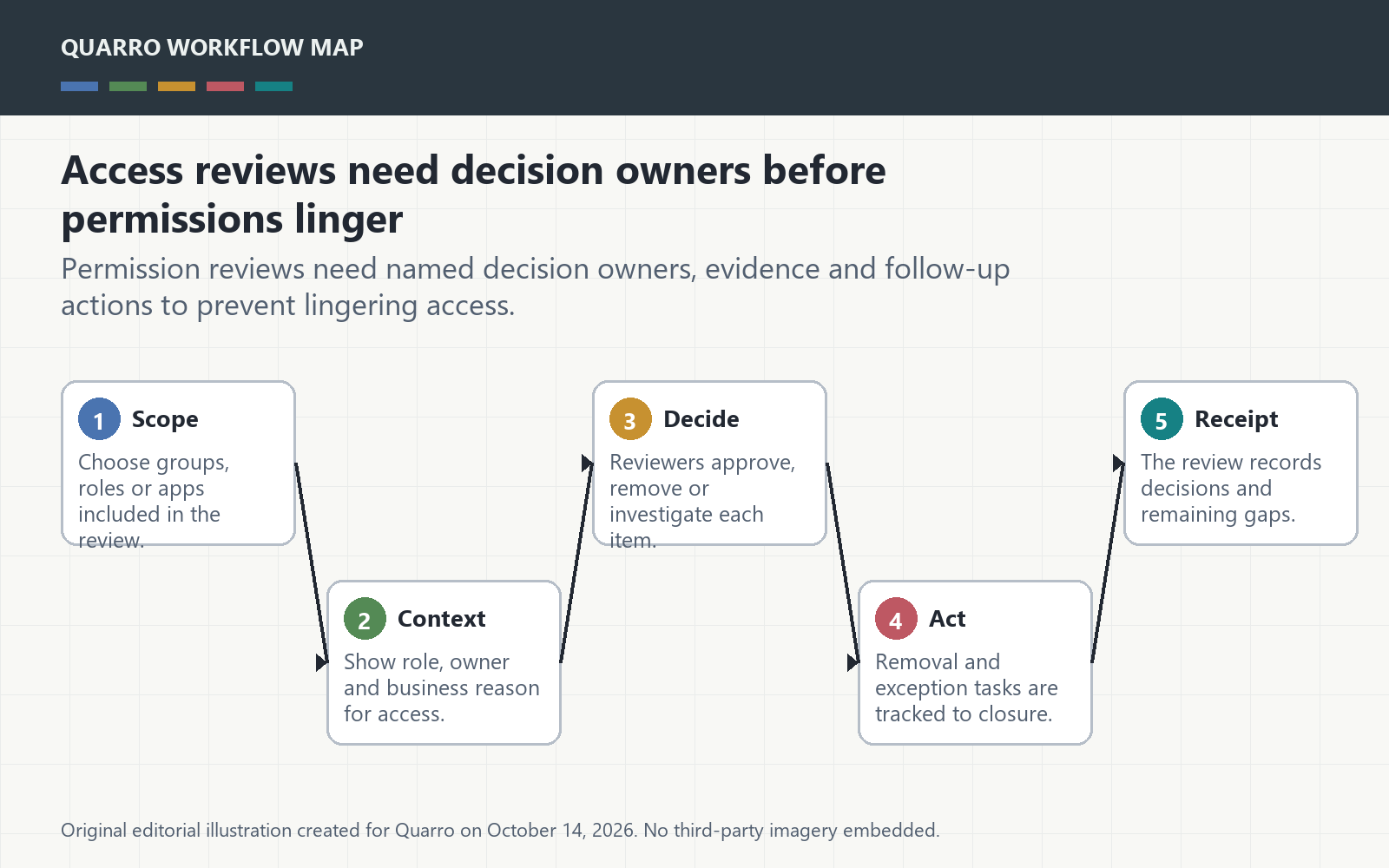
Access reviews need decision owners before permissions linger
Make access reviews useful by assigning decision owners, evidence and follow-up actions before stale permissions remain active.
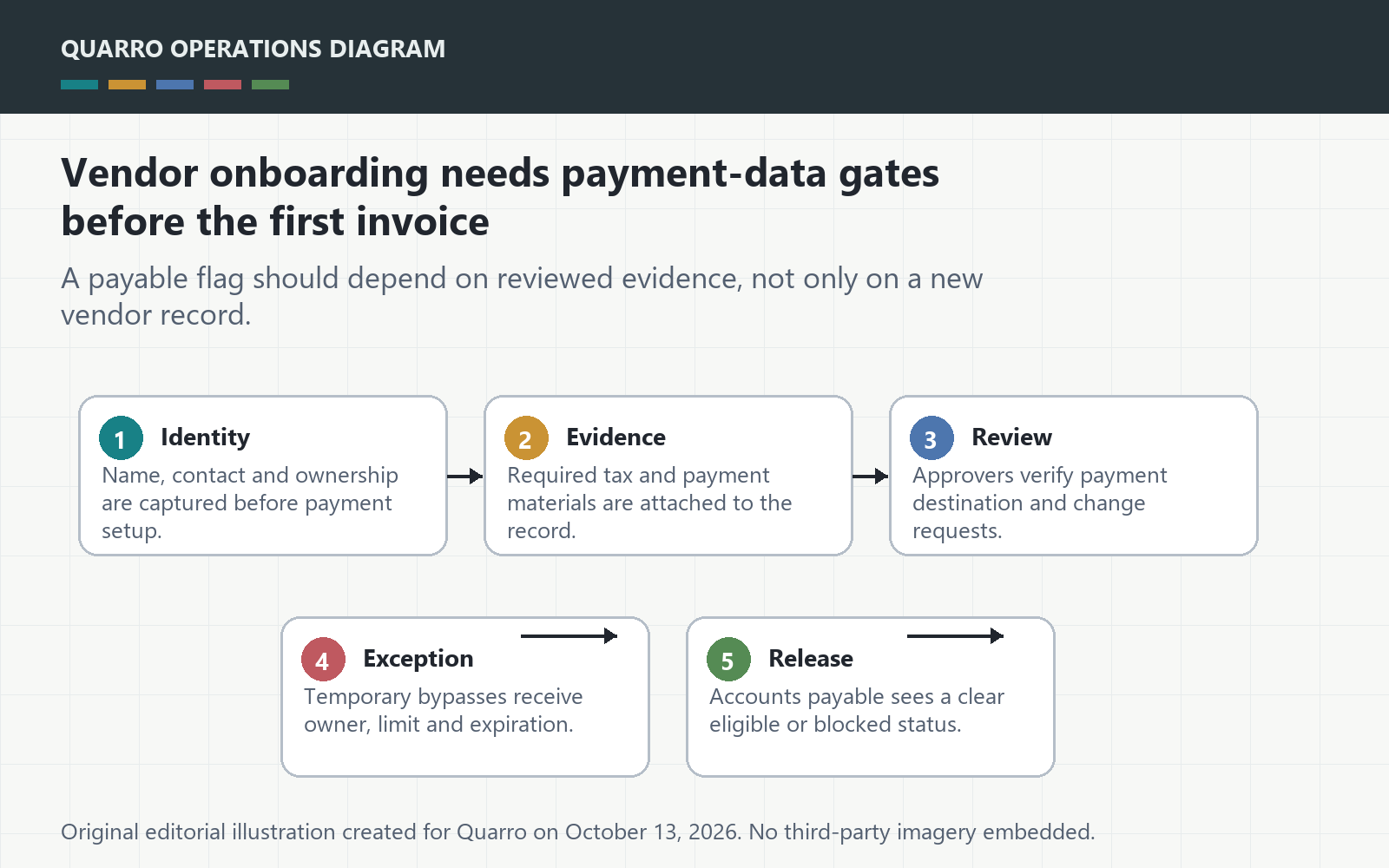
Vendor onboarding needs payment-data gates before the first invoice
Design vendor onboarding around payment-data gates, ownership and review before invoices enter the payable queue.
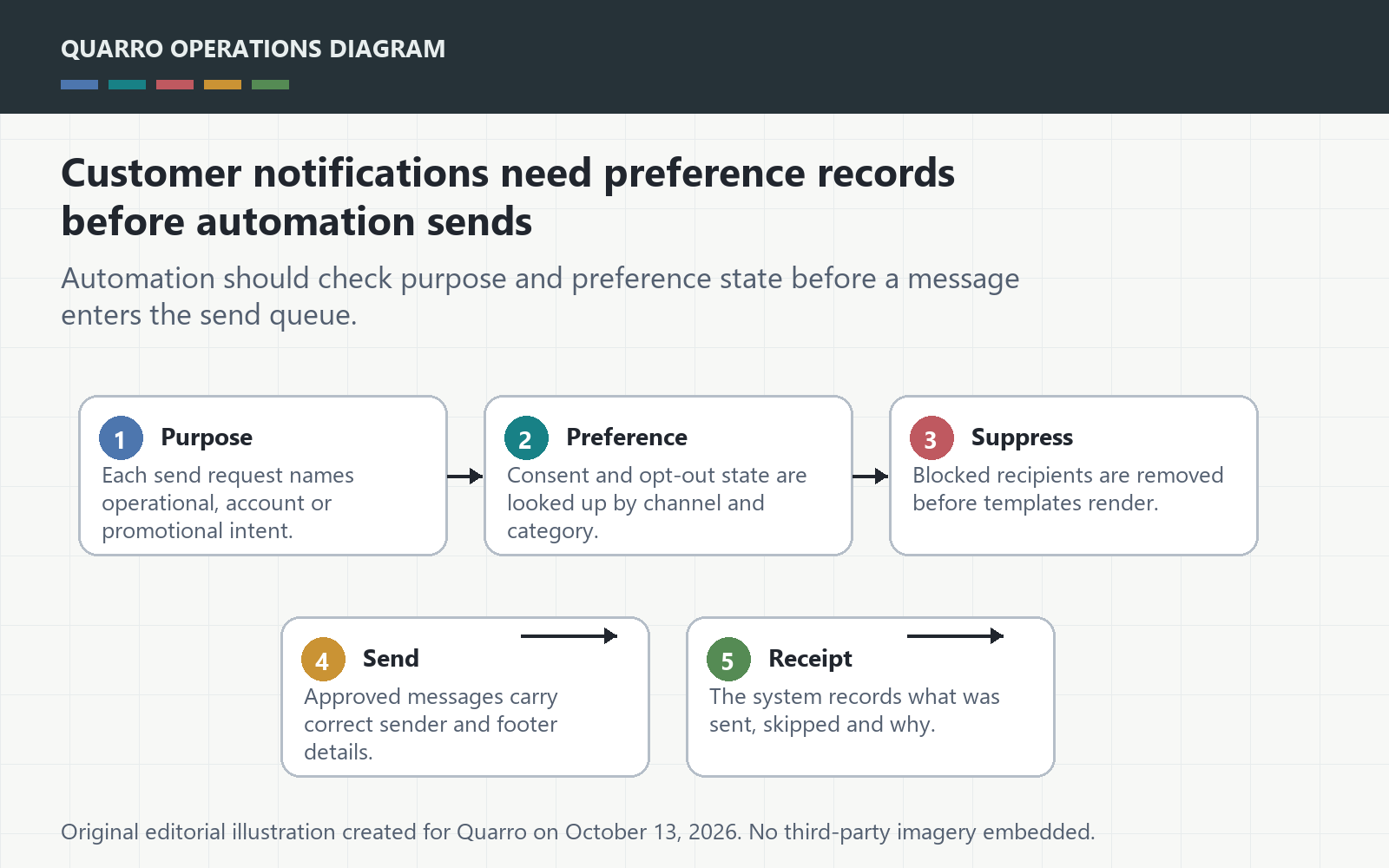
Customer notifications need preference records before automation sends
Use message-purpose, consent and opt-out records before automated customer notifications leave the system.
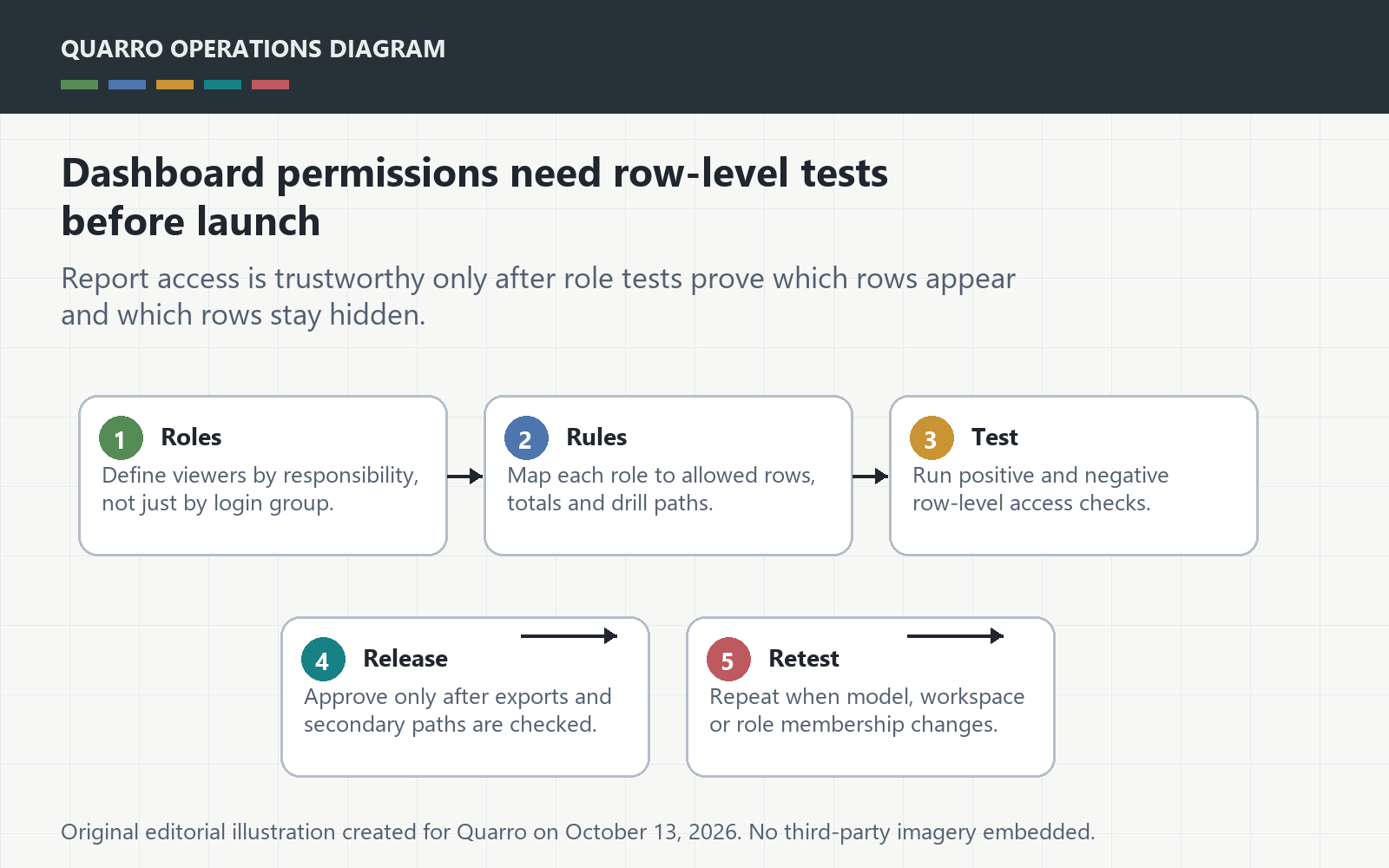
Dashboard permissions need row-level tests before launch
Plan dashboard access with row-level test cases so shared reports do not expose the wrong records.
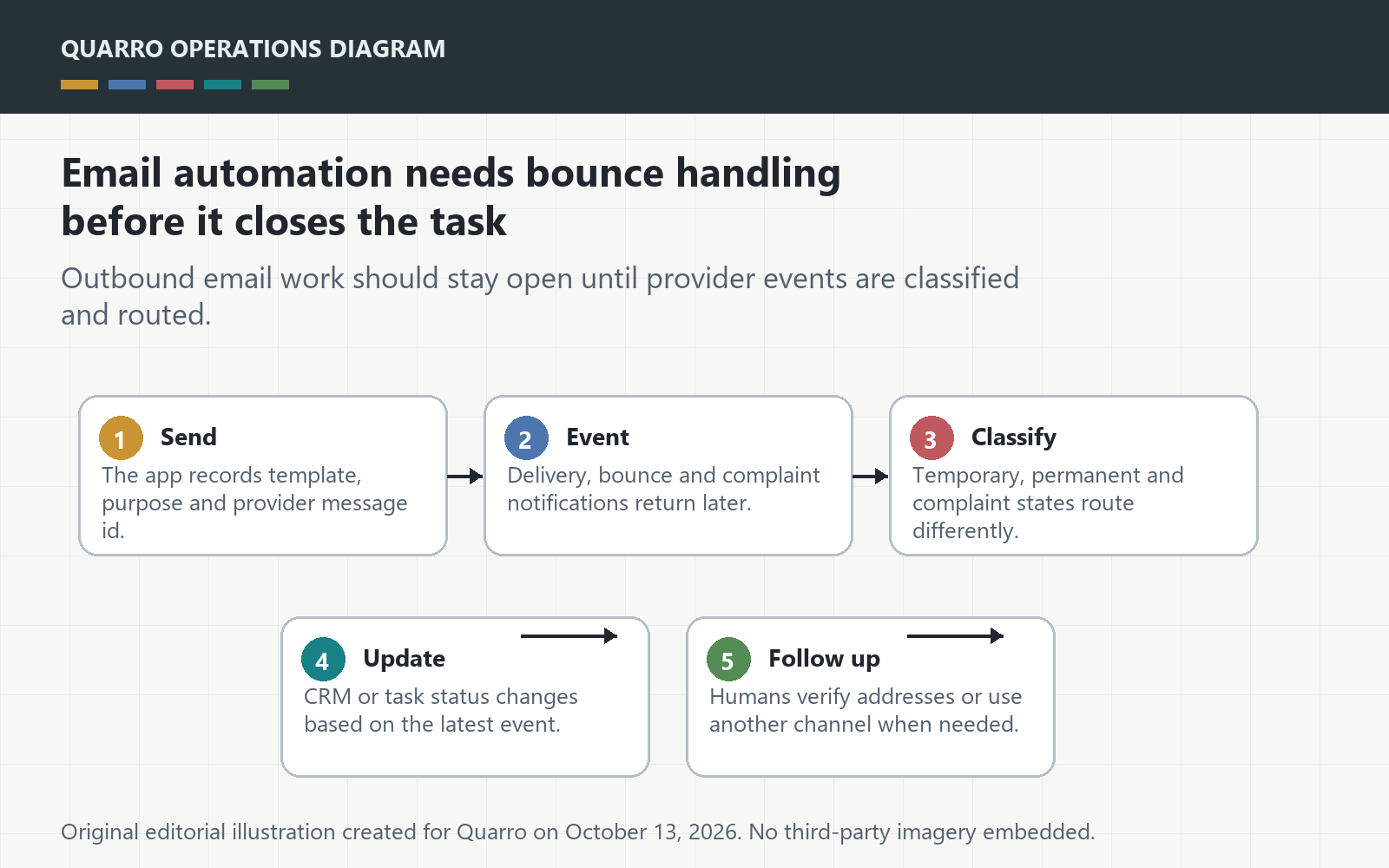
Email automation needs bounce handling before it closes the task
Treat bounce and complaint events as workflow inputs so automated email does not mark failed outreach complete.
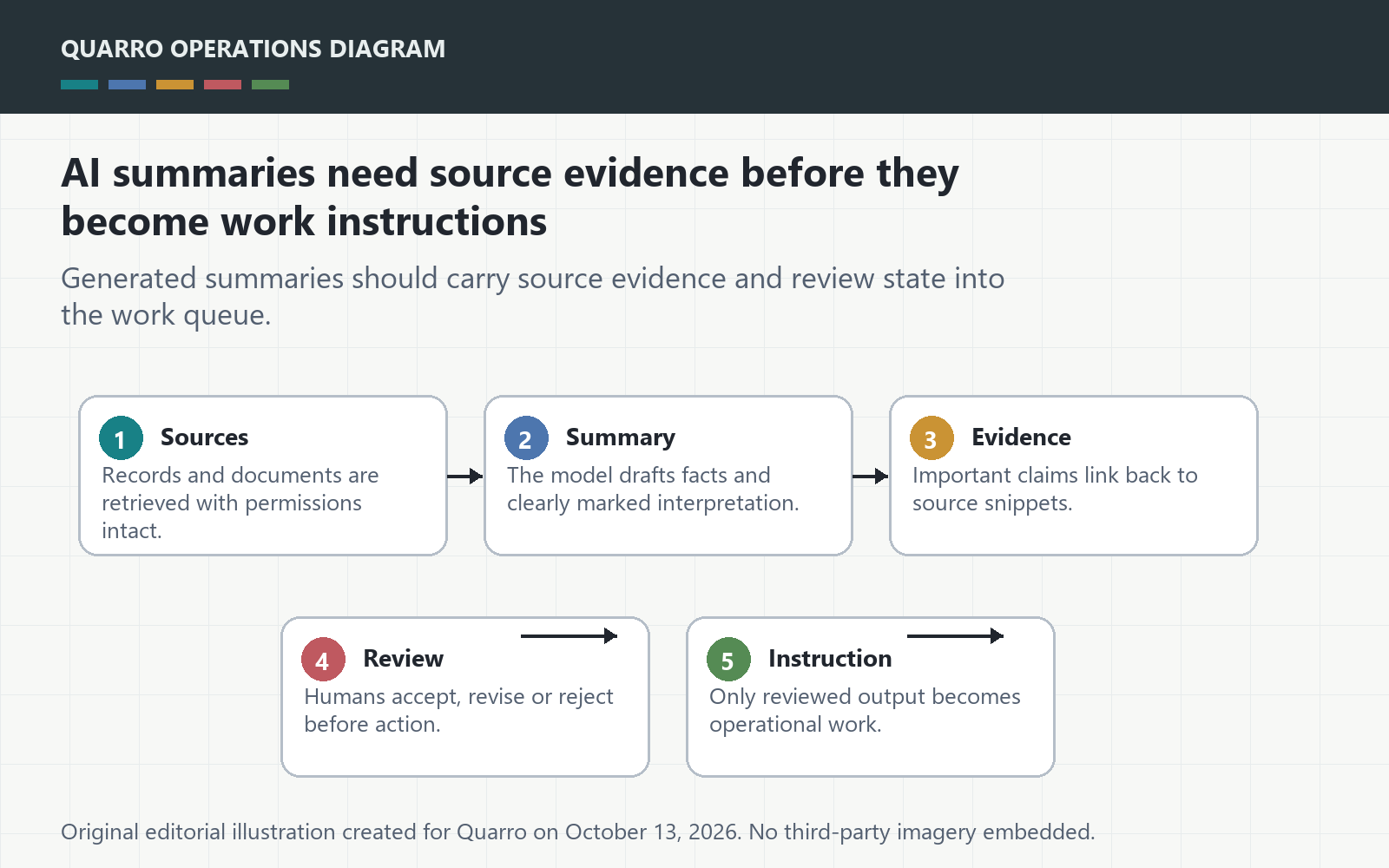
AI summaries need source evidence before they become work instructions
Use citations, confidence boundaries and review states before generated summaries drive operational decisions.
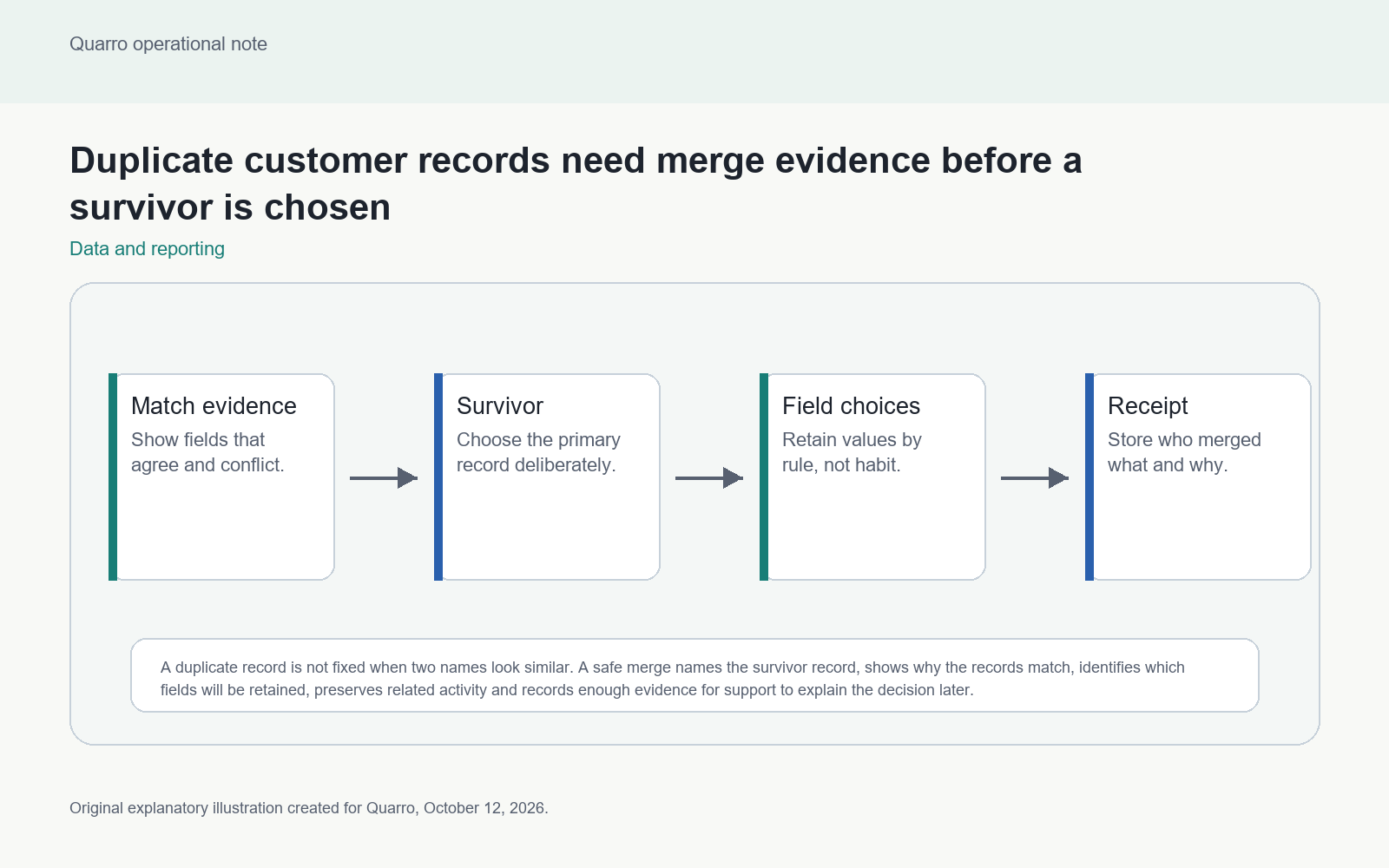
Duplicate customer records need merge evidence before a survivor is chosen
Design duplicate customer merge review around match evidence, survivorship rules and reversible support notes before records are combined.
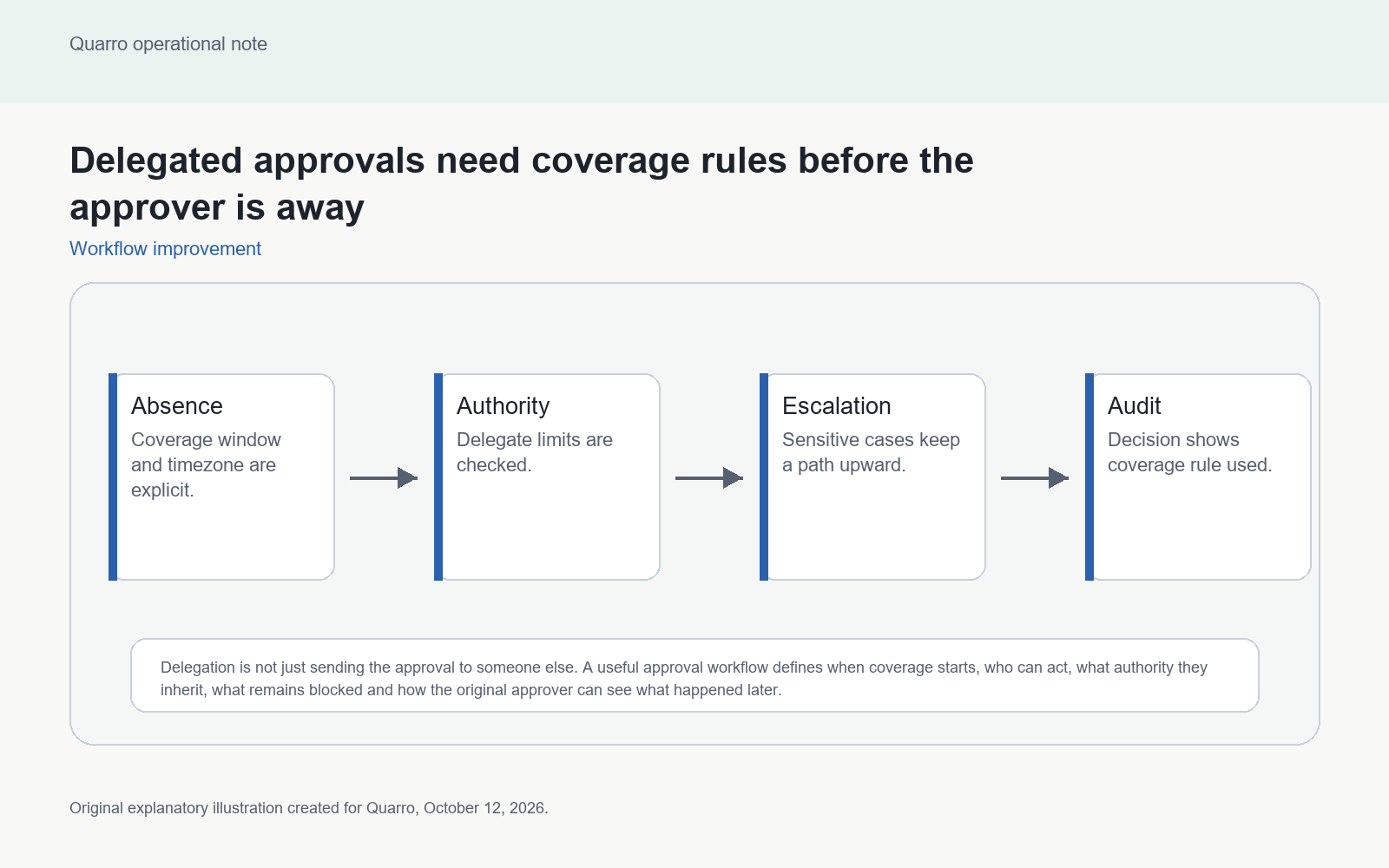
Delegated approvals need coverage rules before the approver is away
Plan approval delegation with coverage windows, authority limits and audit evidence so work does not stall or bypass control.
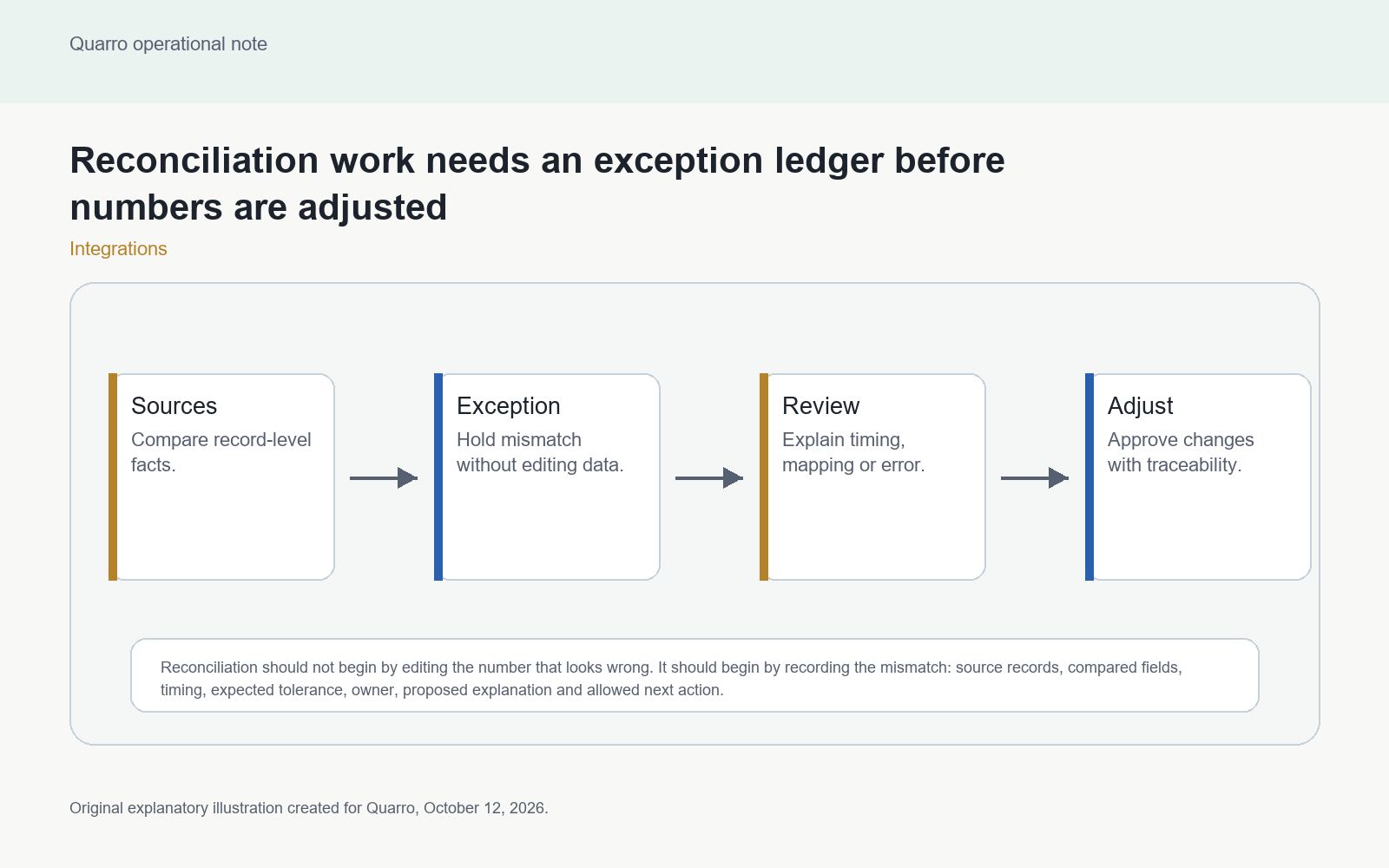
Reconciliation work needs an exception ledger before numbers are adjusted
Use a reconciliation exception ledger to compare systems, preserve differences and route adjustments through owned review.
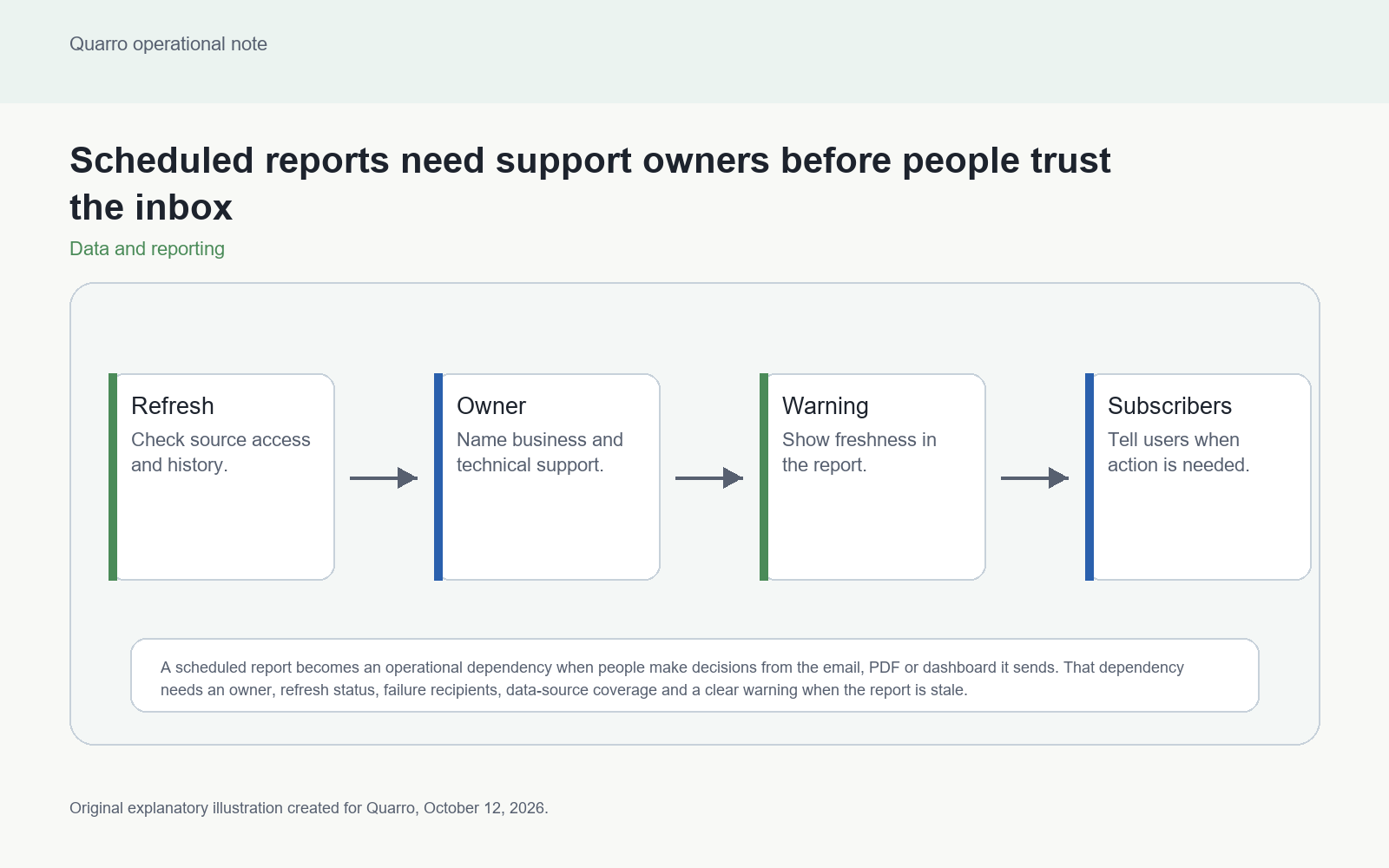
Scheduled reports need support owners before people trust the inbox
Assign owners, refresh checks and failure handling to scheduled reports before inbox delivery becomes a hidden dependency.
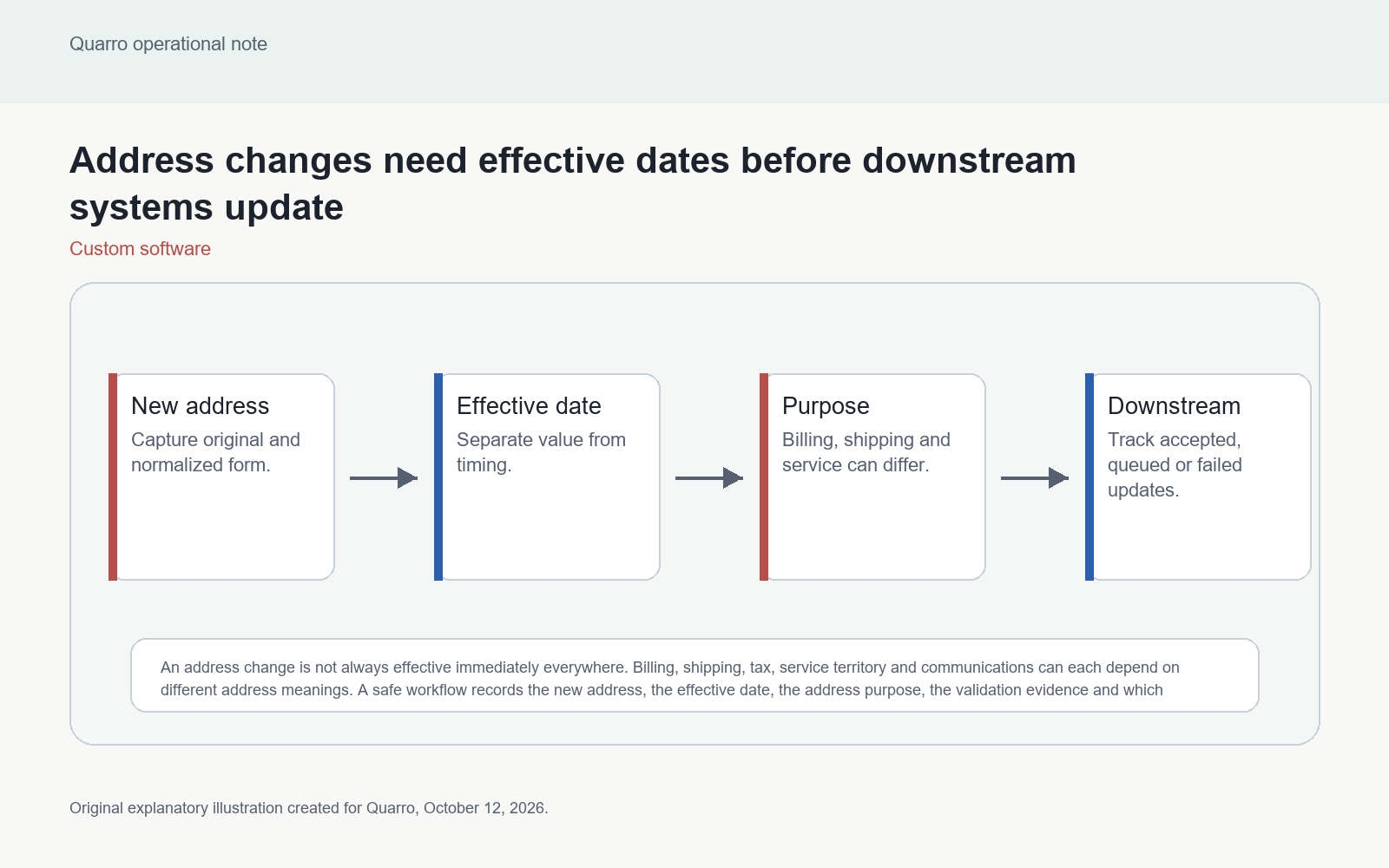
Address changes need effective dates before downstream systems update
Handle customer address changes with effective dates, validation, downstream routing and history instead of overwriting the current value everywhere.
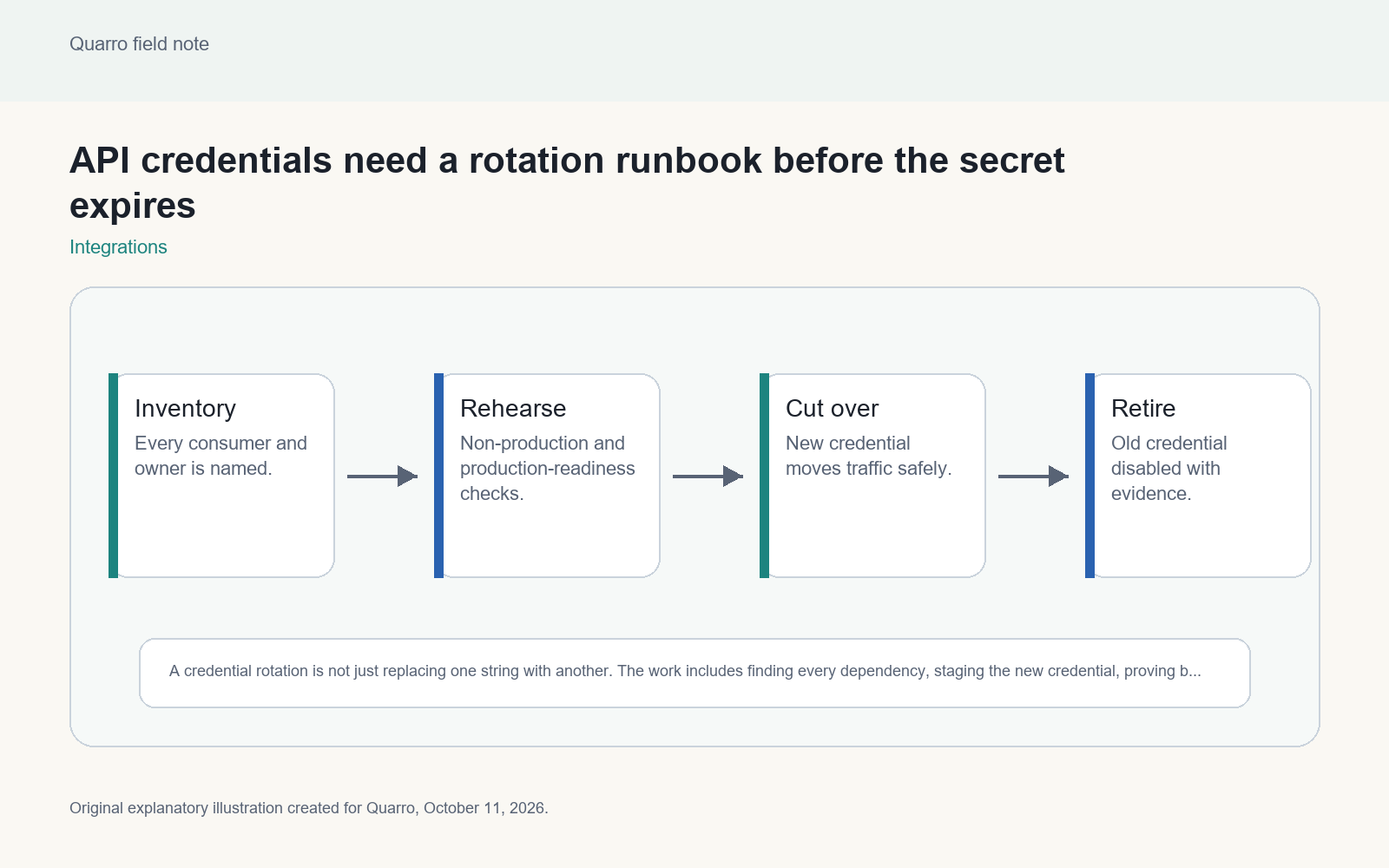
API credentials need a rotation runbook before the secret expires
Plan API key and secret rotation as an operational workflow, with owners, rehearsal steps, rollback evidence and dependent system checks.
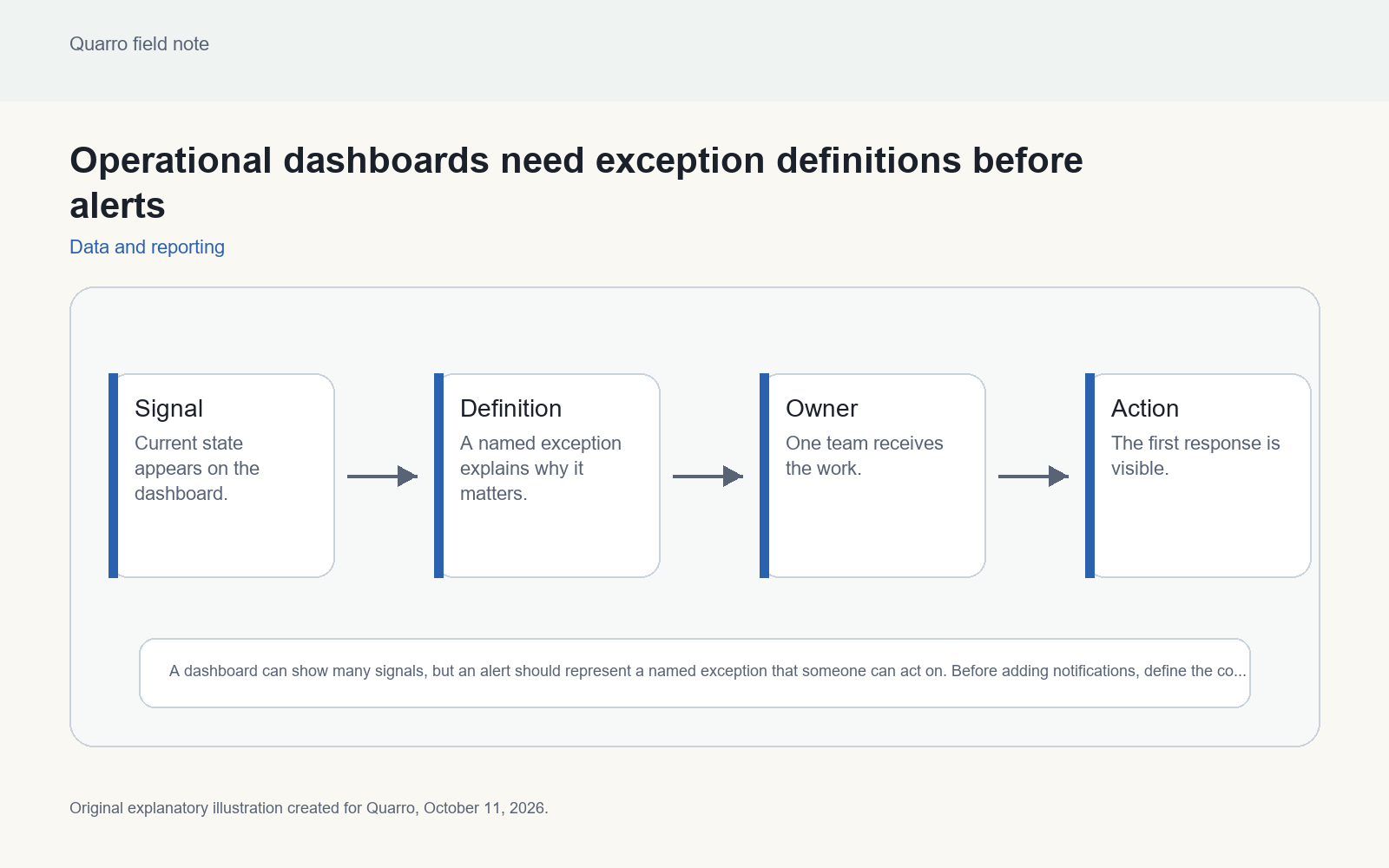
Operational dashboards need exception definitions before alerts
Define actionable exceptions, owners and thresholds before turning dashboard colors into alerts that interrupt staff.
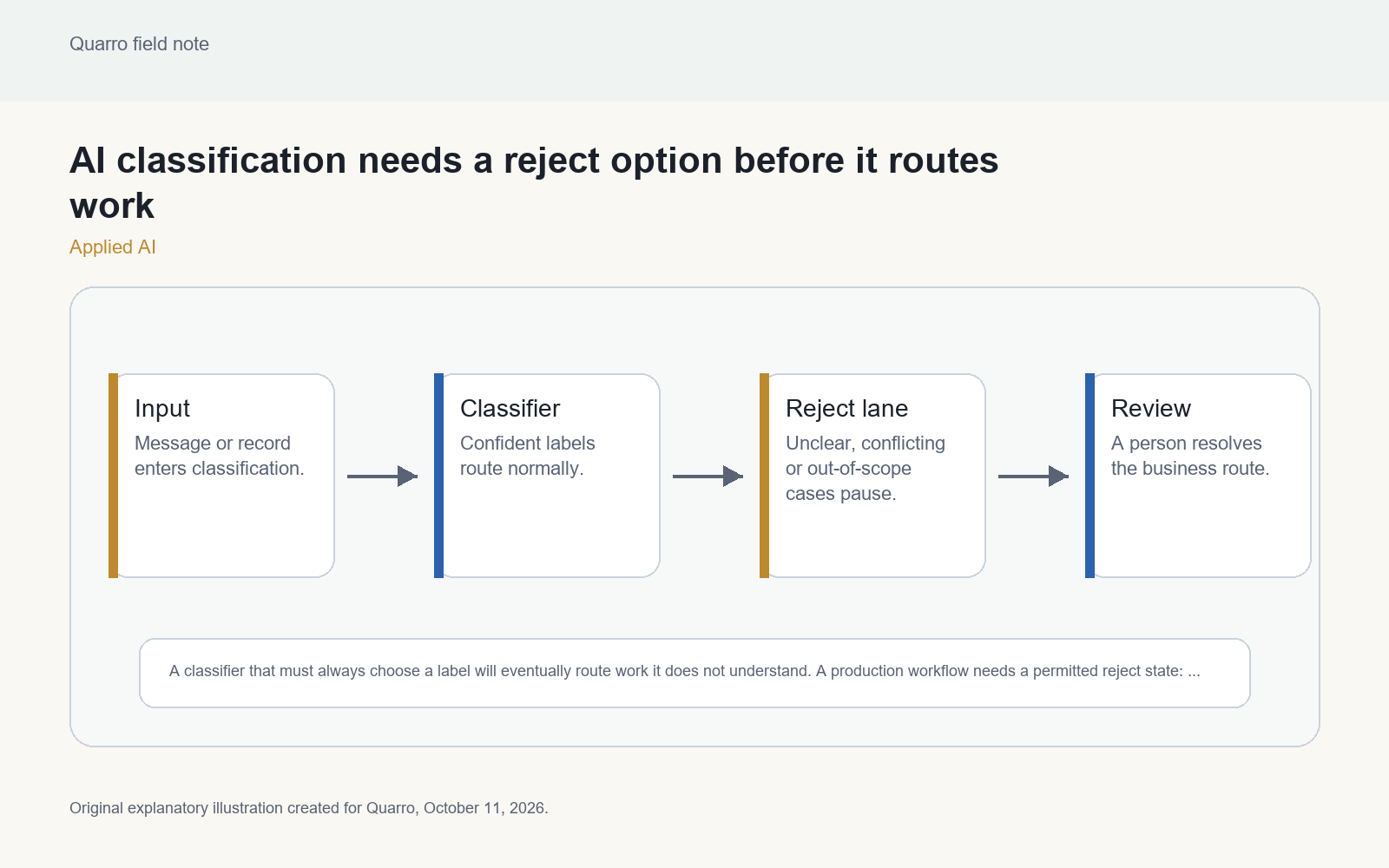
AI classification needs a reject option before it routes work
Design AI classification workflows with uncertainty handling, review queues and reject states before automated routing affects real work.
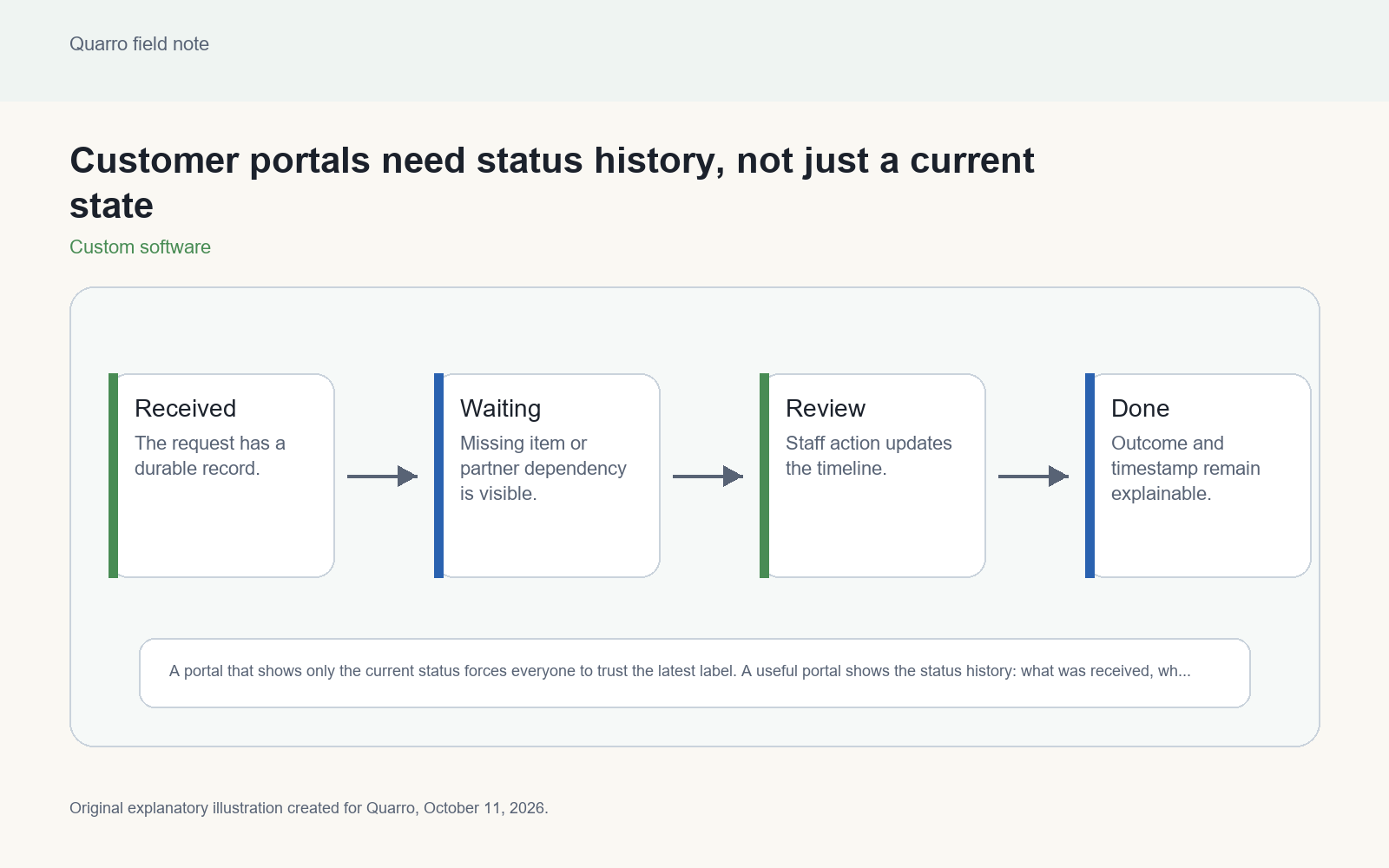
Customer portals need status history, not just a current state
Give customers and staff a reliable status timeline so asynchronous work can be understood, supported and corrected.
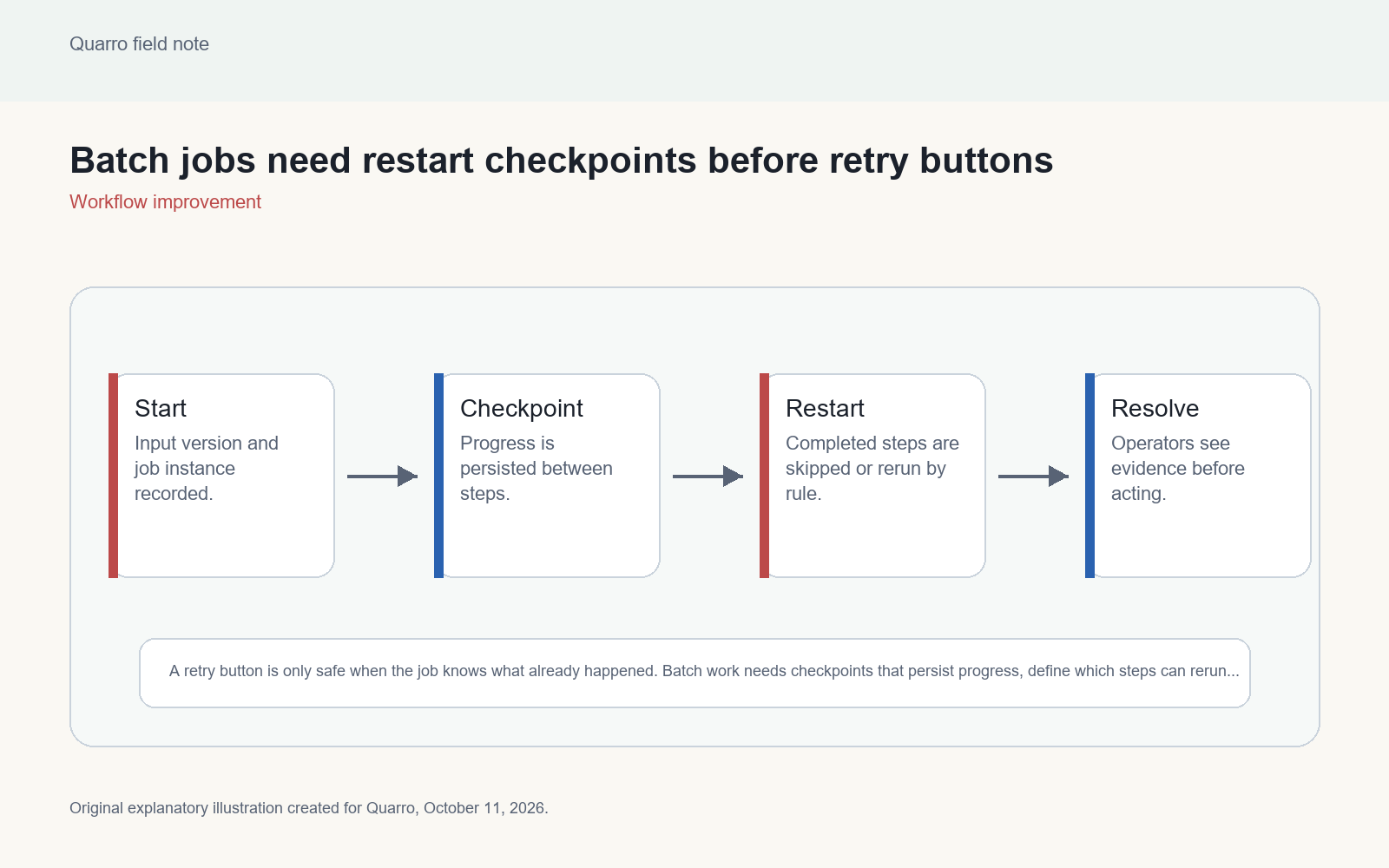
Batch jobs need restart checkpoints before retry buttons
Build batch jobs with persisted checkpoints, step ownership and restart rules before offering operators a retry button.
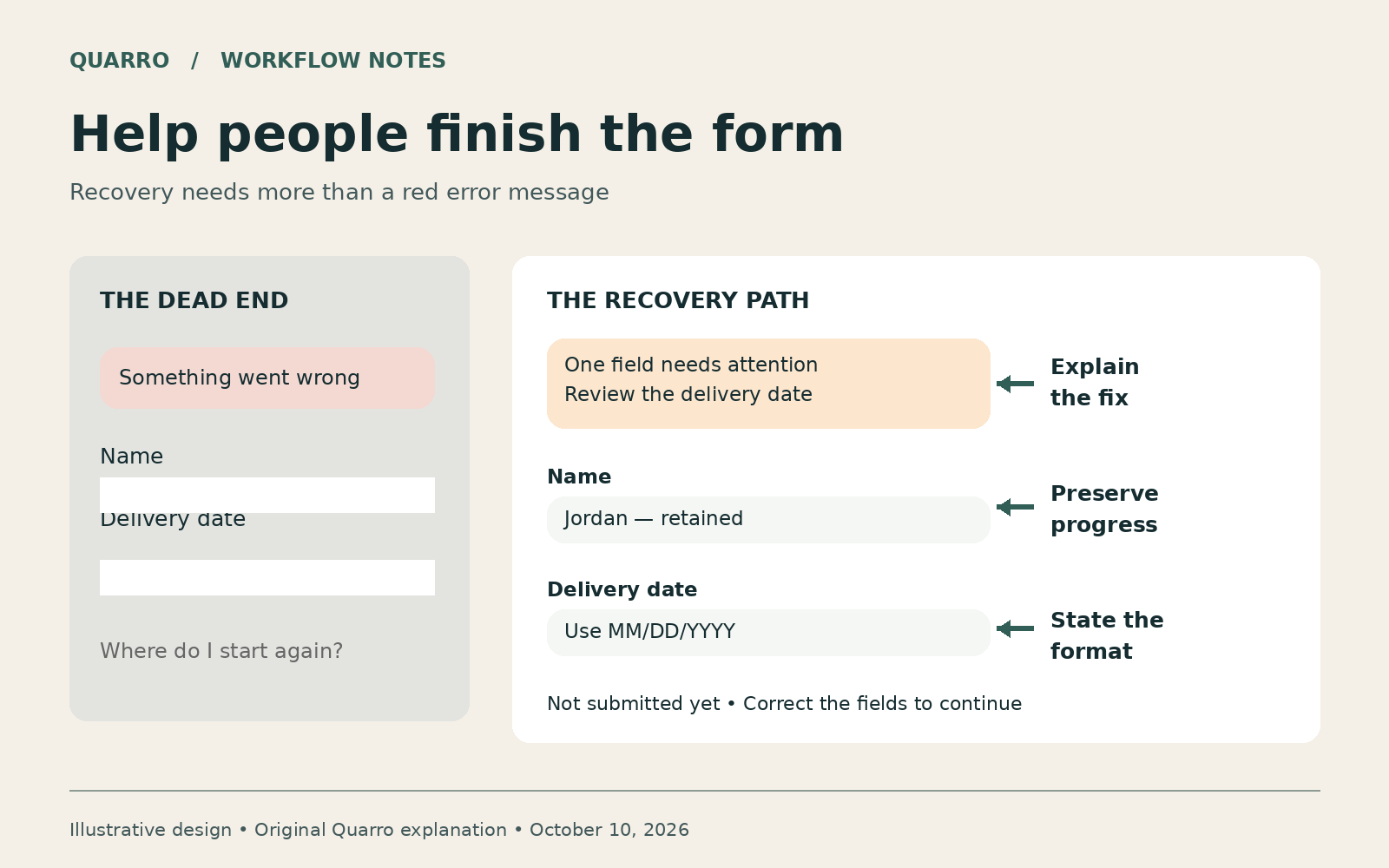
A failed web form should tell people how to finish
Design accessible form errors that preserve progress, explain the fix and confirm what actually happened after submission.
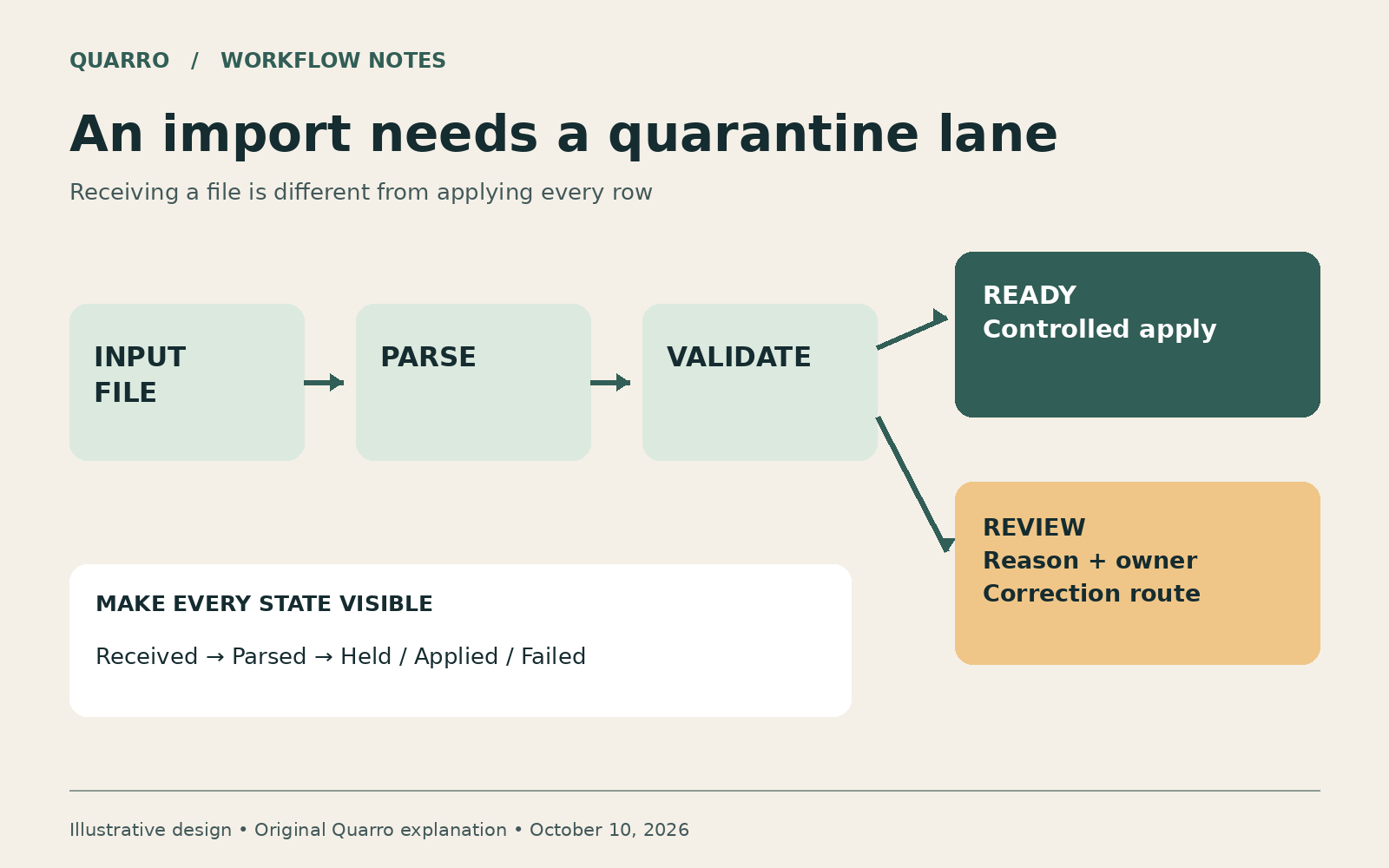
CSV imports need a quarantine lane before they update your CRM
Separate file parsing, business validation and record updates so a convenient CRM import does not hide rejected or ambiguous rows.
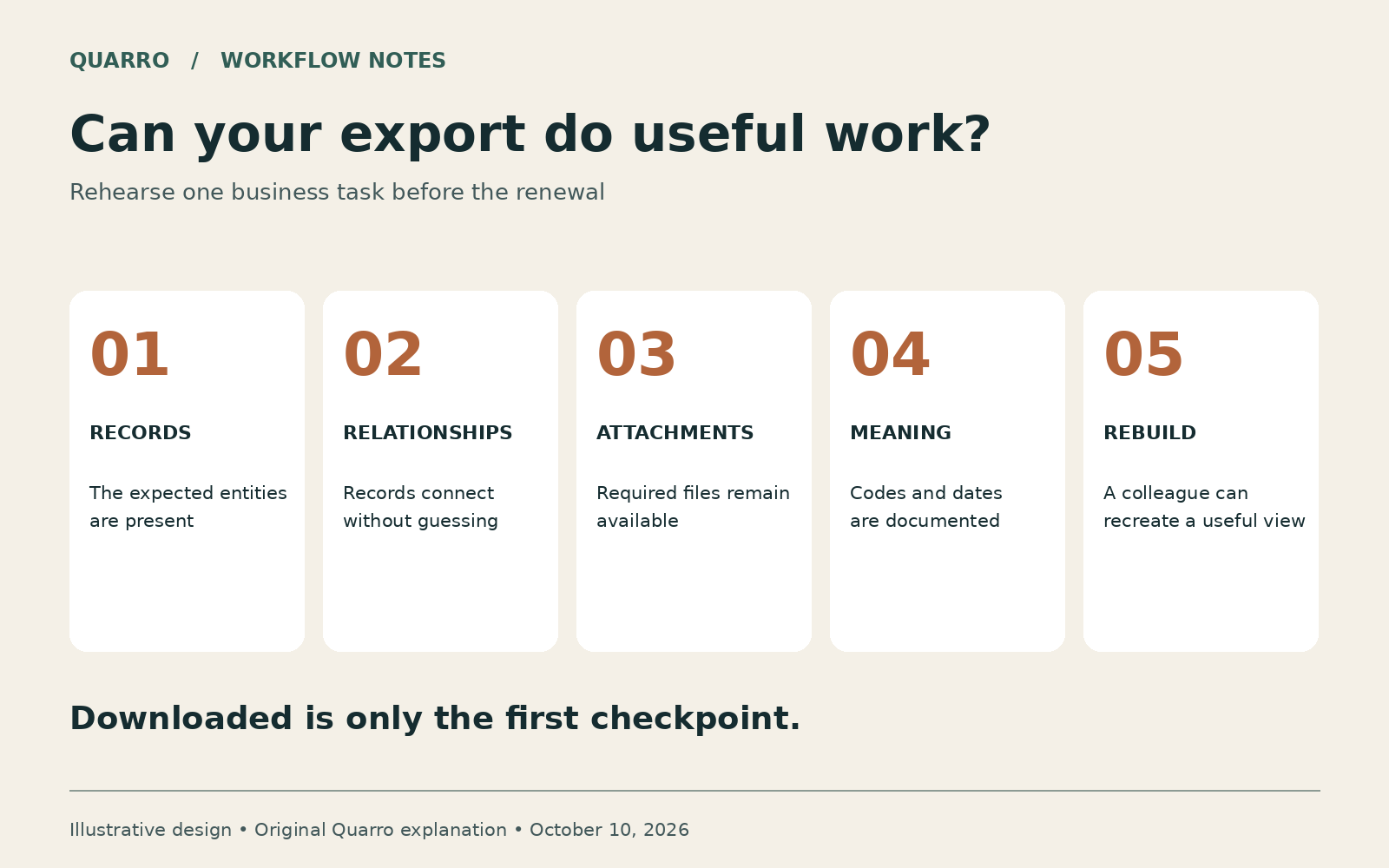
Before renewing business software, rehearse the data export
Check whether exported records retain identifiers, relationships, attachments and usable meaning before a software renewal becomes an exit problem.
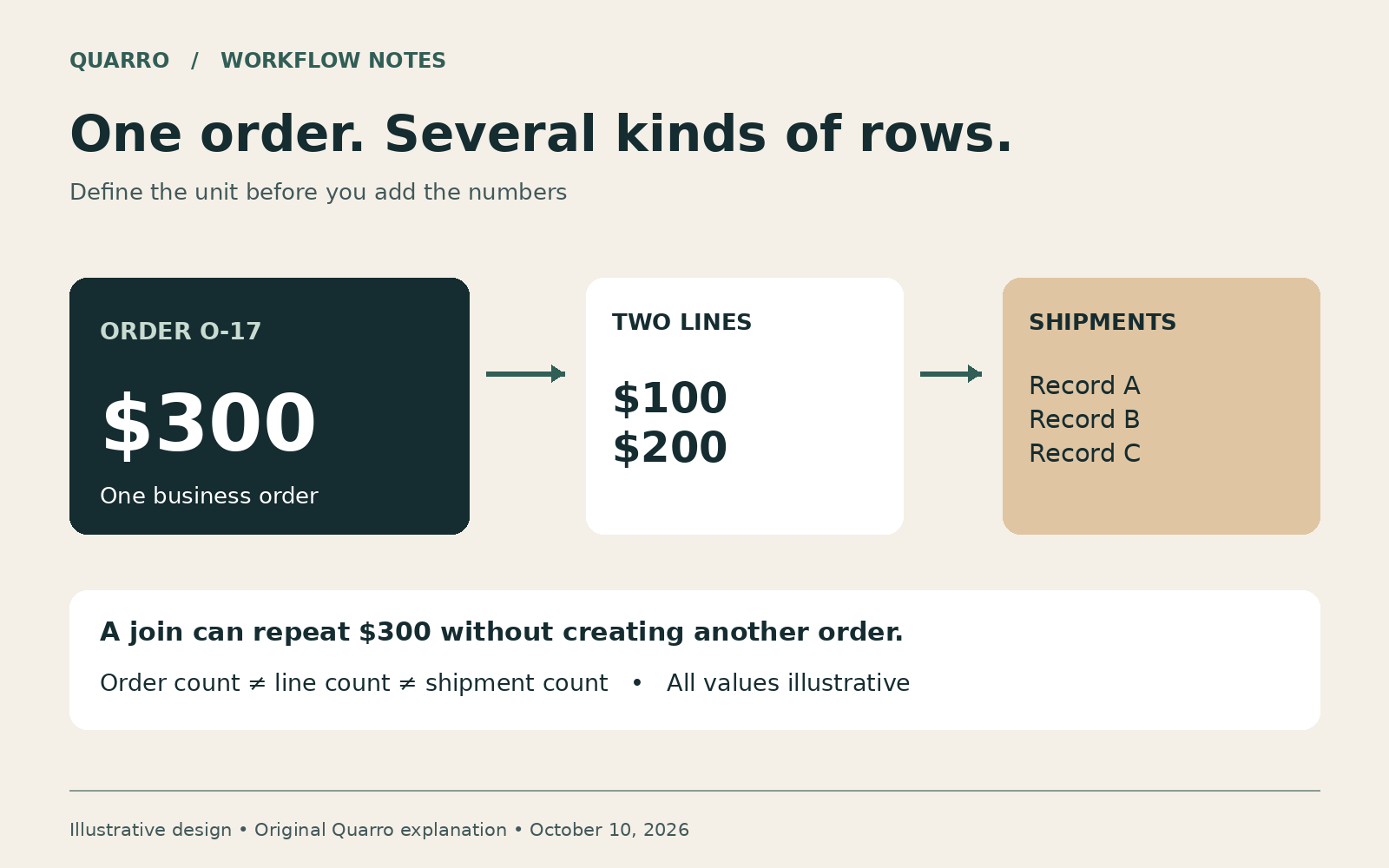
Why sales dashboards disagree: orders, lines and shipments count different things
Define what one row represents before joining sales data, and prevent line or shipment records from multiplying order totals.
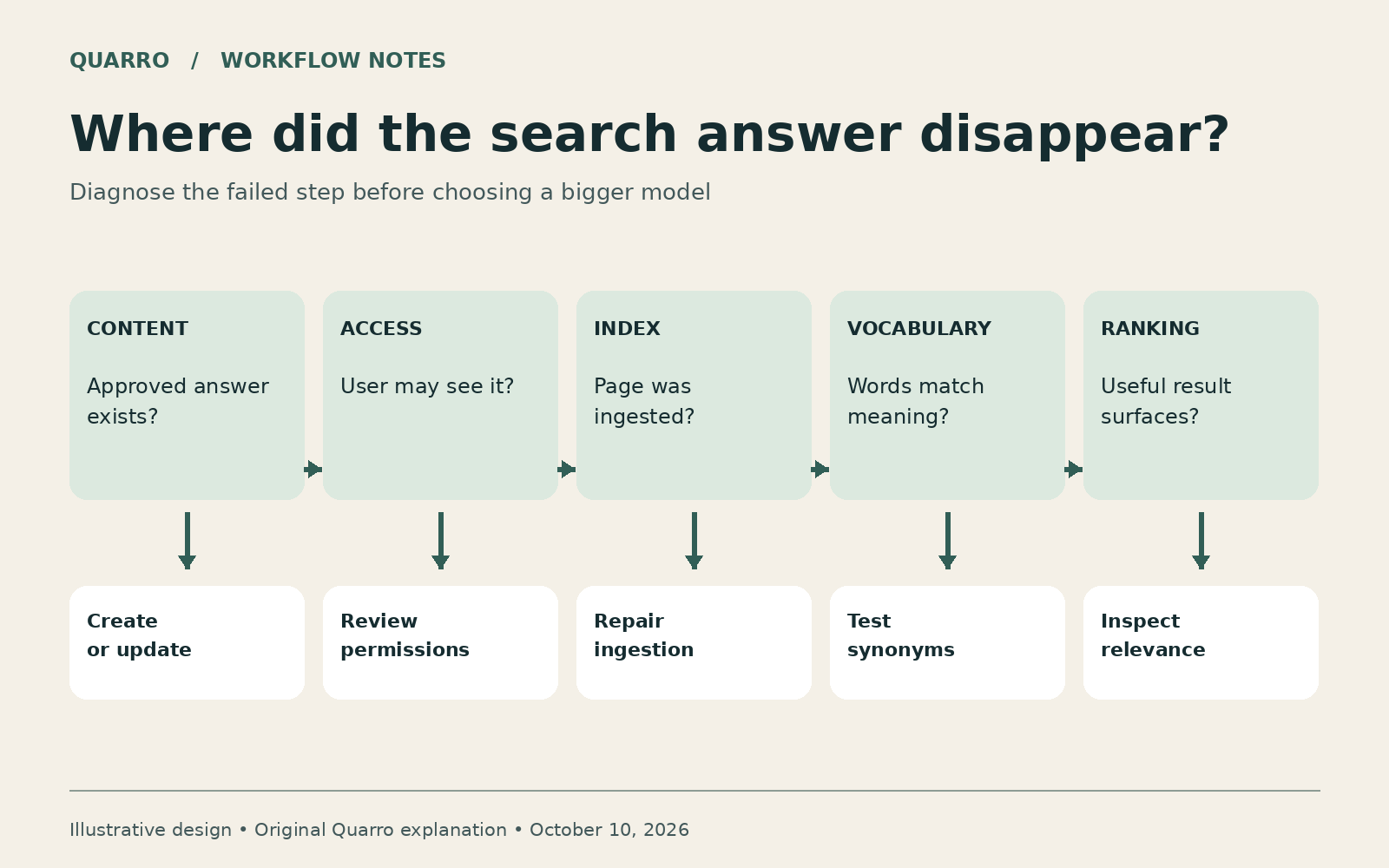
An empty intranet search result needs a diagnosis, not a bigger chatbot
Separate missing content, vocabulary mismatches, access restrictions and ranking failures before changing your internal search system.
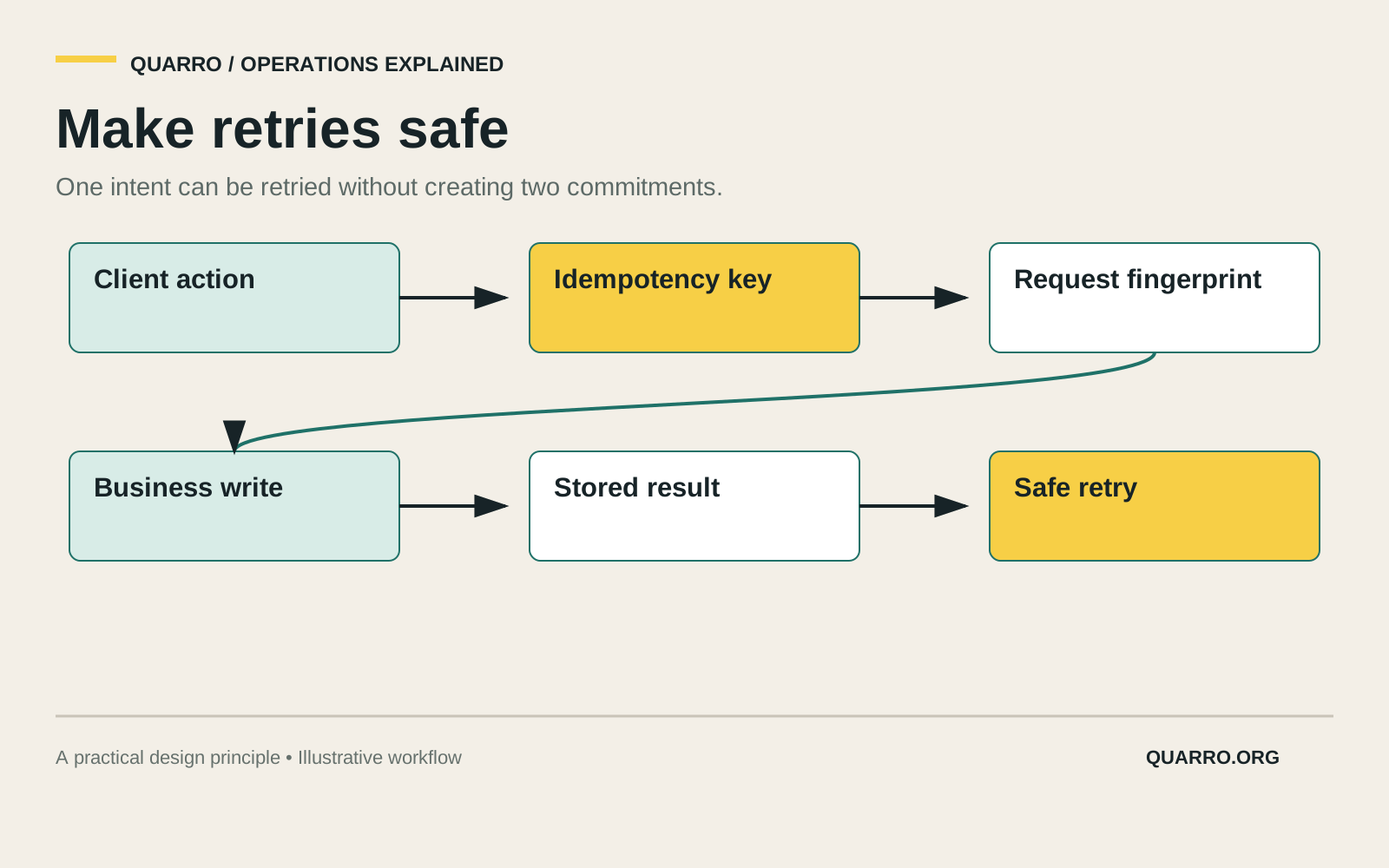
Retryable requests need idempotency records before they feel safe
Use idempotency records to make retries safe, reviewable and supportable when requests create orders, tickets, jobs or other business commitments.
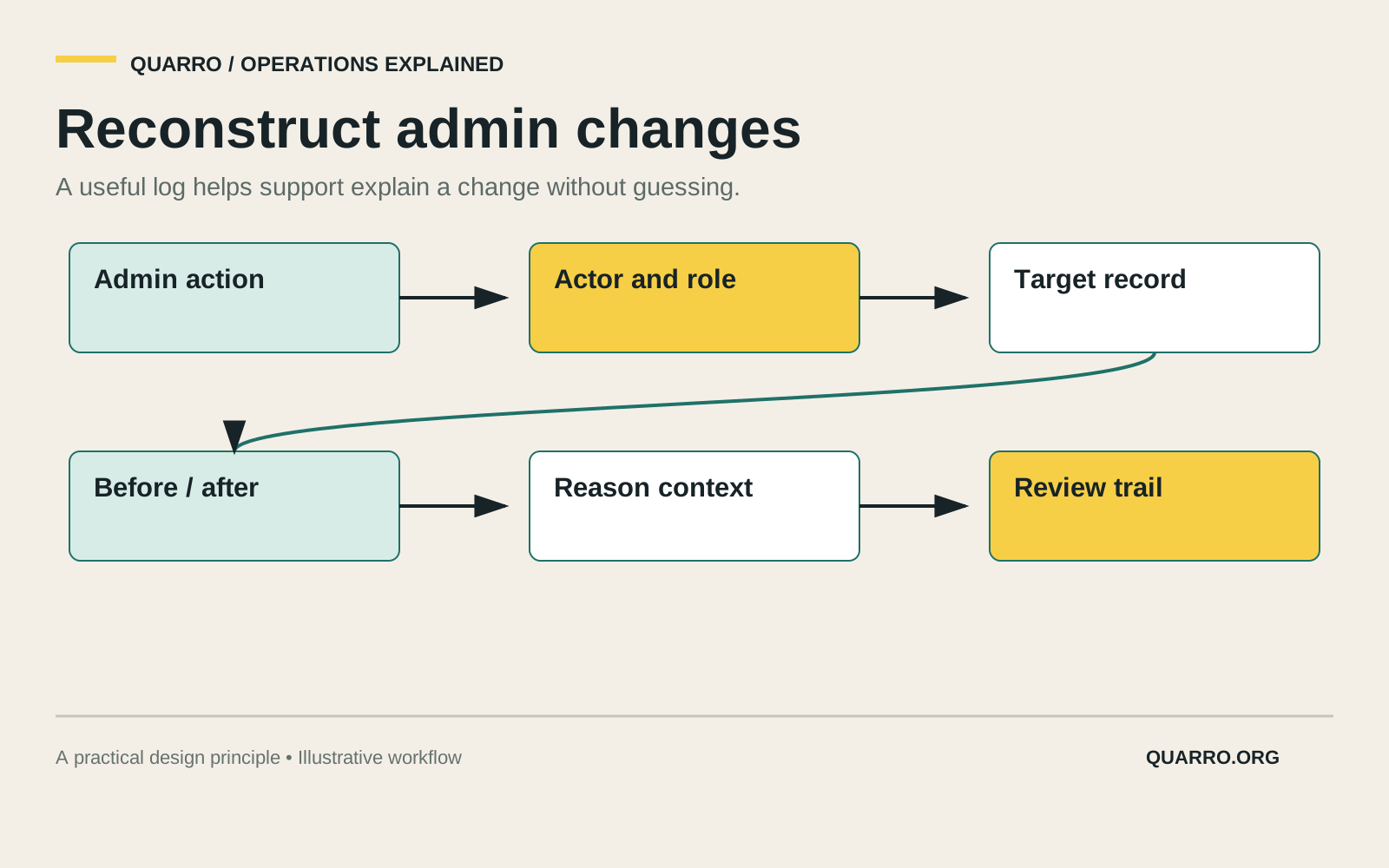
Admin actions need audit trails people can reconstruct
Design admin audit trails around who changed what, when, from where, why it mattered and how support can reconstruct the operational sequence later.
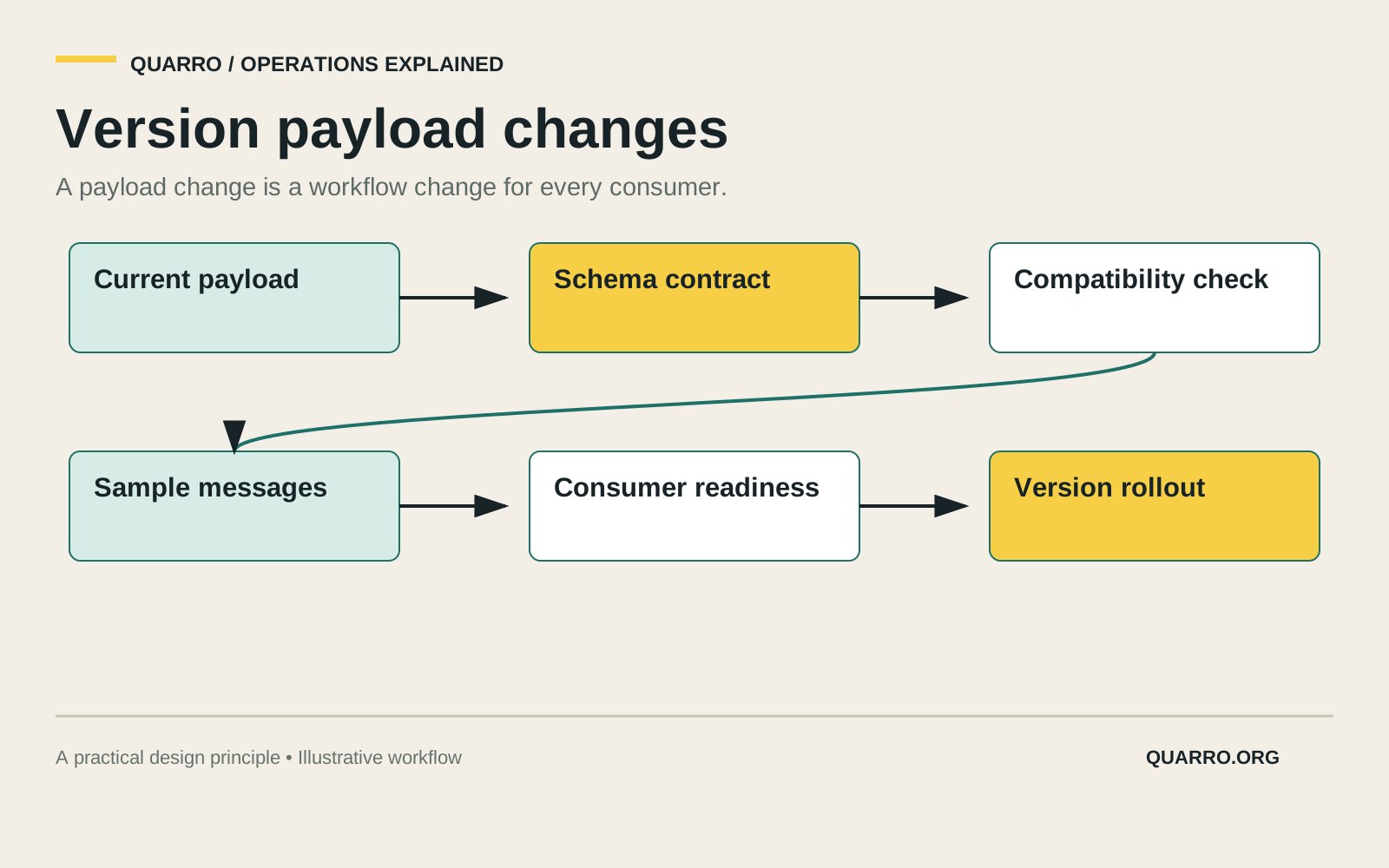
Payload changes need schema versioning before partners break
Version integration payloads with examples, compatibility rules, staged rollout and monitoring so internal or partner consumers can adapt safely.
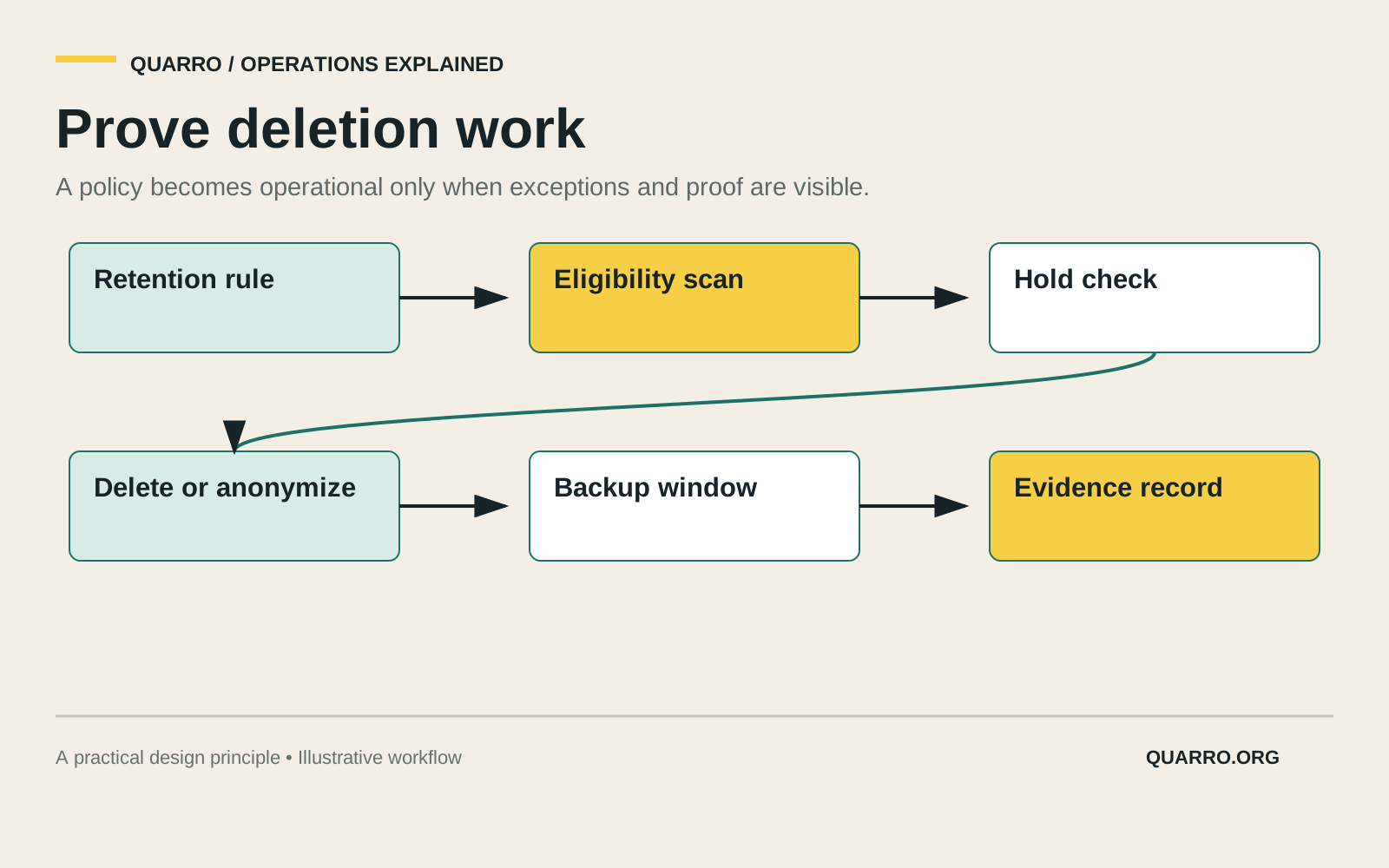
Data retention needs deletion evidence, not just a policy
Turn retention rules into reviewable deletion workflows with scope checks, holds, evidence records and recovery-aware verification.
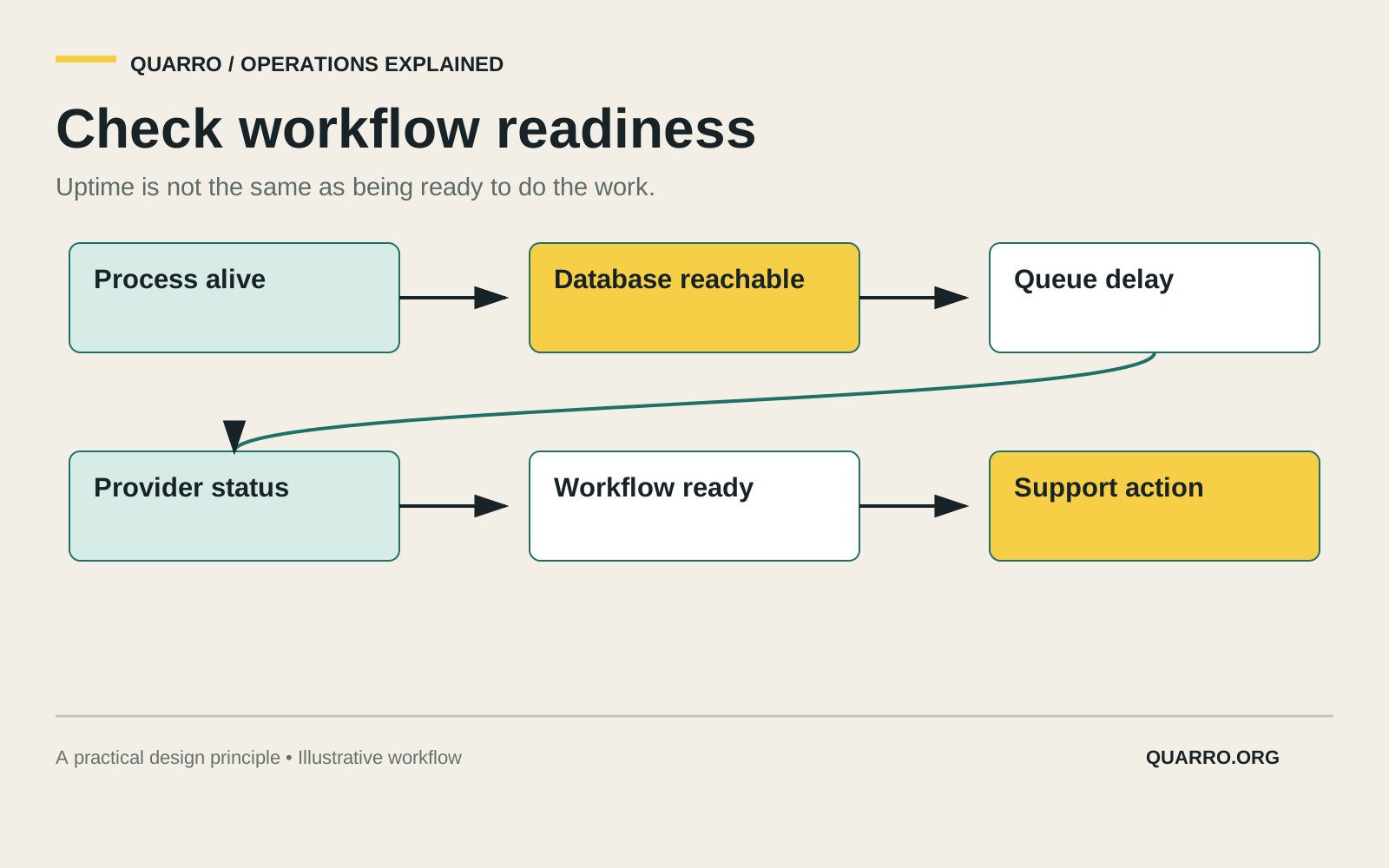
Health checks need business dependency signals
Design health checks that distinguish process uptime from workflow readiness, dependency failure and business-impacting degraded states.
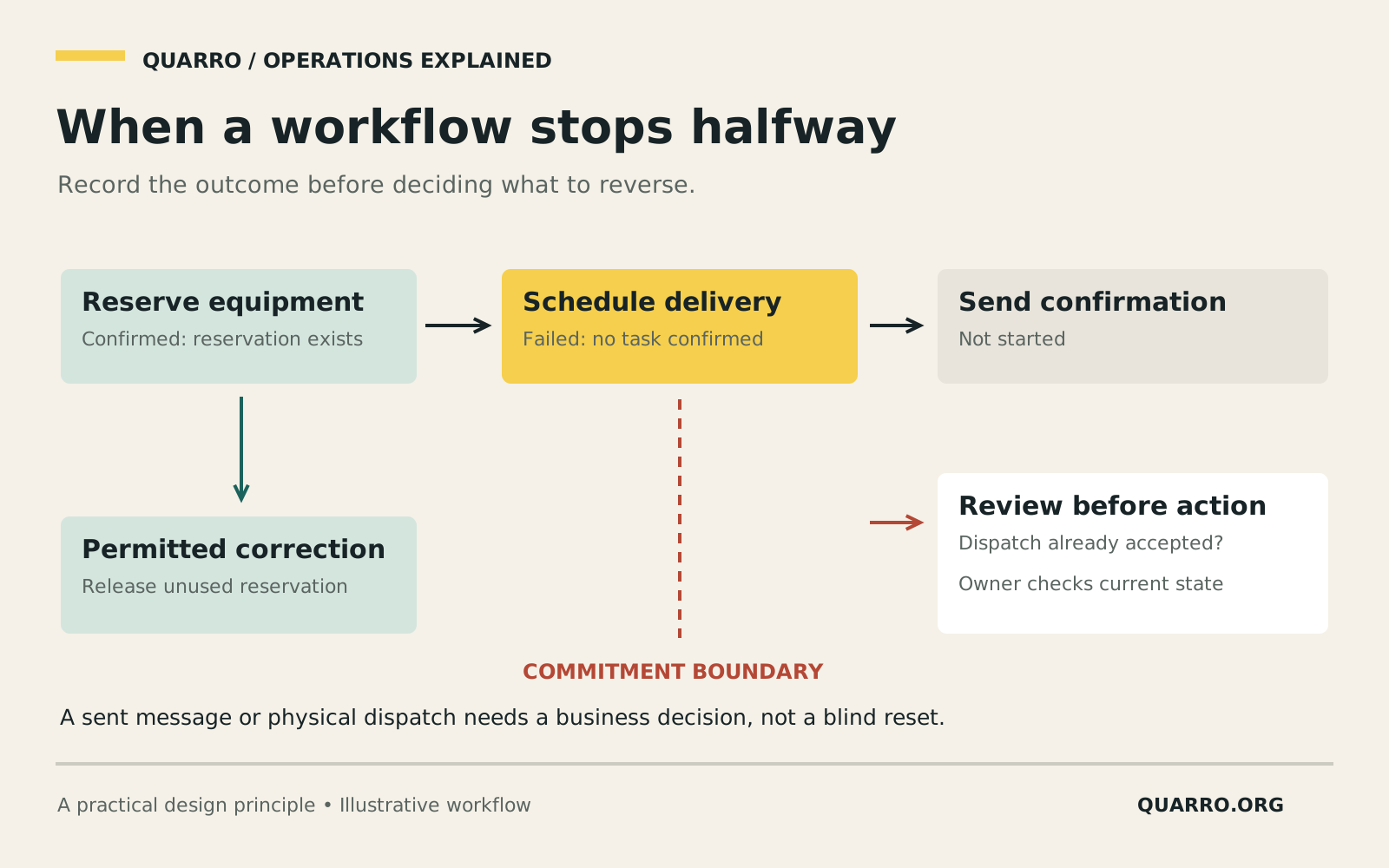
Cross-system workflows need a recovery decision at every step
Plan partial-failure recovery for business workflows with step records, compensating actions, protected commitments and an owned exception path.
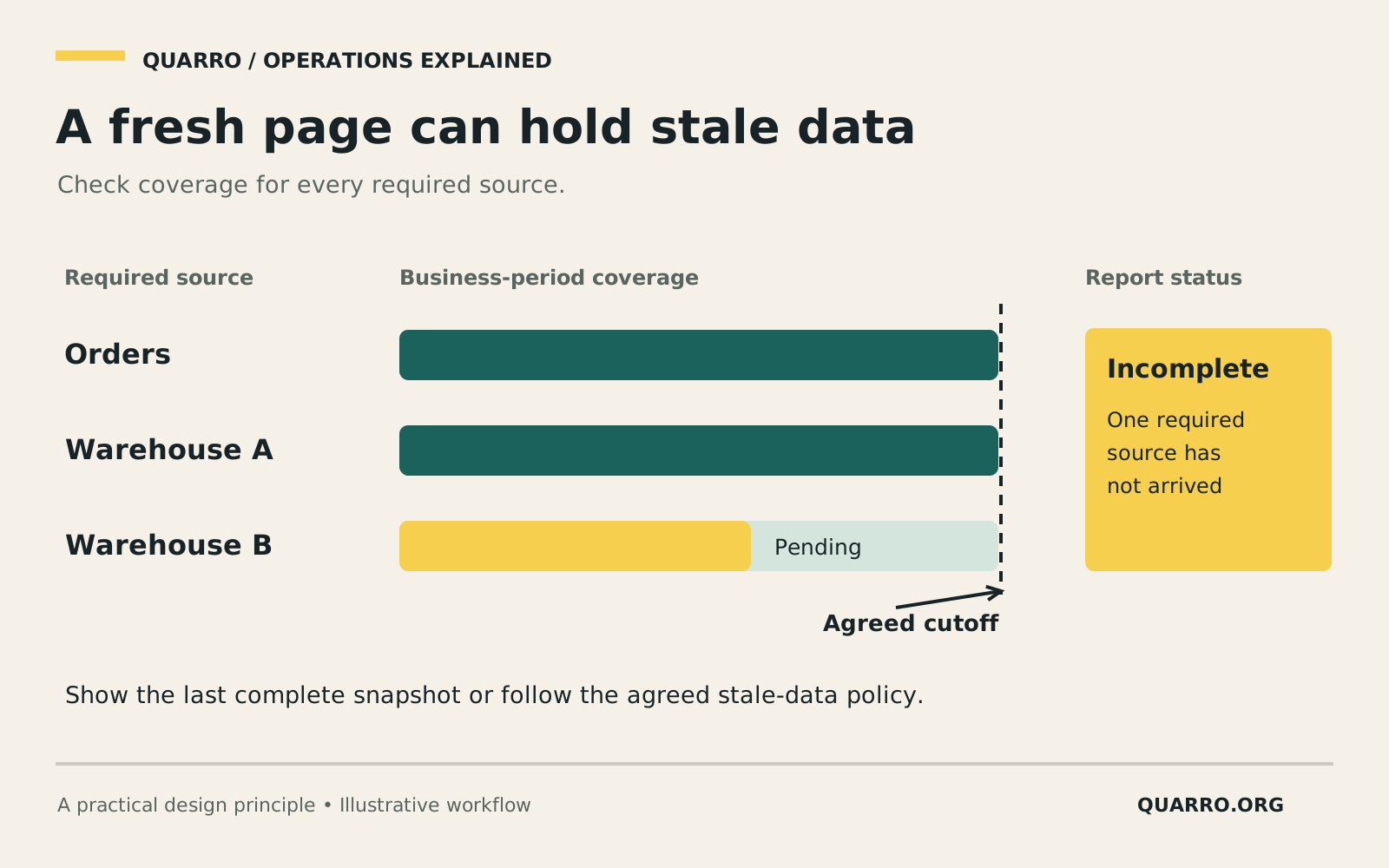
Reporting data needs a freshness contract
Make reporting freshness visible with source coverage, business-time cutoffs, delay thresholds and explicit behavior when required data is late.
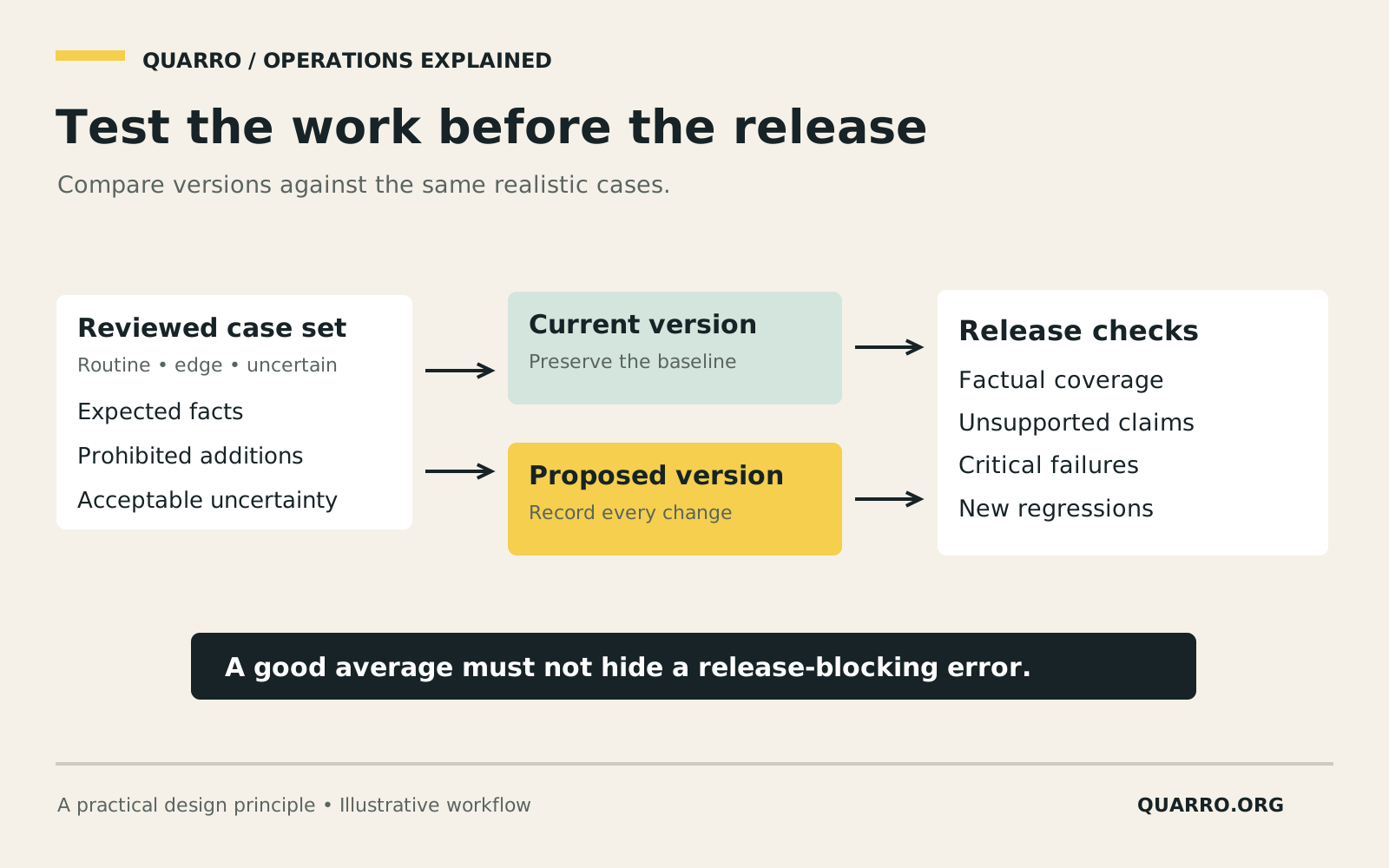
AI workflows need release evaluation cases
Turn AI workflow demos into release decisions with representative cases, task-specific scoring, critical-failure gates and a repeatable comparison record.
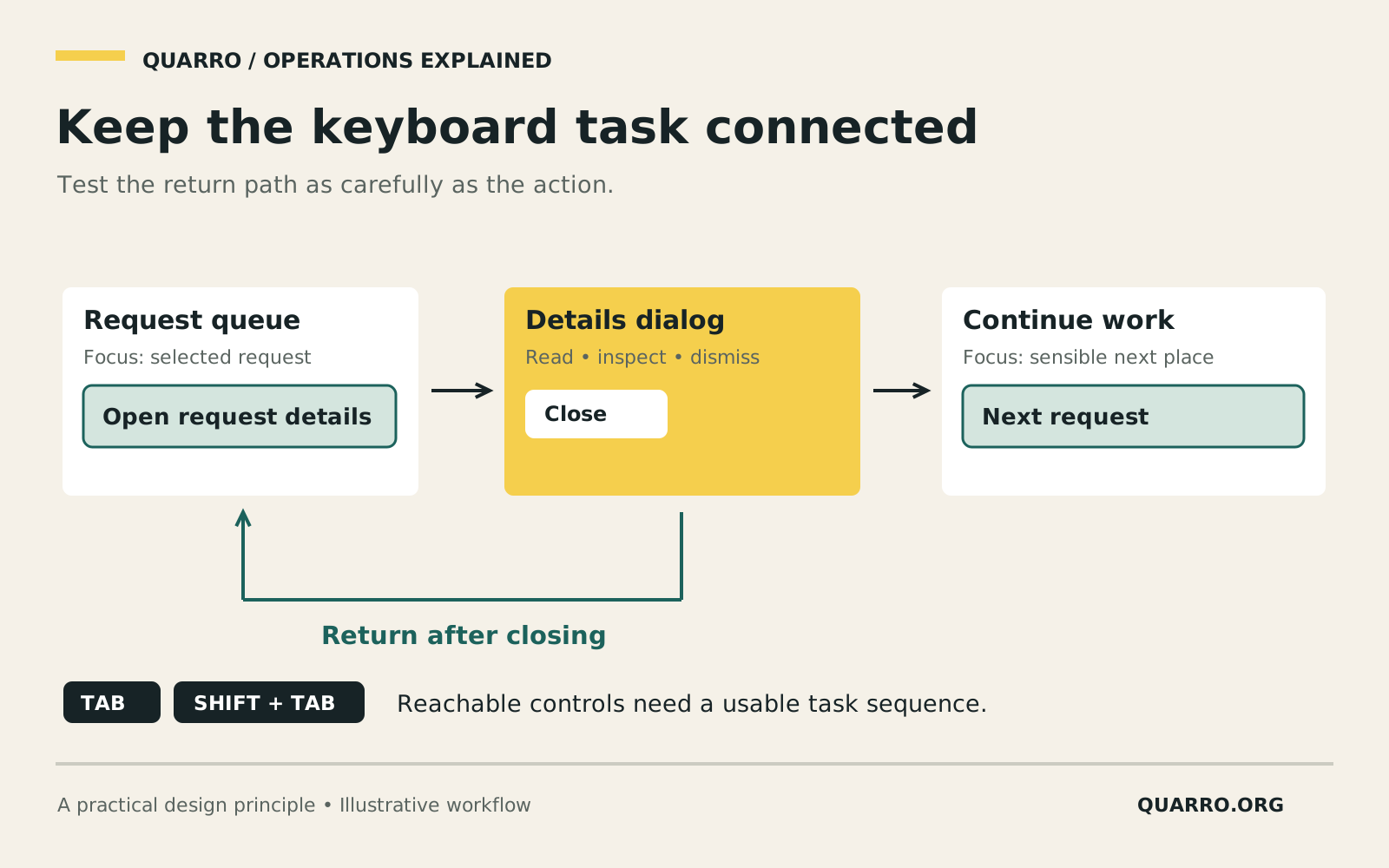
Internal tools need complete keyboard task paths
Test internal software through complete keyboard-operated tasks, including focus order, dialogs, repeated records and recovery from interrupted work.
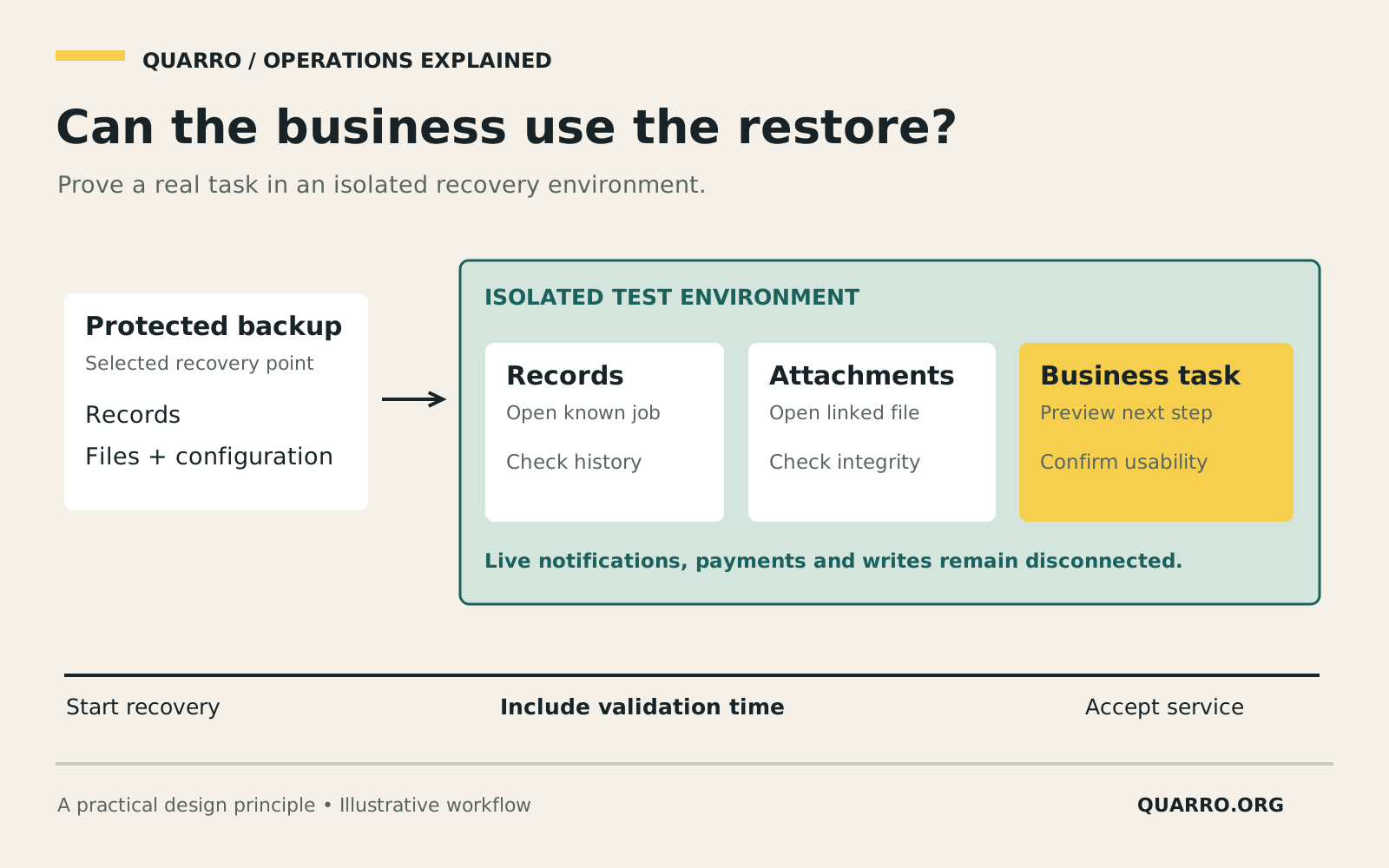
Backup restore drills need business checks
Verify recovery with a safe restore drill that tests usable records, application dependencies, elapsed recovery time and the return to normal operations.
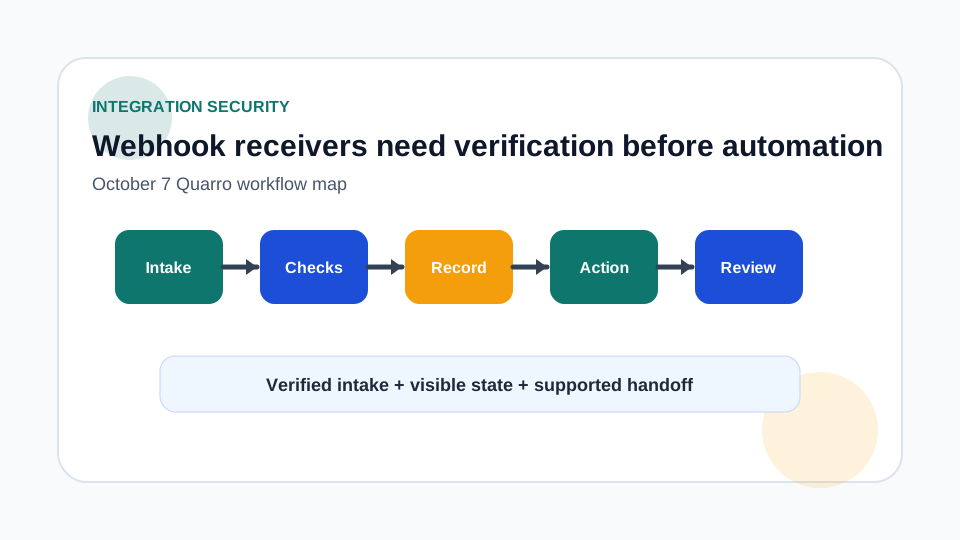
Webhook receivers need verification before automation
Design webhook intake around signature verification, raw payload storage, replay protection and reviewable failures before events update business systems.
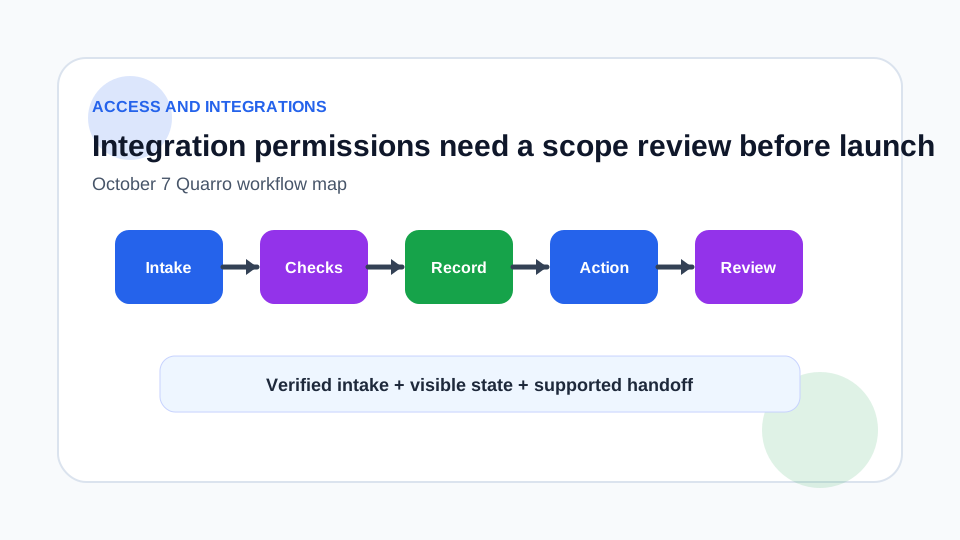
Integration permissions need a scope review before launch
Review delegated and application permissions, consent ownership and least-privilege alternatives before connecting operational tools.
Feature flags need cleanup owners before rollout
Use feature flags to reduce rollout risk, but assign owners, defaults, evaluation reasons and retirement dates so flags do not become permanent complexity.
Trace IDs make integration support less mysterious
Carry a trace identifier across forms, jobs, APIs and notifications so support can reconstruct what happened without guessing from disconnected logs.
File upload intake needs controls before convenience
Treat upload features as controlled intake workflows with type allowlists, generated filenames, size limits, authorization and post-upload review.
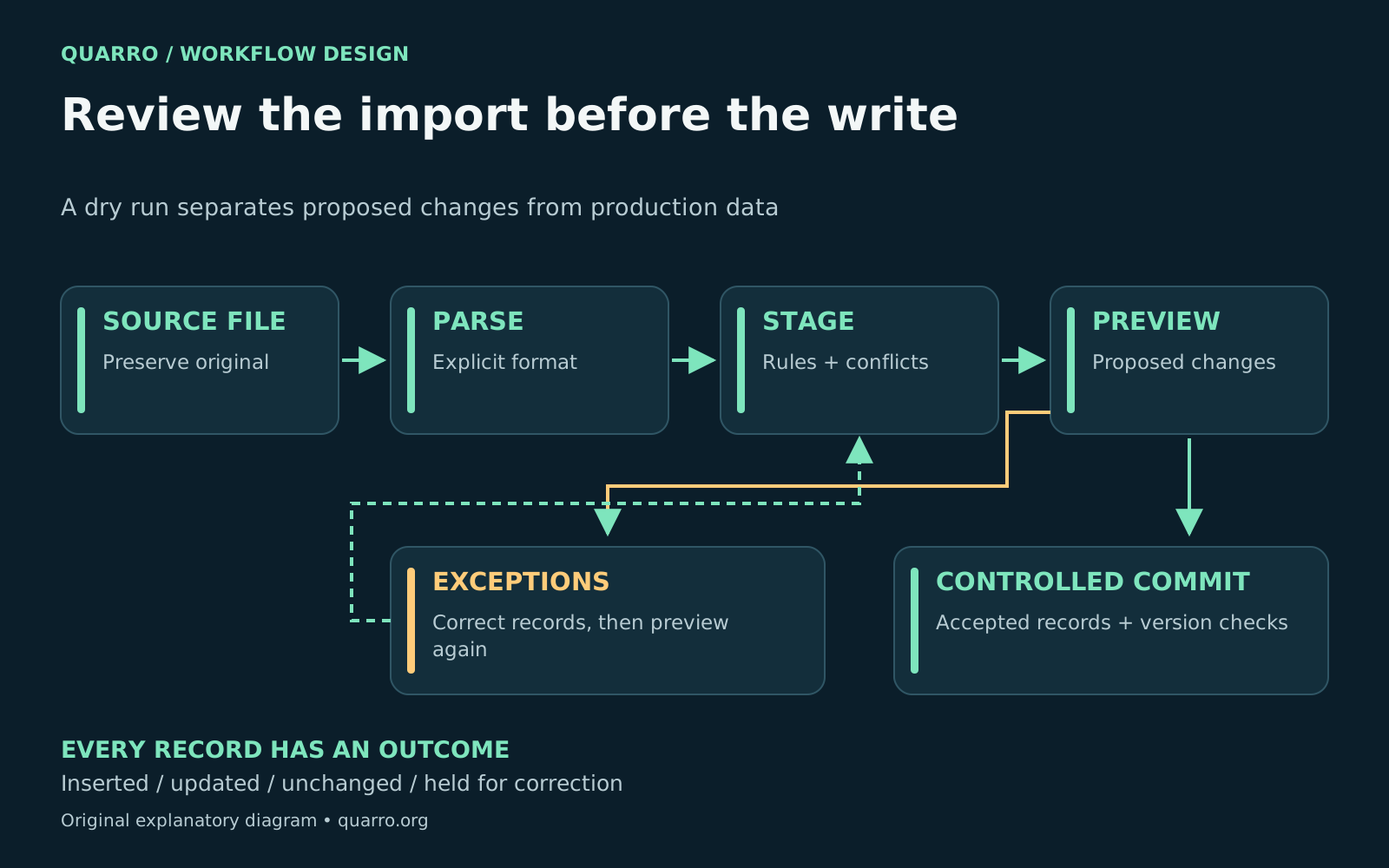
CSV imports: build a dry run before changing business data
Design a CSV import workflow with staging, row-level errors, change previews and reconciliation before updating CRM, ERP or reporting data.
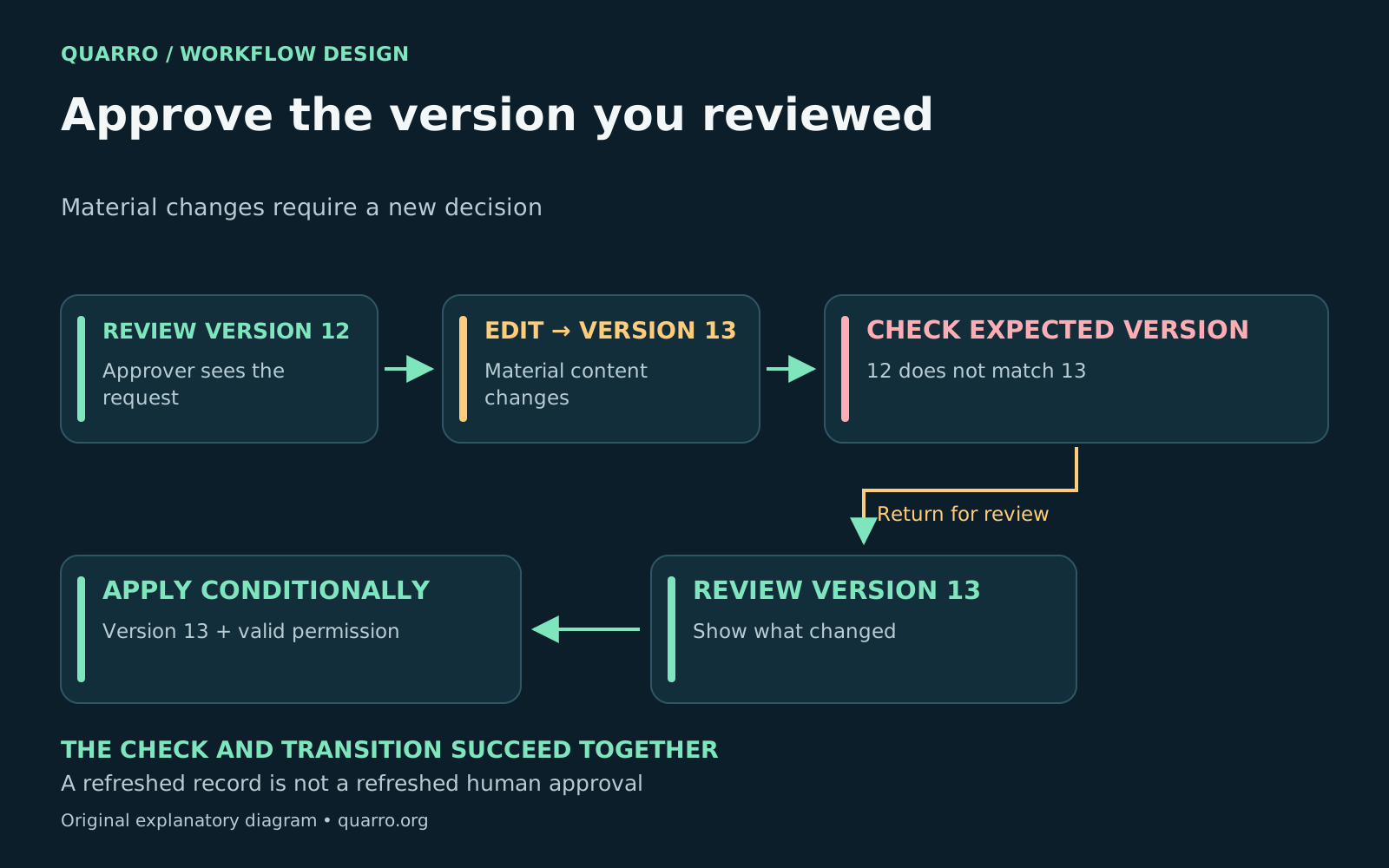
Approval workflows: bind each decision to the version reviewed
Prevent stale approvals with version checks, explicit state transitions and a review trail that records exactly which business changes were approved.
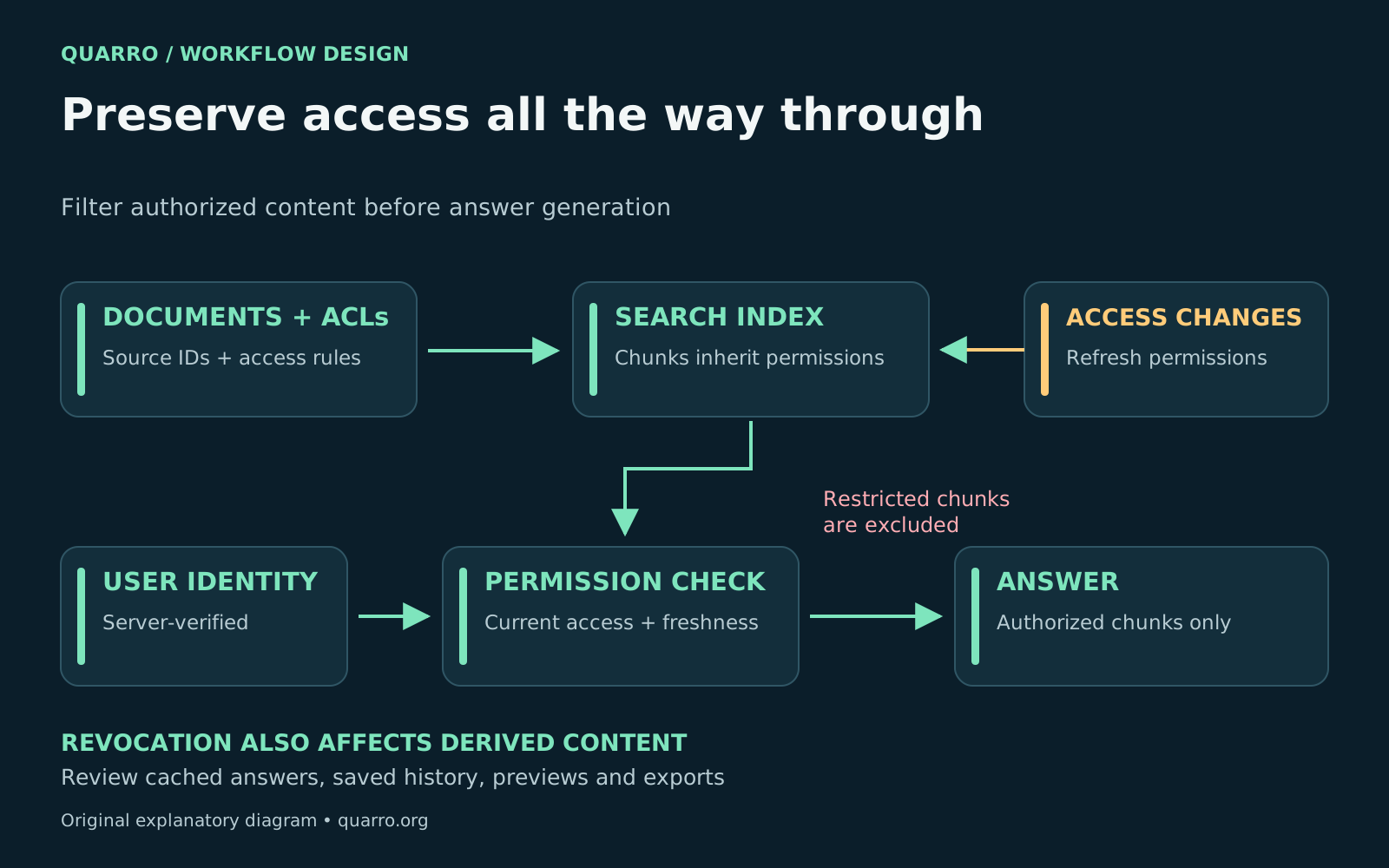
AI search: preserve document permissions from source to answer
Plan permission-aware enterprise search with authenticated retrieval, synchronized access metadata, revocation handling and tests for derived answers.
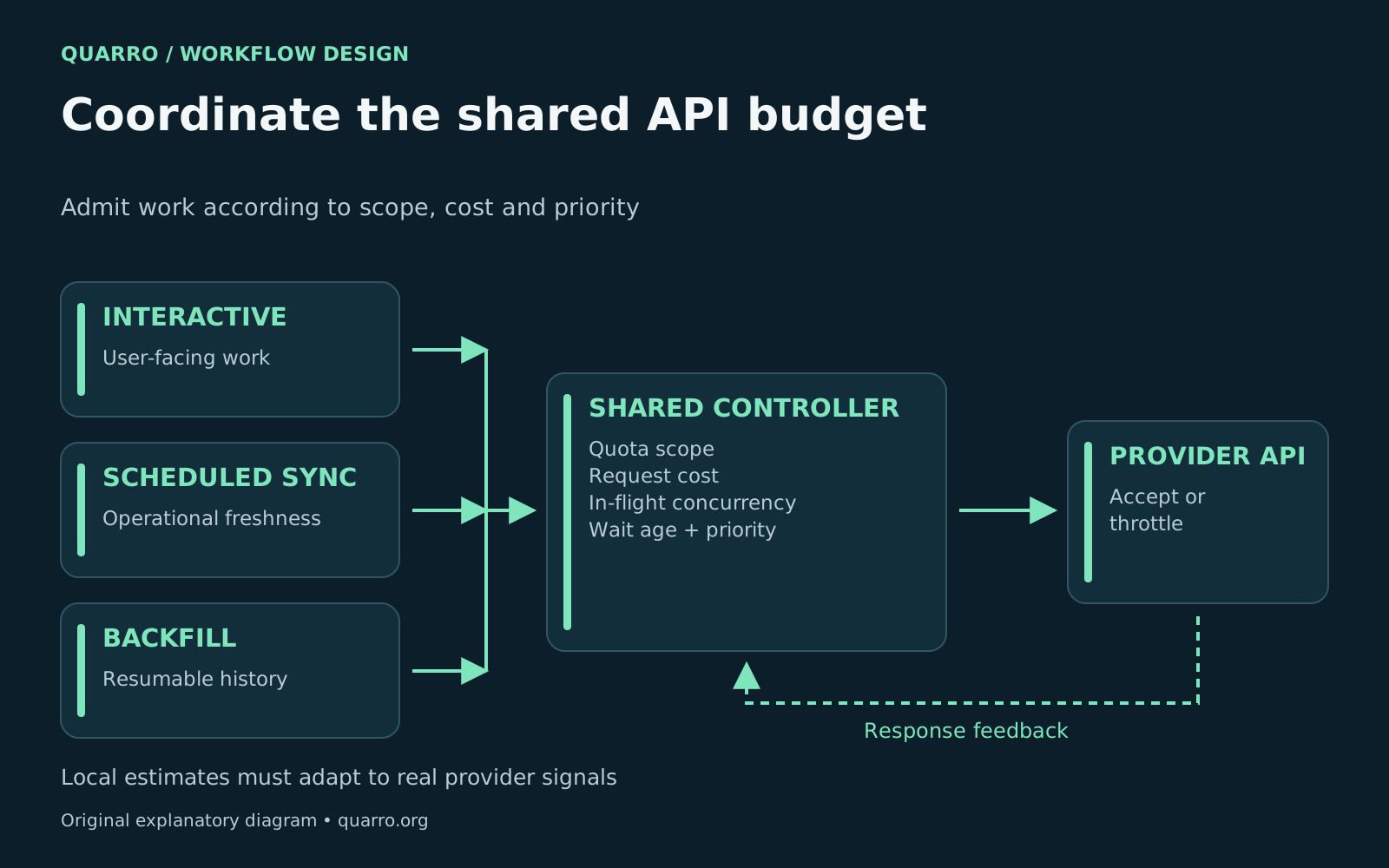
API integrations: share the quota budget across every worker
Coordinate API usage across background jobs and interactive workflows with scoped budgets, request-cost awareness and provider-specific backoff.
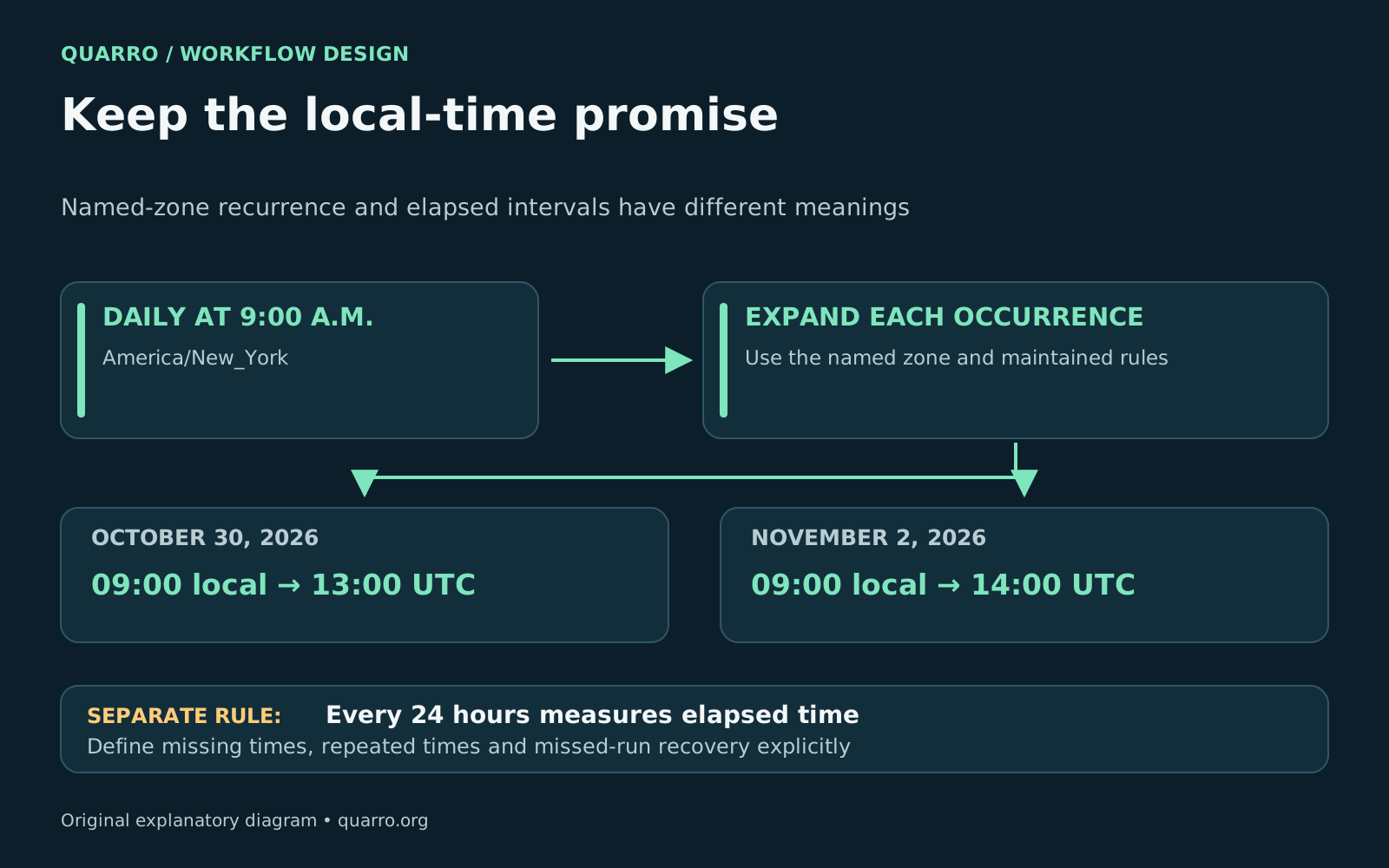
Recurring workflows: preserve local time across clock changes
Design recurring automations with named time zones, explicit daylight-saving rules, previewed occurrences and a separate policy for missed runs.
Spreadsheet Reporting Needs Stable Anchors Before More Automation
Keep operational spreadsheets useful by anchoring rows, columns, and report sections before scripts depend on fragile cell positions.
Change Sync Needs Checkpoints, Not Constant Polling
Design integrations around durable checkpoints, replay handling, and resync plans instead of repeatedly rereading entire systems.
AI Extraction Needs a Schema Contract Before It Feeds Operations
Use structured outputs, validation, and exception handling so AI-assisted extraction can support workflows without silently inventing fields.
Inventory Sync Needs Location Truth, Not One Big Stock Number
Design ecommerce inventory integrations around item-location quantities, reservations, exception handling, and reconciliation views.
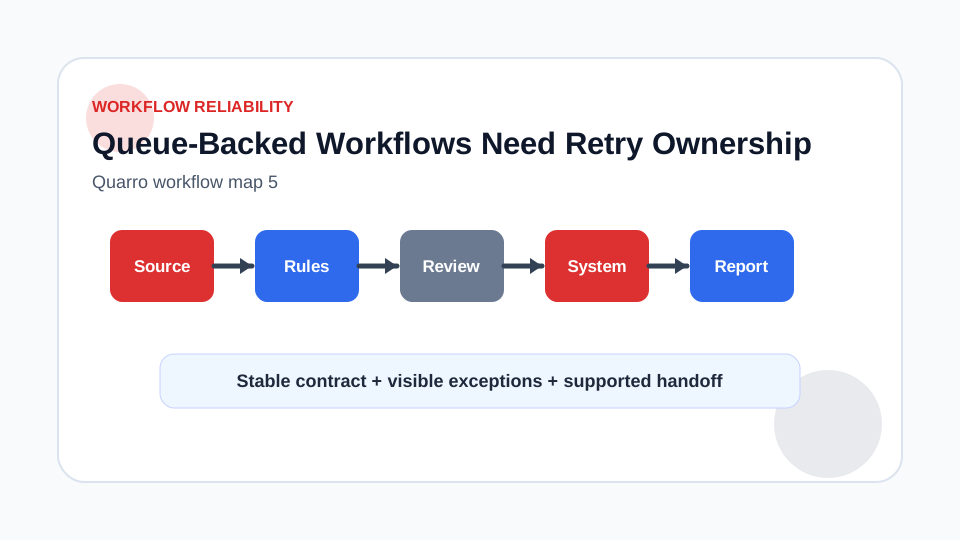
Queue-Backed Workflows Need Retry Ownership
Use queues to make background work safer, but pair batching and retries with idempotency, support views, and clear ownership of stuck messages.
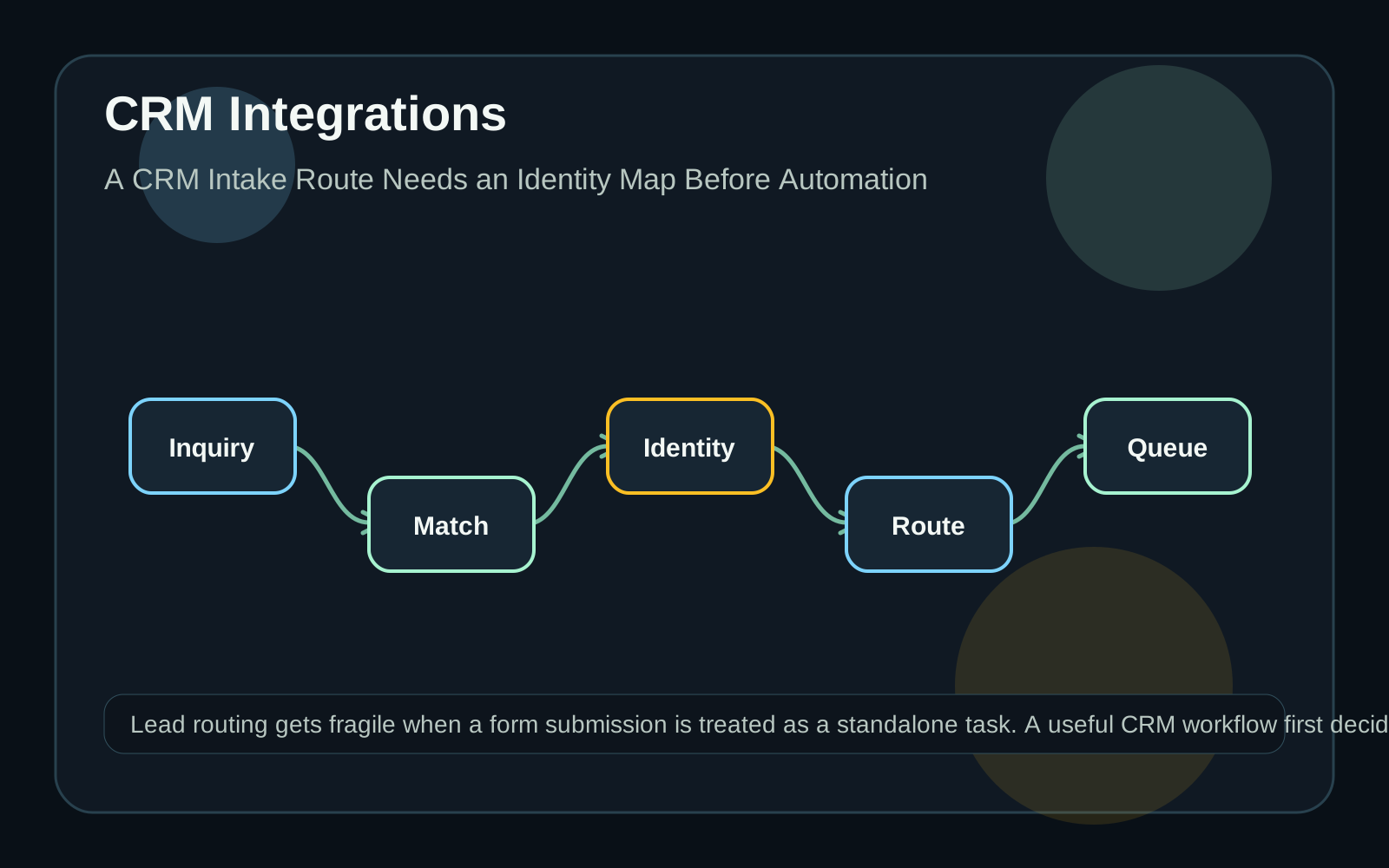
A CRM Intake Route Needs an Identity Map Before Automation
Design sales intake so leads, contacts, companies, and deals are linked deliberately before routing rules start moving work.
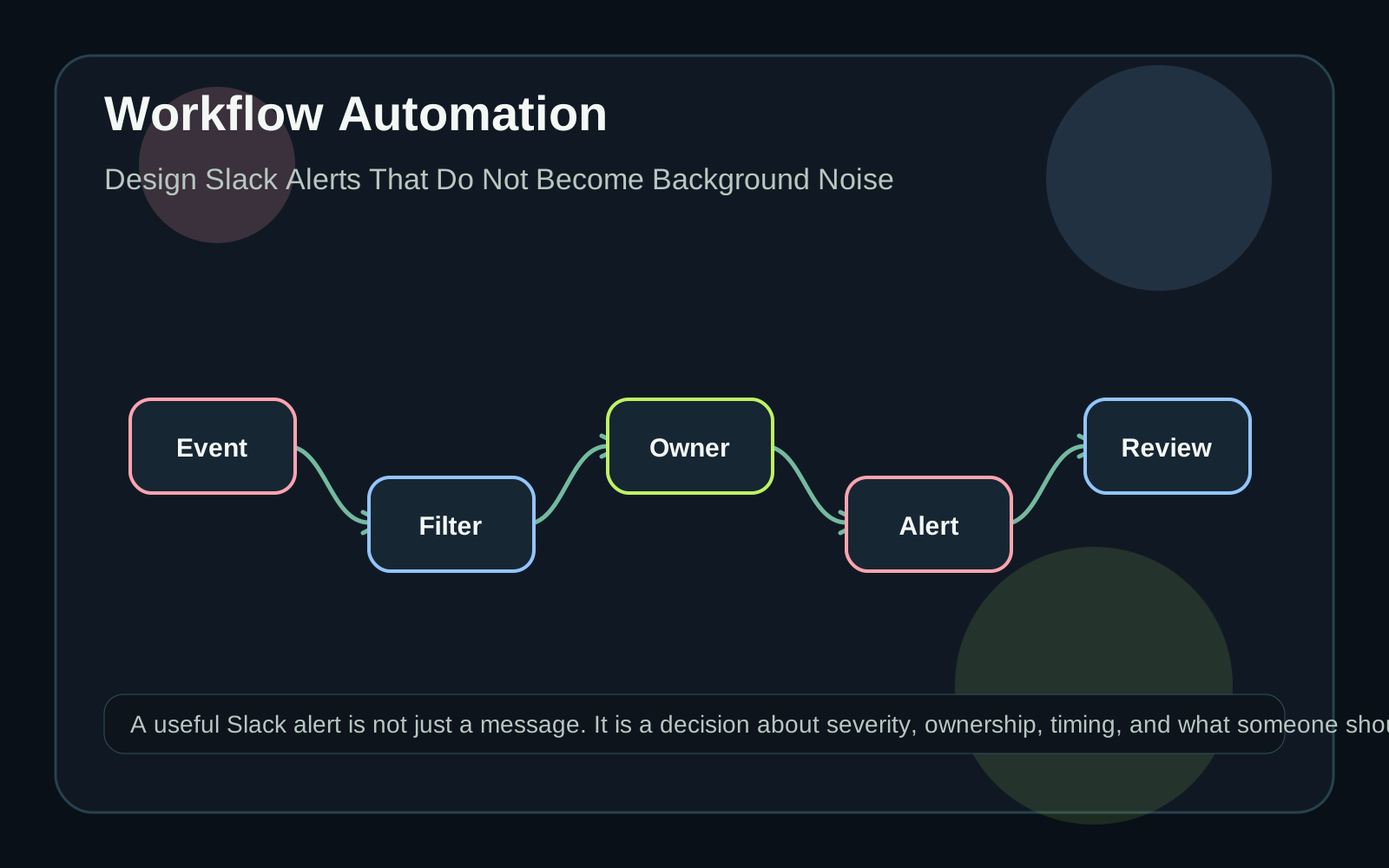
Design Slack Alerts That Do Not Become Background Noise
Turn operational alerts into reviewable, rate-aware notifications with clear owners, escalation rules, and a path back to the source record.
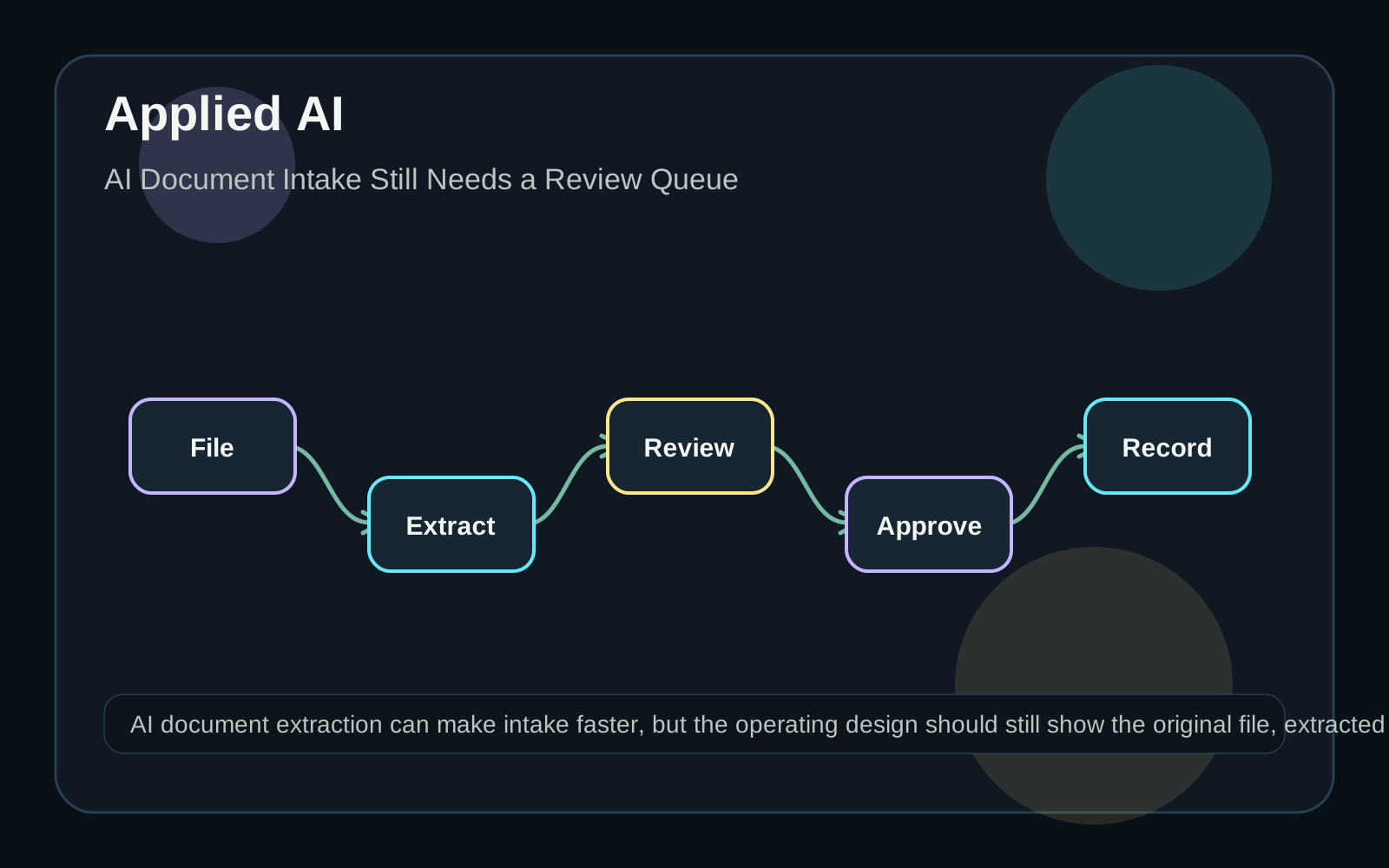
AI Document Intake Still Needs a Review Queue
Use document extraction to reduce retyping, while preserving source files, confidence signals, exceptions, and human approval for important fields.
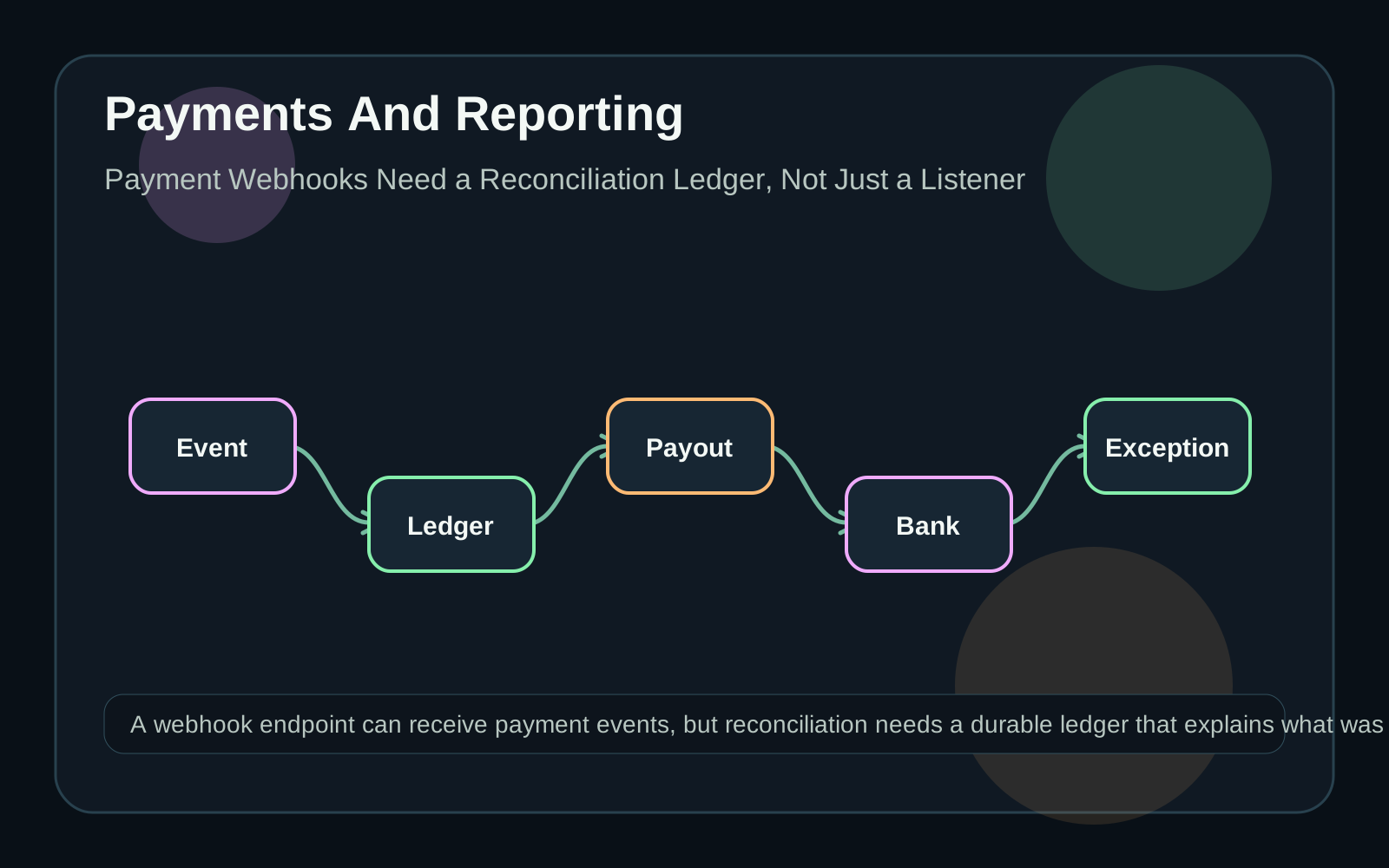
Payment Webhooks Need a Reconciliation Ledger, Not Just a Listener
Build payment event workflows around durable event storage, idempotent processing, bank reconciliation, and visible exception handling.
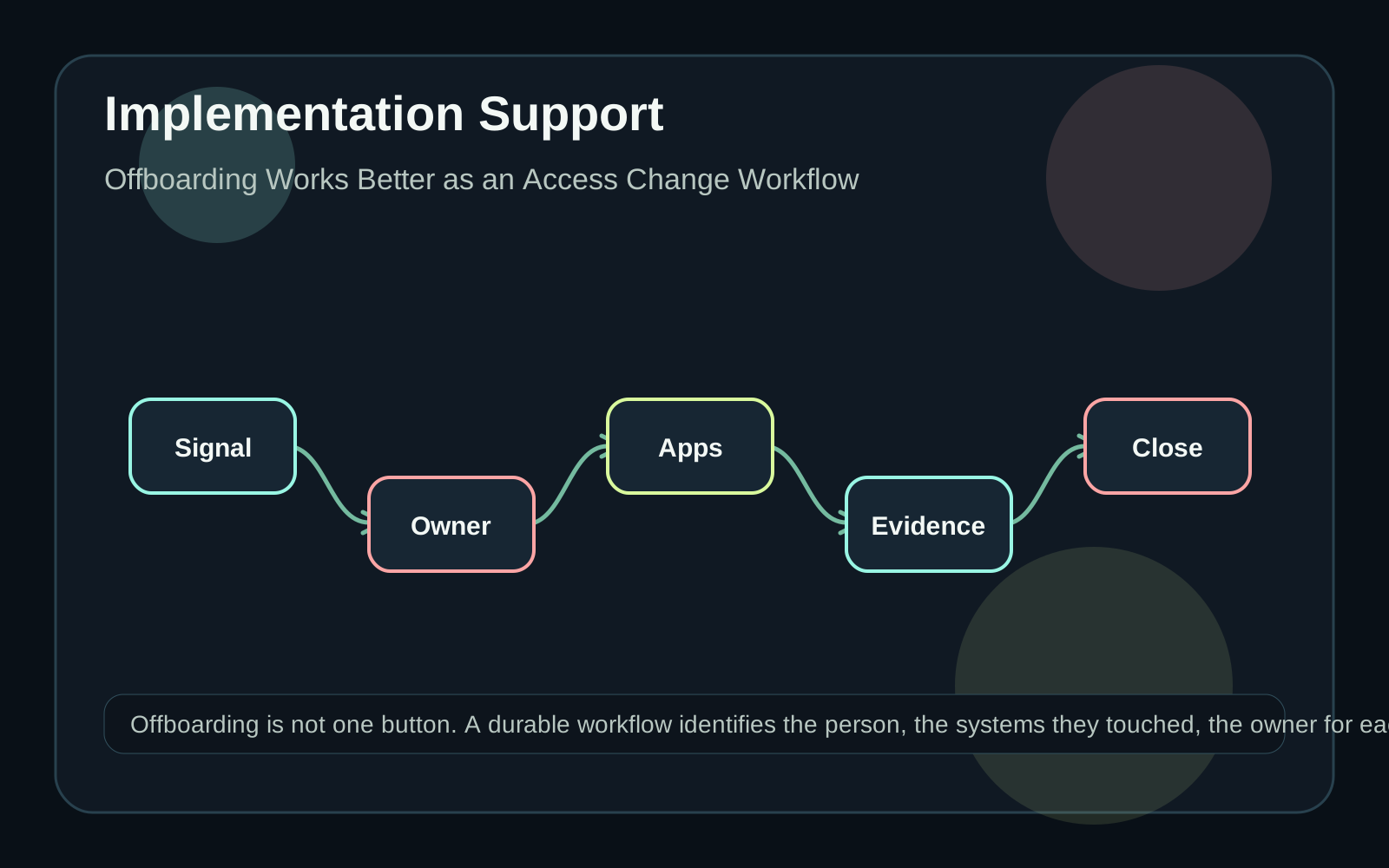
Offboarding Works Better as an Access Change Workflow
Use change notifications, ownership records, and exception queues to make account access changes reviewable instead of relying on memory.
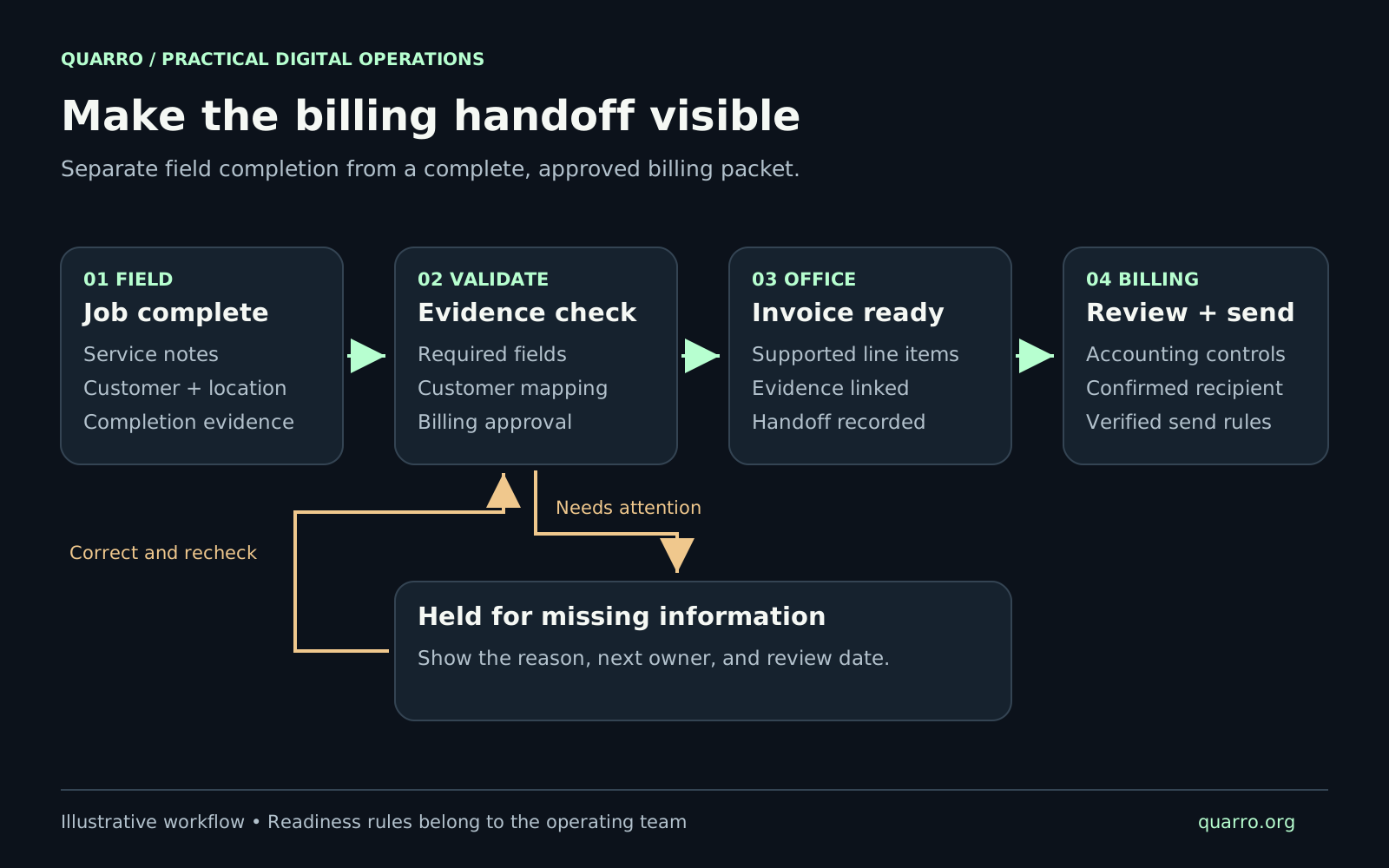
From Job Complete to Invoice Ready: A Field-Service Handoff That Holds Up
Design a clear handoff from completed field work to billing, with required evidence, named owners, and a visible exception queue.
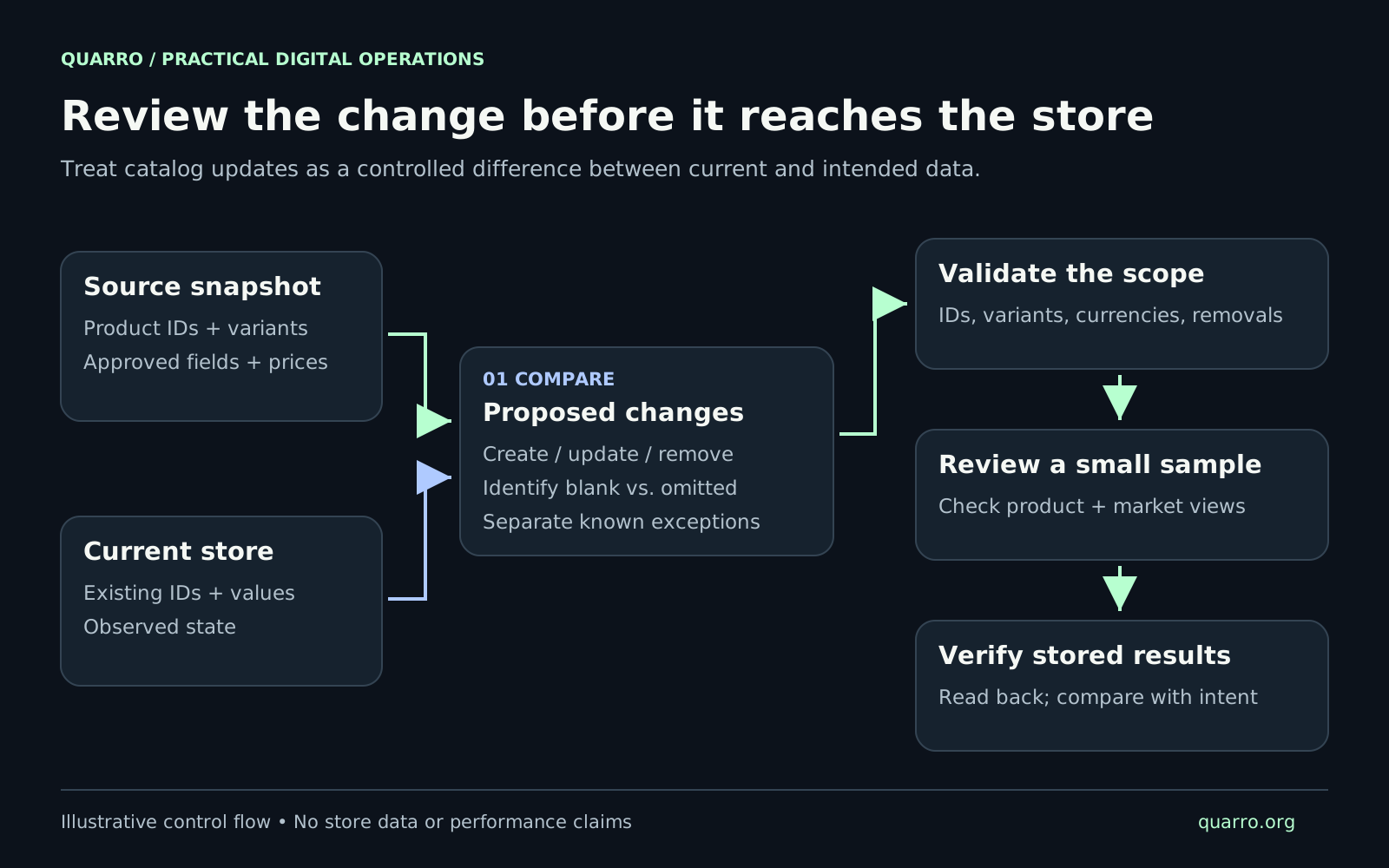
How to Validate Ecommerce Catalog and Price Updates Before Release
Build a reviewable catalog change set with stable variant identities, explicit blank-field rules, targeted tests, and post-release verification.
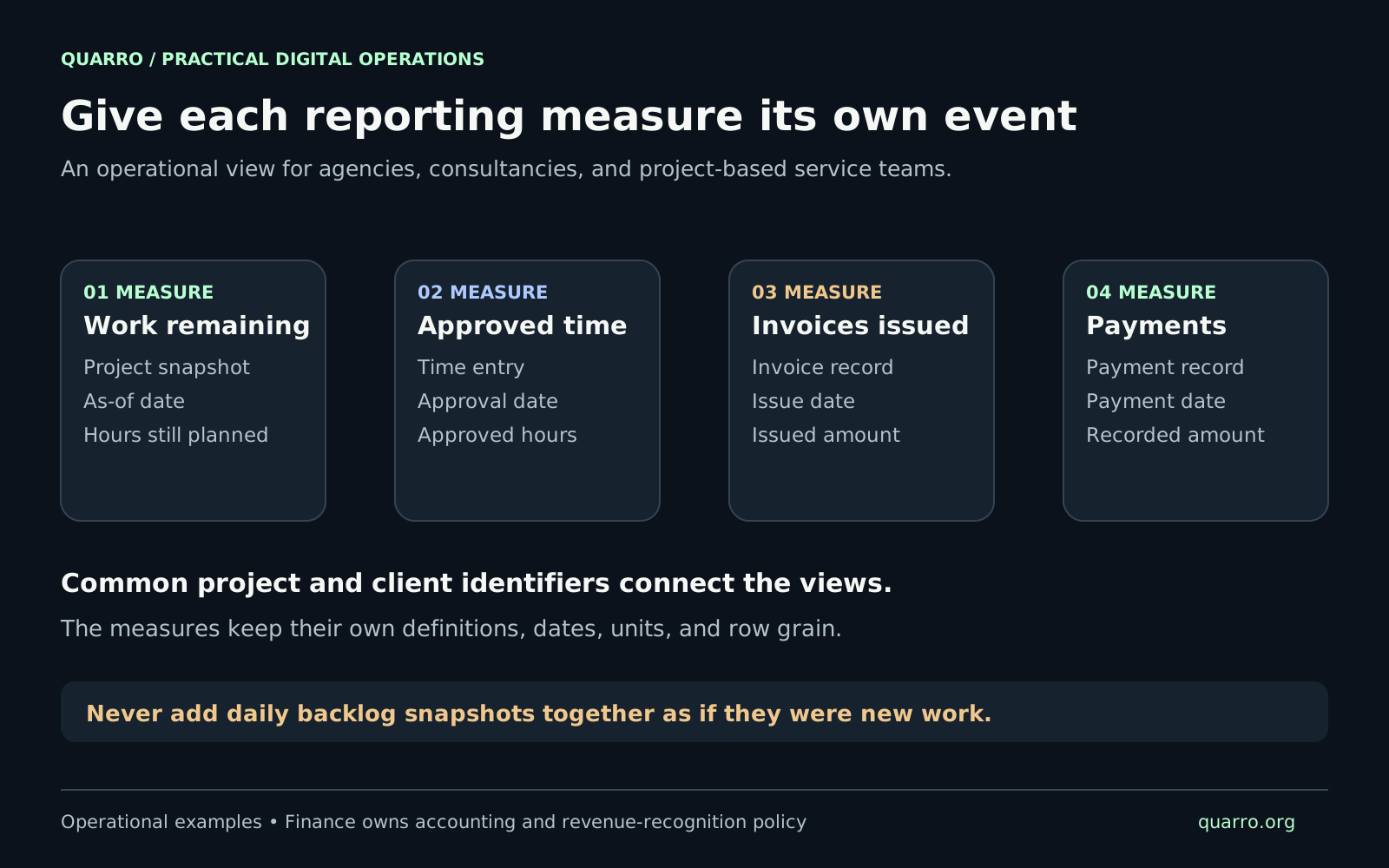
Define Backlog, Time, Invoices, and Payments Before Building a Services Dashboard
Give professional-services metrics clear row grain, dates, units, and ownership so backlog, approved time, invoices, and payments remain interpretable.
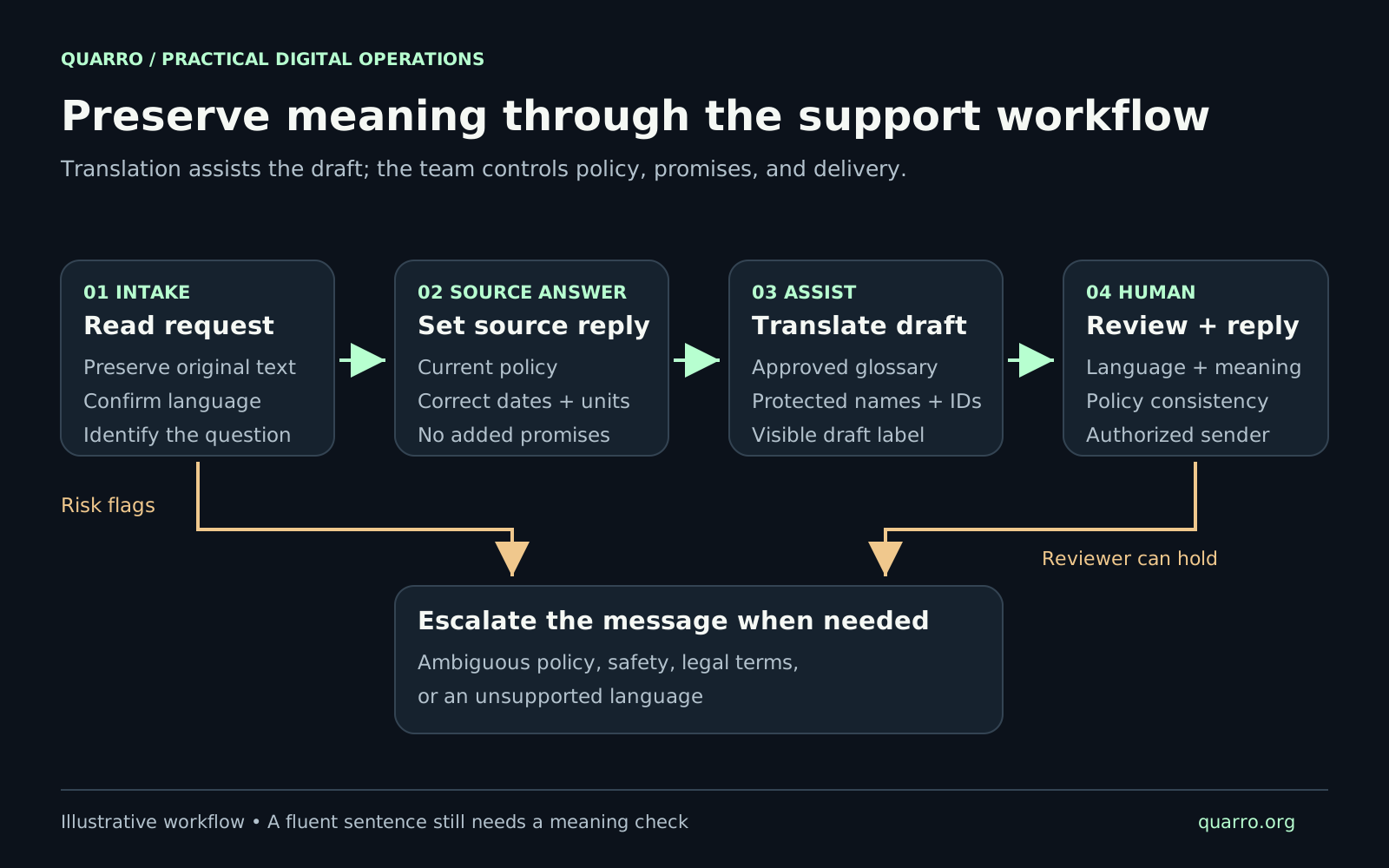
AI-Assisted Multilingual Support: Keep the Meaning, Check the Promise
Build a multilingual support workflow that preserves policy, product terms, dates, and customer intent through translation and review.
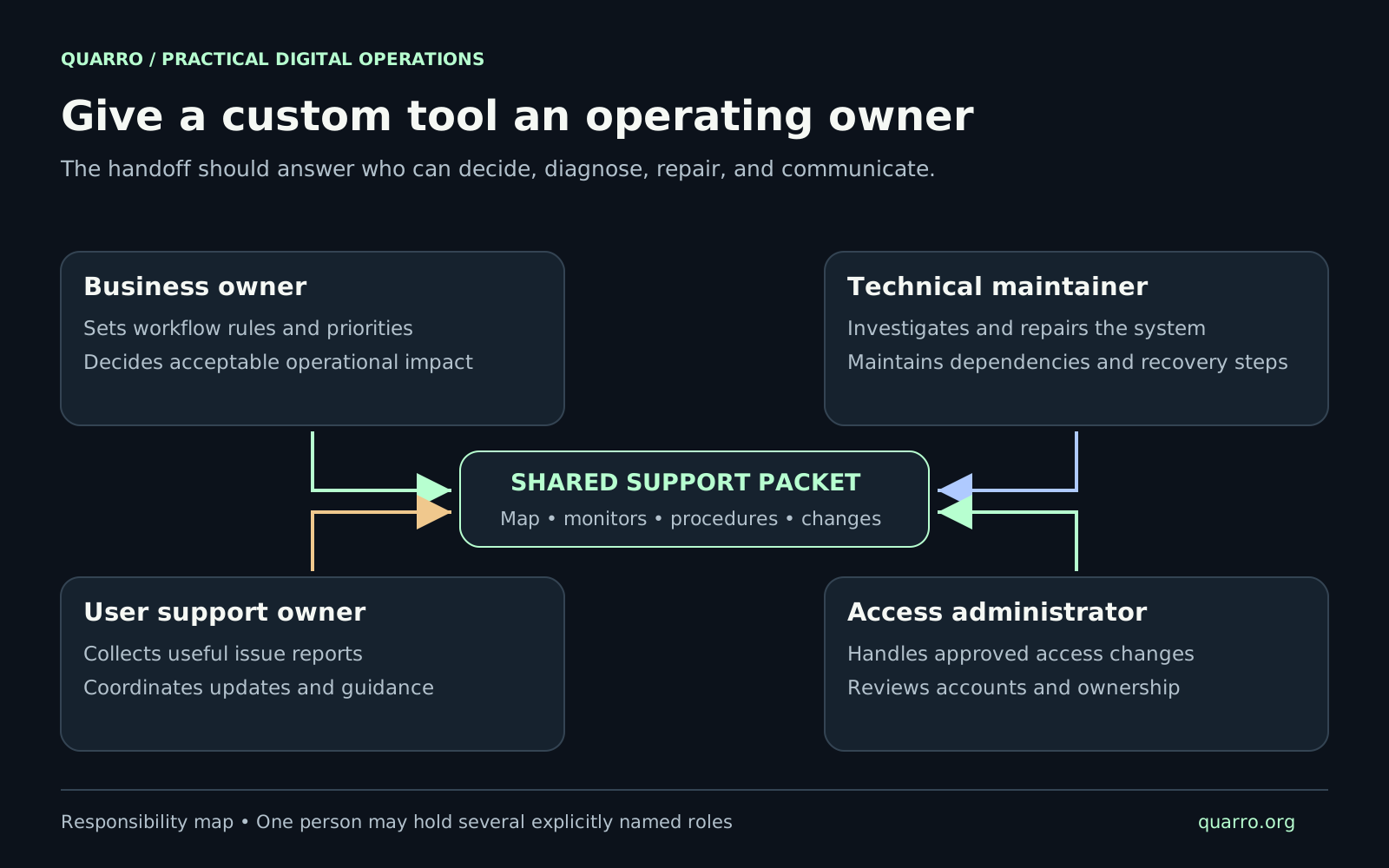
Who Owns the Tool After Launch? A Practical Custom-Software Handoff
Prepare a custom internal tool for daily use with named owners, useful support records, tested procedures, and realistic coverage.