
Ecommerce Operations
Inventory Sync Needs Location Truth, Not One Big Stock Number
Inventory workflows get clearer when stock is tracked by item, location, and state. One blended number hides the operational questions that actually cause oversells and manual cleanup.
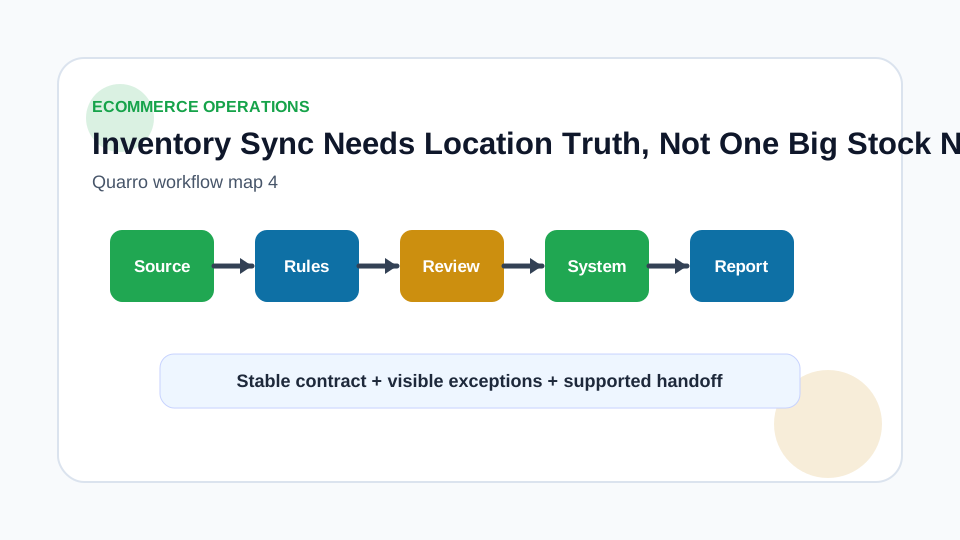
Do not flatten inventory too early
A single available stock number is easy to display, but it can hide where the item is, whether it is committed, and which system should be trusted. That matters when online orders, retail pickup, warehouse transfers, bundles, and manual adjustments all touch the same product. Before integrating inventory, define the operational truth you need. Is the workflow deciding whether a product can be sold, where it should ship from, whether a transfer is needed, or whether two systems disagree? Each question may require a different view of the same item.
Model item-location quantities explicitly
Shopify's GraphQL Admin API documentation describes InventoryLevel as the quantities of an inventory item at a specific location, connecting an InventoryItem to a Location and tracking quantity states such as available, on-hand, incoming, and committed. That model is a reminder that inventory is not just product equals count. A sync should carry the item identifier, location identifier, quantity state, timestamp, and source system. If a downstream dashboard collapses those details into one summary number, keep the detailed records available for reconciliation.
Decide what each system is allowed to change
Many inventory problems come from unclear ownership. The ecommerce platform may own storefront availability. A warehouse system may own physical counts. A purchasing sheet may own incoming stock. A marketplace connector may reserve inventory for external orders. Write down which system can create a product, activate a location, adjust on-hand stock, reserve committed quantity, or override a saleable number. When an update arrives from the wrong place, route it to an exception instead of accepting it silently.
Make reconciliation a daily surface
Inventory reconciliation should not live only inside logs. Show mismatches by item, location, quantity state, age, and likely cause. Common causes include delayed fulfillment updates, manual adjustments, failed marketplace syncs, missing location activation, and bundle math that was applied in one system but not another. Give operations a clear path to resolve each mismatch: accept source A, accept source B, create a transfer, mark as known timing delay, or investigate. The workflow becomes more valuable when it explains why a number is different, not just that it is different.
Start with the riskiest products
A first inventory sync does not need to cover every SKU and edge case. Start with products where mistakes are expensive: fast-moving items, pickup-eligible items, bundled products, or stock split across multiple locations. Prove the identifiers, ownership rules, and reconciliation view there. Quarro can help connect ecommerce, warehouse, spreadsheet, and reporting systems around that operating model. The useful result is a stock workflow people can trust because it preserves location truth instead of hiding it.