
Payments And Reporting
Payment Webhooks Need a Reconciliation Ledger, Not Just a Listener
A webhook endpoint can receive payment events, but reconciliation needs a durable ledger that explains what was received, processed, matched, and still unresolved.
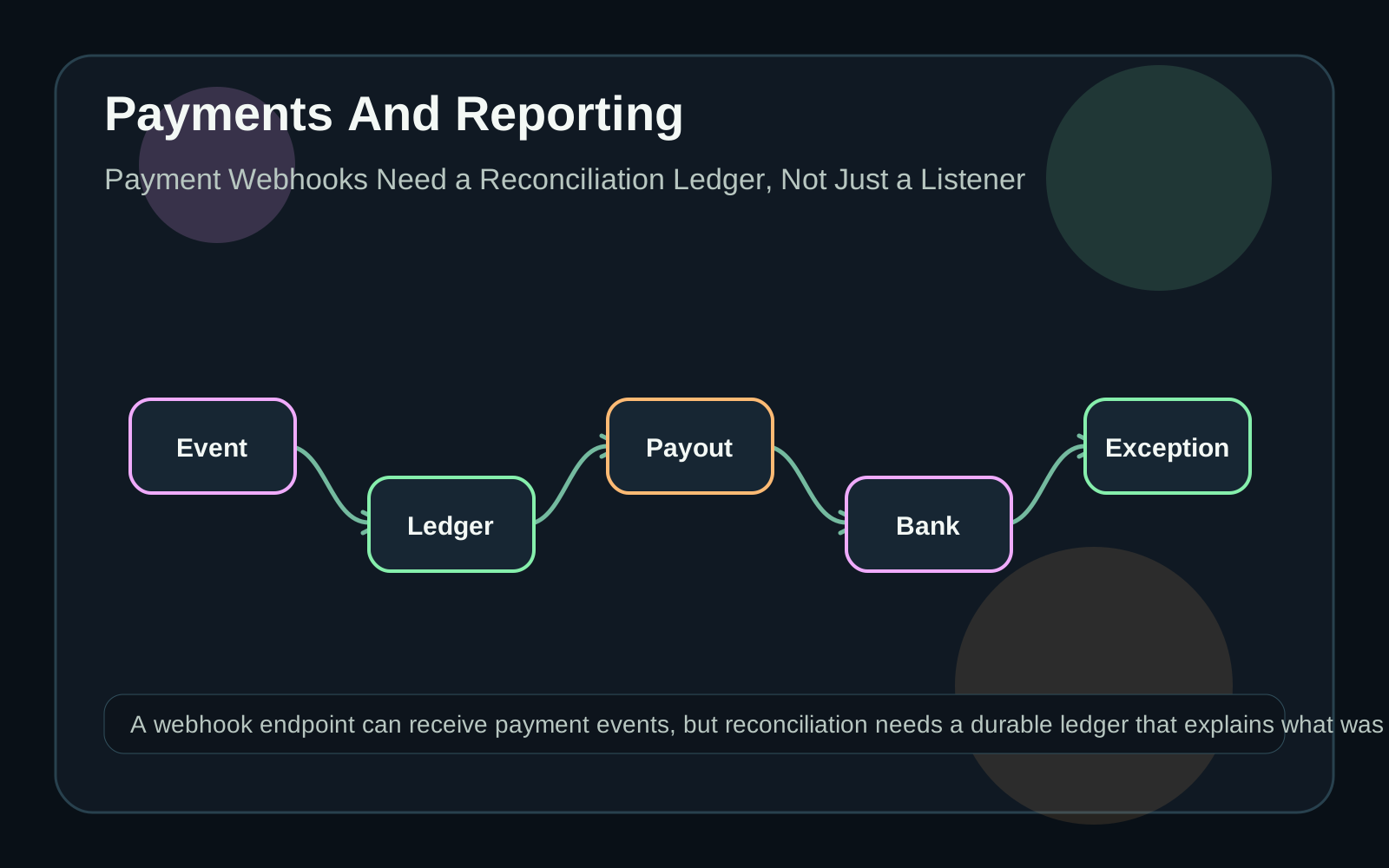
Separate event receipt from business processing
A payment event should first be received, verified, stored, and acknowledged. Business processing can then happen from the stored event. This separation protects the workflow when a downstream system is temporarily unavailable or a rule changes. Record the provider event ID, event type, received timestamp, processing status, and related internal record. Do not use an incoming webhook as the only record that the event happened. If the listener updates a customer record but loses the original event context, later reconciliation becomes guesswork.
Design for duplicate and delayed events
Stripe's webhook documentation describes webhook endpoints as a way to receive event notifications and includes guidance for webhook handling and endpoint security. Operationally, the integration should treat event delivery as something to process idempotently. The same event should not create two internal transactions or clear the same exception twice. Use the provider event ID and the intended internal action as a uniqueness boundary. If a later event changes the state of the payment, record the transition rather than overwriting history. A support person should be able to explain which event caused a record to move.
Reconcile against payouts and bank activity
A successful payment event is not the same thing as bank reconciliation. Stripe's bank reconciliation documentation describes reconciling Stripe data with bank statements and accounting records. That distinction matters for workflow design: the event ledger, payout reports, and bank deposits answer related but different questions. Create a view that compares expected settlement, payout identifiers, fees where applicable, refunds, disputes, and the bank record. Keep unresolved differences visible with a reason and owner. Do not bury them inside a generic "sync failed" label.
Keep accounting decisions outside the webhook
A webhook can provide evidence that a payment event occurred. It should not silently decide accounting treatment, revenue recognition, tax treatment, or write-off policy. Those rules belong to the finance owner and should be encoded only after review. For a practical integration, write operational statuses first: received, mapped, processed, matched to payout, matched to bank, held for review, or reversed. Then connect the approved accounting action. This keeps the automation useful without pretending that payment operations and accounting policy are the same thing.
Test the awkward paths
Before going live, test duplicate delivery, out-of-order states, refunds, failed downstream writes, missing internal customer matches, and manual correction. Use test mode or synthetic data where appropriate. Confirm that retrying a job does not multiply records. The goal is a ledger someone can audit: these events arrived, these were applied, these were matched, and these still need attention. Quarro can help build the integration, queue, reconciliation view, and reporting layer around the payment provider so the workflow survives ordinary operational messiness.