
Integration Design
Change Sync Needs Checkpoints, Not Constant Polling
A dependable integration knows what it has already seen, what it still needs to process, and when it must restart from a trusted baseline.
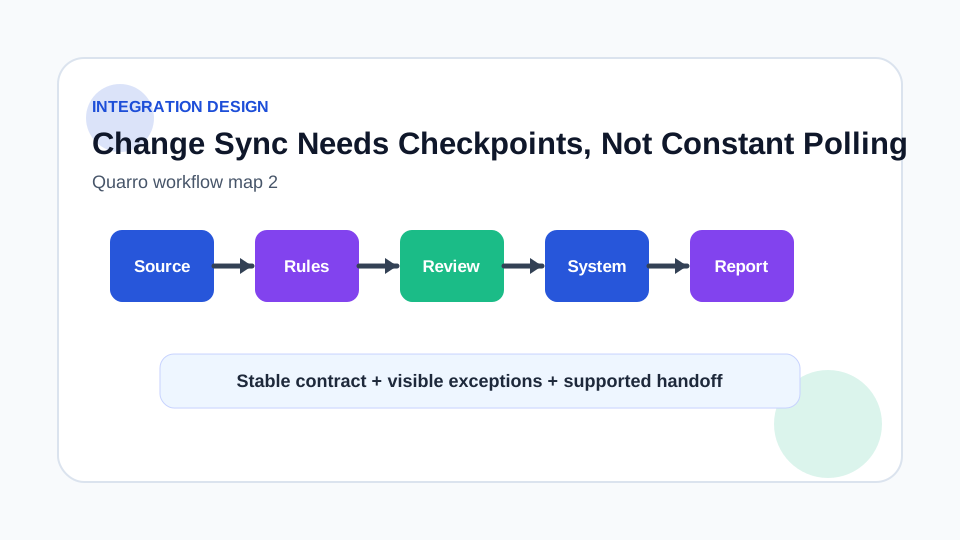
Polling is usually a symptom, not a strategy
When an integration needs to keep two systems aligned, the quick instinct is often to reread everything on a schedule. That can be acceptable for tiny datasets, but it becomes wasteful and confusing as data grows. It also makes failure recovery harder: after an outage, the workflow may not know which records changed, which were already processed, or which updates were overwritten. A better design starts with checkpoints. Store what the integration has consumed, what it has successfully applied, and what it needs to resume. The checkpoint should be durable enough that a restart does not turn into a guessing exercise.
Respect the source system's change model
Microsoft Graph delta query is designed to let applications discover newly created, updated, or deleted entities without doing a full read every time. Its documentation explains the pattern of following @odata.nextLink pages until an @odata.deltaLink is returned, then using that delta link for later change requests. The state tokens are opaque and should be copied into the next call rather than modified. That pattern carries a larger lesson for integrations: use the source system's intended change-tracking contract. Do not invent a weaker one by comparing timestamps if the platform gives you a checkpoint mechanism with documented behavior and limitations.
Design for replays and resets
Change feeds are not magic delivery guarantees. The Microsoft documentation notes that the same item can appear more than once in some conditions, and that a reset may require a full synchronization again. Your merge logic should therefore be idempotent. Seeing the same change twice should not duplicate tasks, payments, contacts, or notifications. Keep a full-resync path in the runbook. If a token expires or the source requires a reset, the team should know whether the integration can rebuild from scratch, from a recent snapshot, or from a narrow scoped collection.
Keep visibility close to the checkpoint
A sync job should report more than success or failure. Show the last successful checkpoint, pages processed, records changed, records skipped, retry count, and the oldest unprocessed change where that is available. These details turn vague data freshness concerns into supportable facts. If the integration feeds a customer-facing or operational workflow, expose stale-data warnings where people make decisions. A dashboard that looks current but is backed by a failed sync is worse than a dashboard that clearly says it is waiting for recovery.
Start with one important collection
The first version does not need to synchronize every object the platform exposes. Pick one collection that affects a real workflow: users for offboarding, events for scheduling, contacts for CRM cleanup, or files for document review. Define the checkpoint, merge rules, deletion behavior, and support view. Quarro can help design and implement that narrow path, then extend it once the support model is proven. The point is not to poll faster. It is to make change tracking understandable enough to operate.