
Applied AI
AI summaries need source evidence before they become work instructions
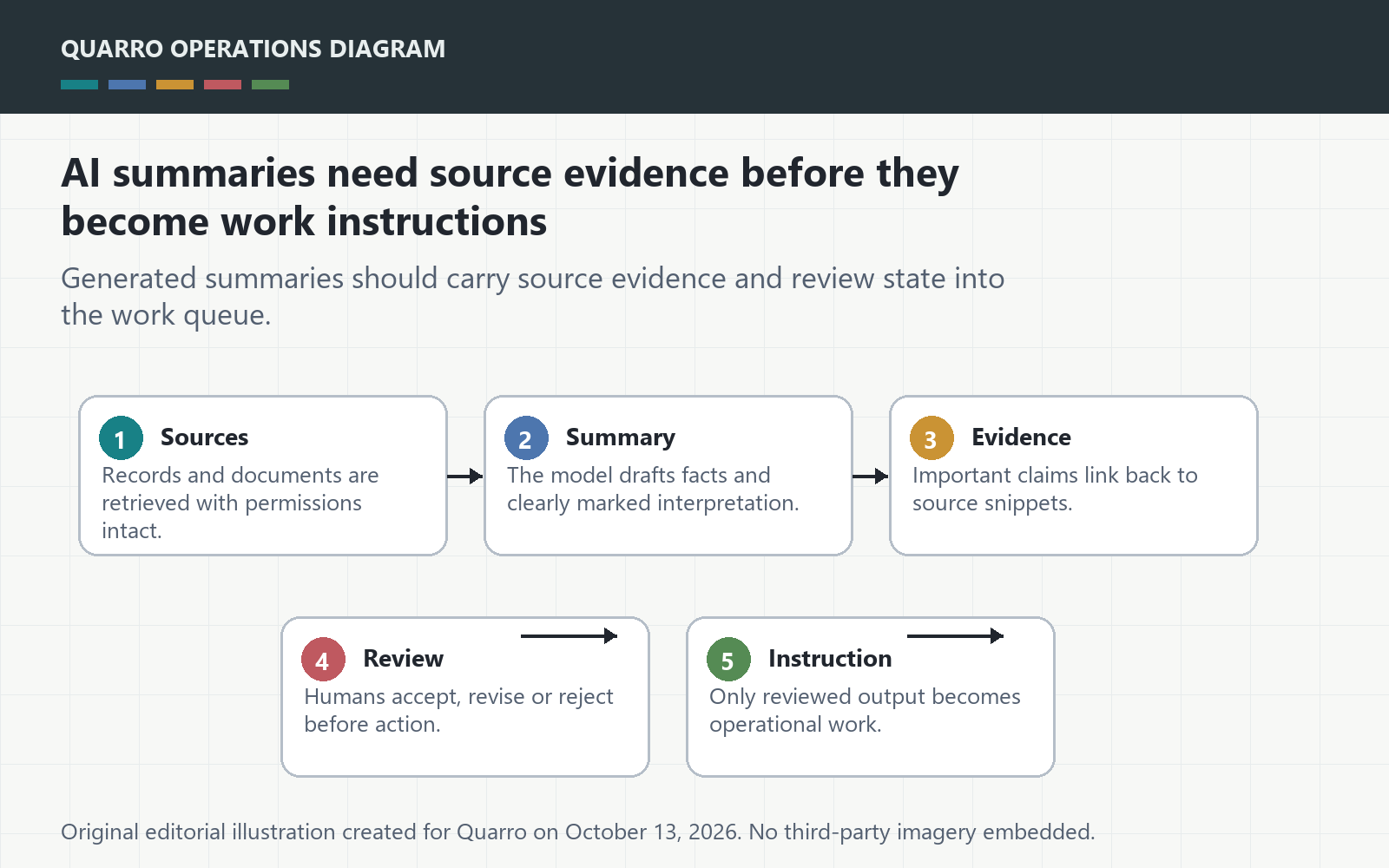
An AI-generated summary can be useful without being ready to direct work. Before a summary becomes an instruction, the workflow should show the source material, name what was inferred, mark confidence limits and give a human a way to accept, revise or reject it.
The answer: keep evidence beside the summary
An AI-generated summary can be useful without being ready to direct work. Before a summary becomes an instruction, the workflow should show the source material, name what was inferred, mark confidence limits and give a human a way to accept, revise or reject it. The summary is an aid; the evidence is what makes it reviewable.
Treat unsupported claims as workflow risk
NIST AI 600-1 identifies confabulation as confidently stated but erroneous or false content that can mislead users, and its Generative AI Profile focuses in part on content provenance, testing and incident disclosure. For business operations, that translates into a practical rule: generated text should not hide the documents, records or assumptions behind it.
Design the review screen for decisions
A good review screen links each important claim to source snippets or records, separates extractive facts from model-written interpretation, and lets reviewers flag missing evidence. If the source is unavailable because of permissions, retention or integration failure, the summary should say so rather than filling the gap with confident prose.
Do not make citations decorative
A list of links at the bottom is weaker than claim-level evidence. Staff need to know which source supports which instruction, especially when the next action affects a customer, payment, shipment, compliance response or internal escalation. When evidence is thin, the workflow should route to human review instead of pretending certainty.
Start with low-risk summaries and measured handoff
Useful first cases include meeting notes, support-ticket recap, intake classification and document comparison where a human remains accountable. Track accepted, edited and rejected summaries so the team learns where the tool helps and where it fails. The takeaway: applied AI is safer when summaries carry their evidence all the way into the work queue.