
Practical AI
AI workflows need release evaluation cases
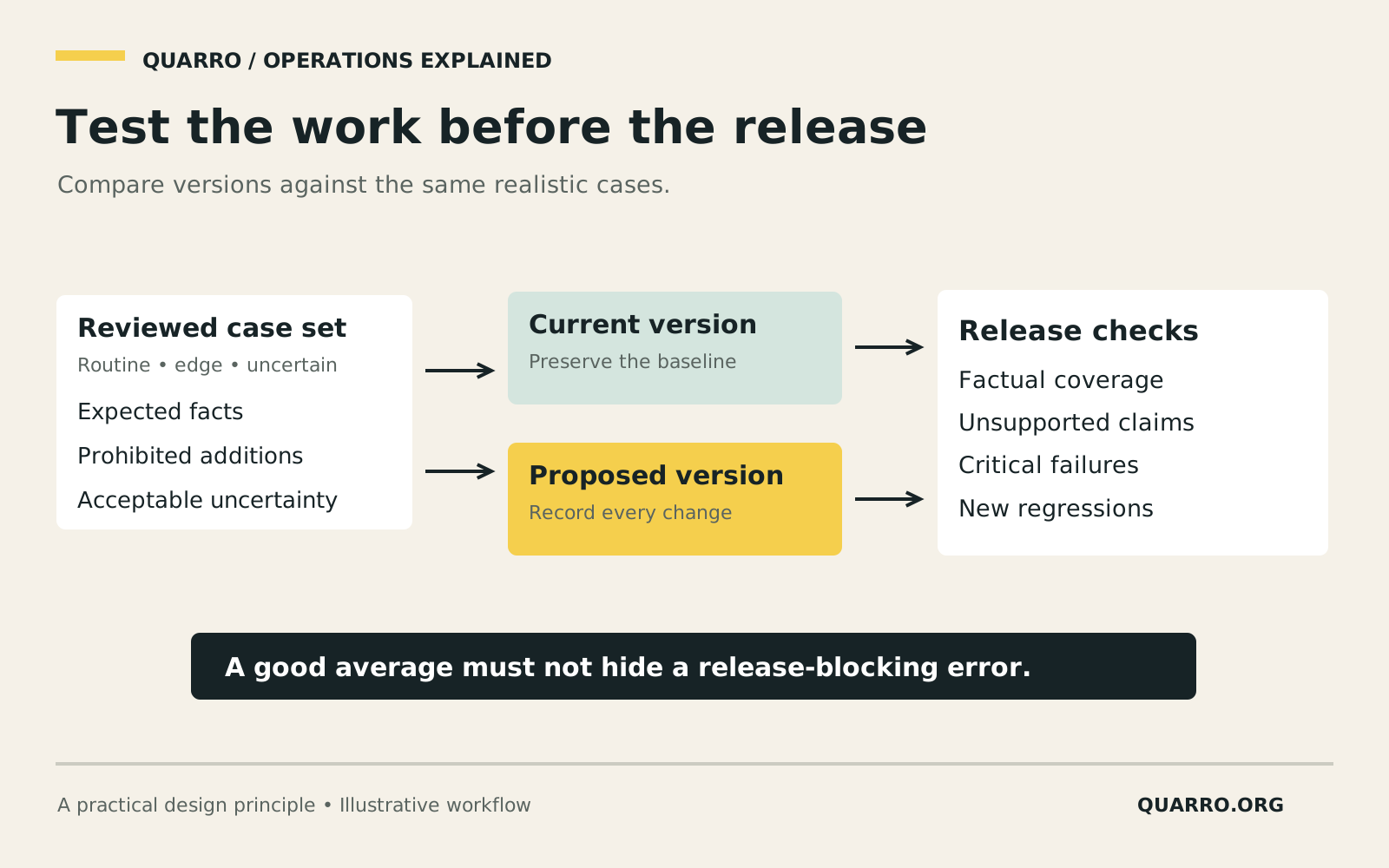
An AI workflow needs a release evaluation set: representative inputs, explicit success criteria and a record of how the proposed version performs against the current one. A few convincing demonstrations can help explain an idea, but they cannot establish how reliably it handles the business cases it will receive.
The practical issue
An AI workflow needs a release evaluation set: representative inputs, explicit success criteria and a record of how the proposed version performs against the current one. A few convincing demonstrations can help explain an idea, but they cannot establish how reliably it handles the business cases it will receive.
Consider an illustrative manufacturer using AI to draft internal summaries of maintenance notes. The useful output should retain the affected asset, observed issue and unresolved questions. A fluent summary that adds a repair action never recorded by the technician may create more work than a rougher but faithful draft. This example is hypothetical and makes no claim about a deployed Quarro system.
Start with the job the output must do
Write acceptance criteria with the people who use the result. For maintenance summaries, criteria might include retaining the asset identifier, separating an observation from a proposed action, and clearly indicating when the source lacks a date. These are workflow requirements, not a universal scoring formula.
OpenAI's evaluation guidance recommends task-specific evaluations, representative datasets, human calibration and ongoing evaluation as systems change. The general method is more important than any particular evaluation product. A team can preserve its cases and scoring rules independently of the tool that runs them.
Build a case set that can disagree with the demo
Select examples from the range of work the system is intended to support. Include routine notes, abbreviations, conflicting statements, incomplete records and cases where the correct response is to flag missing information. Use only data the team is authorized to use; remove unnecessary personal or confidential details before moving examples into another environment.
For each case, record the source, expected facts, prohibited additions and acceptable handling of uncertainty. A single ideal sentence is often too narrow for a summarization task. Different wording can be valid while an apparently minor change in meaning is not.
Keep a separate group of cases that was not used to tune the prompt. Otherwise the team risks improving performance on familiar examples while learning little about new work. Add newly observed failure patterns deliberately, with an explanation of what each case is intended to test.
Score critical errors separately from writing quality
Use a simple rubric that reviewers can apply consistently. For the manufacturer, one dimension might assess required factual coverage; another might assess unsupported claims. Readability can be scored separately. Do not let polished writing offset an incorrect asset or an invented instruction.
Decide before testing which failures block release. The business owner should define the consequences that matter, and the implementation team should make them measurable. Report results by relevant case type as well as overall. An average can conceal a weak spot concentrated in handwritten notes or uncommon terminology.
Have two reviewers independently assess a sample and discuss disagreements. If they interpret a rule differently, revise the rule before treating the score as precise. Automated scoring can help with volume, but it also needs checks against human judgment and should not quietly become the sole authority on consequential errors.
Compare the whole workflow version
Record the model, prompt, retrieval configuration, source-document version and post-processing rules used in a run. A change to any of these can change the result. Preserve the inputs and outputs needed to reproduce the comparison within the team's data-handling policy.
Run the current and proposed versions on the same cases. Inspect newly introduced failures, not just improvements. Where output varies between runs, sample repeated attempts enough to understand whether a passing example is dependable for the intended use. Keep runtime and cost observations separate from quality judgments so tradeoffs remain visible.
Make the release decision reviewable
The release note should explain what changed, which cases were tested, where performance improved, what regressed and which limits remain. If a critical requirement fails, narrow the scope or fix the workflow before expanding use. After release, feed confirmed incidents back into the case set.
Quarro can help turn a useful AI prototype into a testable business workflow with clear acceptance criteria and release evidence. The first deliverable can be modest: a reviewed set of realistic cases that the team agrees must work. For output structure, read [AI Extraction Needs a Schema Contract](/blog/ai-extraction-needs-a-schema-contract/).