
Applied AI
AI Extraction Needs a Schema Contract Before It Feeds Operations
AI can help turn messy inputs into structured records, but operations need a schema, validation rules, and a place for uncertain cases before extracted values update important systems.
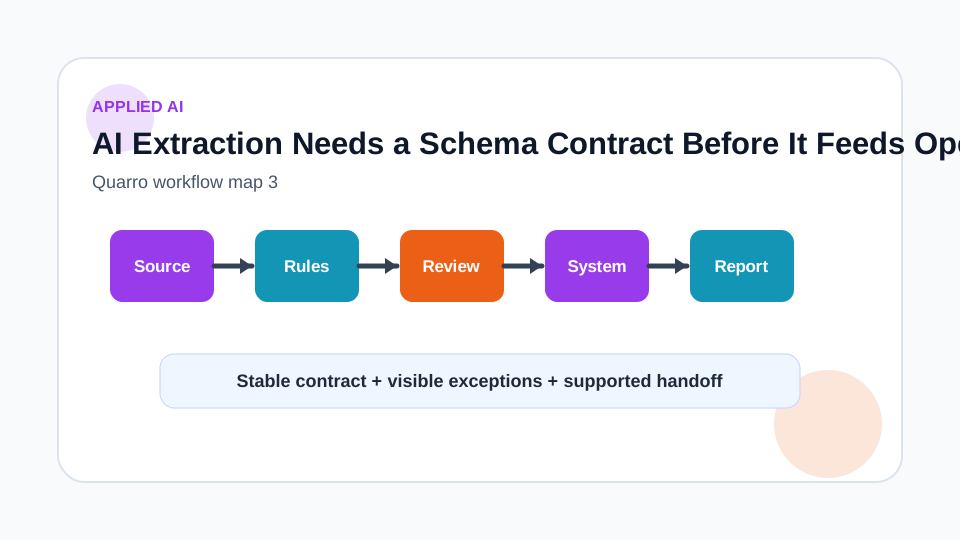
Name the record before choosing the model
AI extraction projects often begin with a pile of emails, PDFs, notes, or transcripts. The practical question is not whether a model can summarize them. It is which operational record should be created or updated afterward. A quote request, onboarding packet, support escalation, renewal note, and compliance checklist all need different fields. Write the target record first. Identify required fields, allowed values, source evidence, and what should happen when the input is incomplete. That schema becomes the contract between the AI step and the rest of the workflow.
Structured output is useful, but not the whole control
OpenAI's structured-output documentation describes constraining model responses to a supplied JSON Schema, with strict schema adherence available in supported configurations. The docs also note edge cases such as refusals, incomplete responses, and unsupported schema features. That makes structured output a strong formatting control, not a substitute for business validation. After the model returns a structured object, the workflow should still check dates, identifiers, required evidence, allowed transitions, and permissions. A valid JSON object can still contain a value the business should not accept.
Keep the raw input and the parsed result
Store the raw source or an approved reference to it. Store the model output separately from the approved operational value. This lets a reviewer compare what was received, what was extracted, and what was finally written. It also makes later debugging possible when a field is disputed. For sensitive workflows, show the source excerpt or field evidence near the extracted value. Do not ask reviewers to trust an isolated answer detached from its input. If the evidence cannot be shown safely, at least record where it came from and who approved the update.
Route uncertainty deliberately
Useful exception states include missing required field, conflicting evidence, unsupported input type, low-confidence match, policy-sensitive content, and system update blocked. Each state should have an owner and a next action. A generic failed-AI label is too vague for operations. Build the first version around a narrow set of outcomes: accepted automatically, needs review, rejected, or needs more information. This keeps the workflow clear while the team learns which fields are reliable and which deserve more human attention.
Use AI where it reduces friction
The goal is not to replace judgment. It is to reduce retyping, speed triage, and make messy inputs easier to review. Quarro can help design the schema, validation layer, review surface, and integration path around the AI component so the result behaves like an operational tool instead of a demo. A good AI-assisted workflow should be explainable when it succeeds and inspectable when it pauses. That is how it earns its place in day-to-day work.