
Implementation and support
Access reviews need decision owners before permissions linger
An access review is not finished when a list of users is exported. It needs decision owners, evidence about why access exists, a deadline, a removal path and a record of what changed. Otherwise permissions linger because everyone assumes someone else understands them.
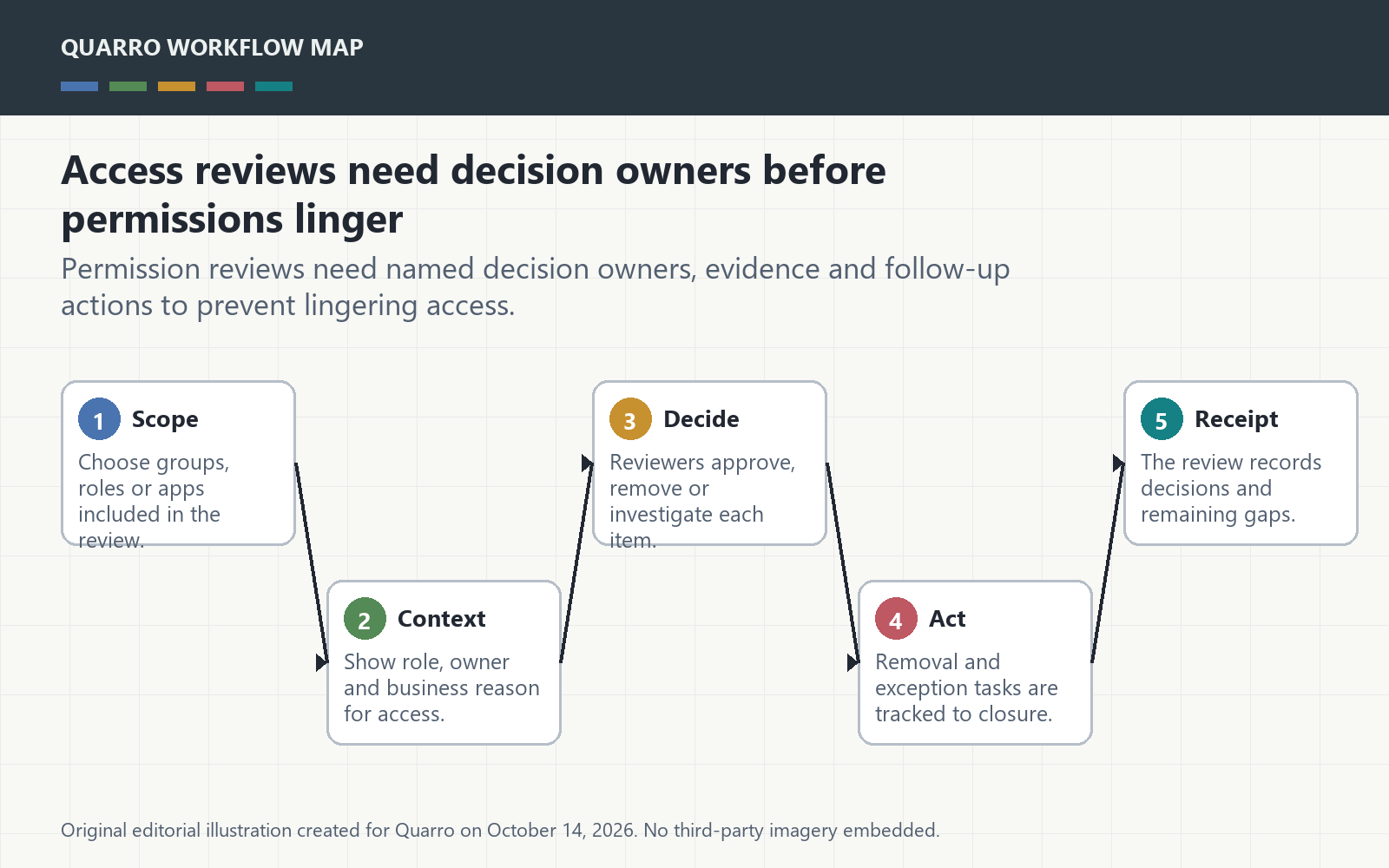
The answer: assign the decision, not just the list
An access review is not finished when a list of users is exported. It needs decision owners, evidence about why access exists, a deadline, a removal path and a record of what changed. Otherwise permissions linger because everyone assumes someone else understands them.
Reviewers need context
Microsoft Entra documentation describes access reviews as a way to manage group memberships, access to enterprise applications and role assignments. The useful workflow lesson is that a reviewer needs enough context to decide. A raw list of names and groups is rarely enough for a manager who does not know every application permission.
Separate approve, remove and investigate
The review should support at least three outcomes. Approve means access is still justified. Remove means the permission should be revoked through a tracked action. Investigate means the reviewer cannot decide yet because ownership, role or usage is unclear. Treating uncertainty as approval is how stale access survives.
Record evidence without overcollecting
Useful evidence might include role, team, last known owner, access source, application purpose and recent business use if available. Avoid turning the review into surveillance. The goal is to let reviewers make a defensible decision, not to collect every possible activity detail.
Close the loop after removal
A review should show whether removals actually happened, whether errors occurred and whether exceptions expire. The practical takeaway: access reviews work better as a decision workflow with owners and receipts than as a periodic spreadsheet exercise.