
Implementation and support
Account recovery needs a verifier handoff before support resets access
Manual account recovery is where a helpful support process can become an identity bypass. A safer workflow separates the person asking for help, the evidence the verifier can accept, the risk flags that require escalation and the final action that changes access.
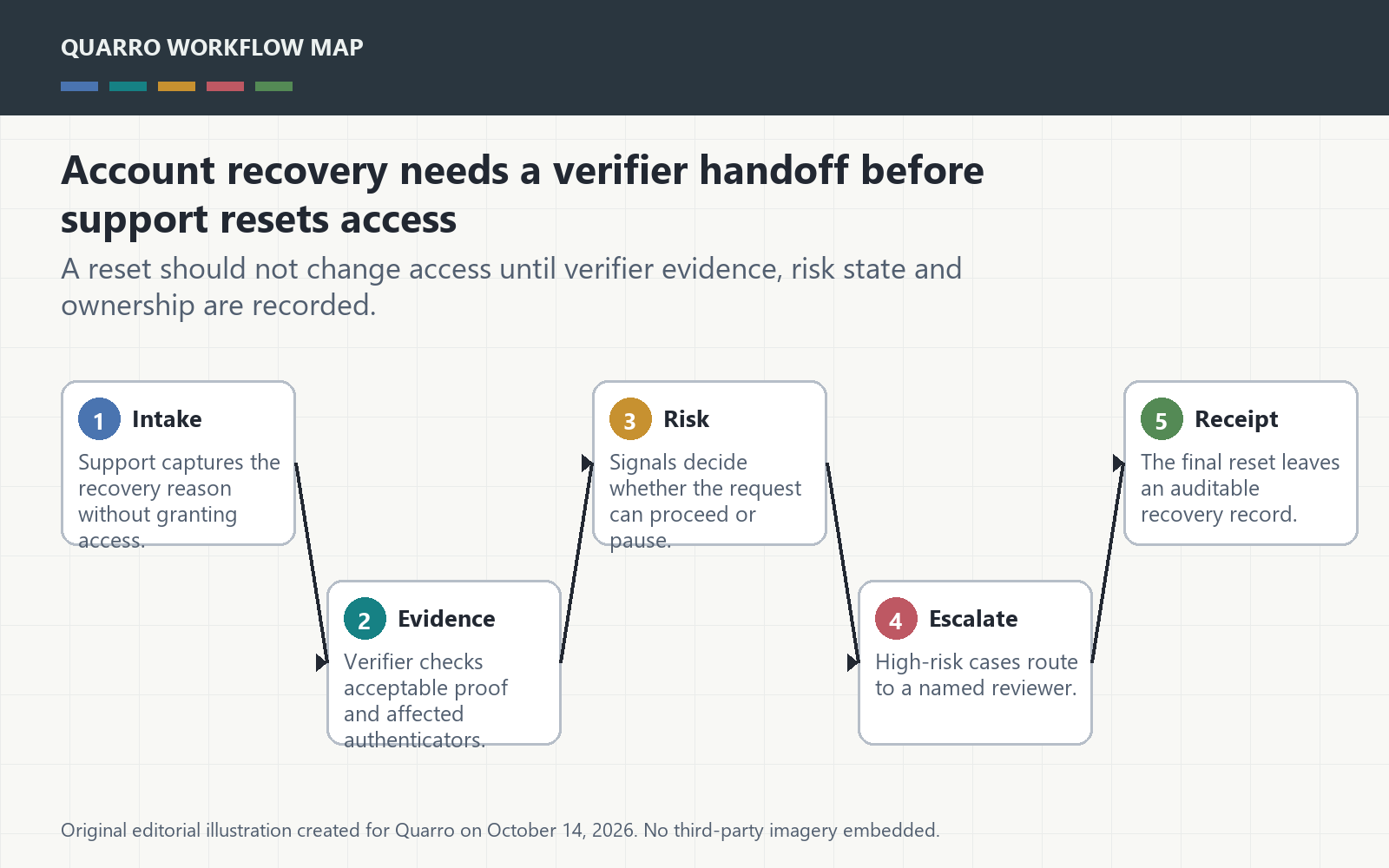
The answer: separate help from verification
Manual account recovery is where a helpful support process can become an identity bypass. A safer workflow separates the person asking for help, the evidence the verifier can accept, the risk flags that require escalation and the final action that changes access. Support should be able to guide the user without quietly becoming the authentication system.
Consider an illustrative customer portal where a user loses a phone and cannot complete multifactor authentication. If the support agent can simply replace the factor after a chat transcript, a stolen inbox or convincing caller can turn recovery into account takeover.
Name the verifier step
NIST SP 800-63B describes authentication as establishing that a claimant controls authenticators bound to a subscriber account, and it discusses authenticator lifecycle events such as maintenance and invalidation after loss or theft. For a business workflow, that points to a clear design boundary: support intake and verifier decision are related, but they are not the same step.
Capture the reason for recovery
The recovery request should record what failed, which authenticator or contact method is affected, whether the user still has an active session and what risk signals are present. A lost phone, changed email address, suspicious location and administrator reset request deserve different routing. A single reset button hides those differences.
Make escalation boring and visible
Some requests should pause for a second reviewer, manager approval or a safer channel. The workflow should show why escalation happened and what evidence is still missing. Staff should not need to invent a policy during the call, and users should not receive conflicting instructions from each support shift.
Close with a recovery receipt
Every completed recovery should leave a receipt: user, requester channel, verifier evidence, risk flags, reviewer, changed authenticator, session revocations and notification sent. The practical takeaway: account recovery is a support workflow with security consequences, so it needs evidence and ownership before access changes.