
Workflow improvement
Delegated approvals need coverage rules before the approver is away
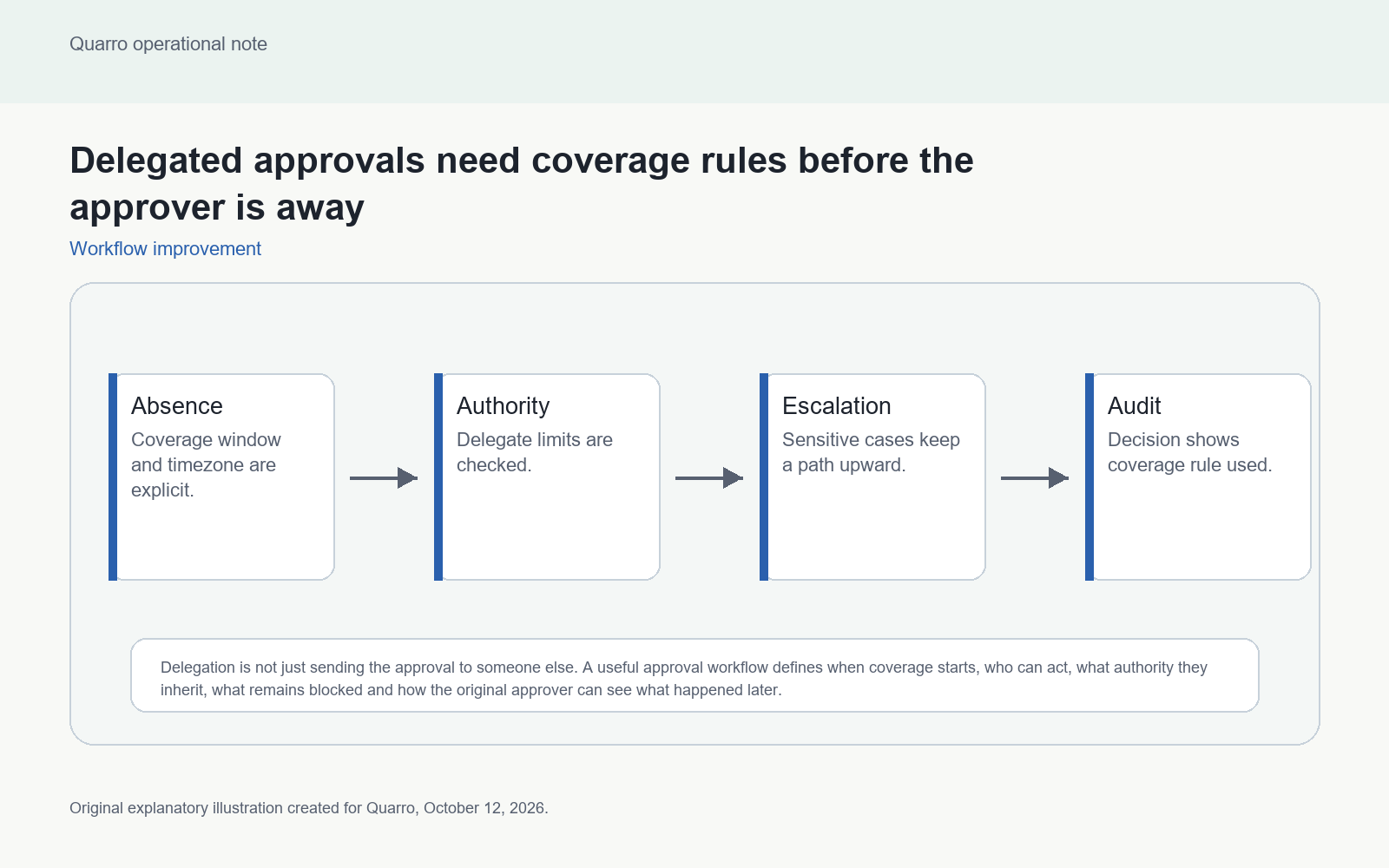
Delegation is not just sending the approval to someone else. A useful approval workflow defines when coverage starts, who can act, what authority they inherit, what remains blocked and how the original approver can see what happened later.
The answer: define coverage before absence
Delegation is not just sending the approval to someone else. A useful approval workflow defines when coverage starts, who can act, what authority they inherit, what remains blocked and how the original approver can see what happened later. Otherwise a vacation, resignation or overloaded queue turns into either delay or uncontrolled bypass.
For an illustrative purchasing workflow, a manager approves ordinary vendor spend but a finance director approves exceptions. If the manager is away, some requests can safely go to a backup. A price exception might still need finance. The workflow needs to know the difference before the approval is pending.
Distinguish reassignment from delegation
Reassignment is a single approval moving from one person to another. Delegation is a rule that explains coverage for a class of approvals during a window or condition. Both can be useful, but they answer different questions. A system that allows one-off reassignment does not automatically provide a safe coverage policy.
Microsoft Power Automate documentation describes approval reassignment by a recipient and also describes sending approval requests to multiple people, including first-response and everybody-must-approve patterns. Those capabilities still need business rules around who is allowed to respond and what counts as enough approval for the risk level.
Write authority limits into the workflow
Coverage rules should include scope, thresholds and exclusions. A delegate might approve ordinary renewals under a certain amount, but not new vendors, legal commitments, payroll changes or emergency exceptions. If the source record changes while the original approver is away, the workflow may need to recheck whether the delegated approval still applies.
Make the coverage window explicit. Start date, end date, timezone and reason matter. A permanent alternate approver is different from temporary coverage. Coverage that starts at local midnight should not surprise a global team because the automation interpreted it in another timezone.
Preserve the approval story
An approval receipt should name the original approver role, the delegate, the coverage rule, the decision, the record version reviewed and any comments. Staff should not have to infer whether a decision came from normal authority, temporary coverage or manual reassignment.
If a delegate denies or escalates a request, the workflow should capture that outcome too. Delegation is often discussed only as a way to keep work moving, but rejection and escalation are equally important controls.
Test absence before it happens
Create authorized test requests for routine, high-value and exception cases. Put the primary approver out of office in the workflow configuration and verify the expected route, notification, deadline and audit receipt. Then test the return path: pending requests, completed delegate decisions and future requests after coverage ends.
The practical takeaway: approval delegation should preserve control while preventing avoidable stalls. Coverage rules make that tradeoff visible before work is waiting on someone who cannot answer.