
Systems integration
Payload changes need schema versioning before partners break
A field rename or type change can break another workflow even when the producing team sees a small improvement. Versioned payloads, examples and compatibility checks make integration changes visible before they interrupt operations.
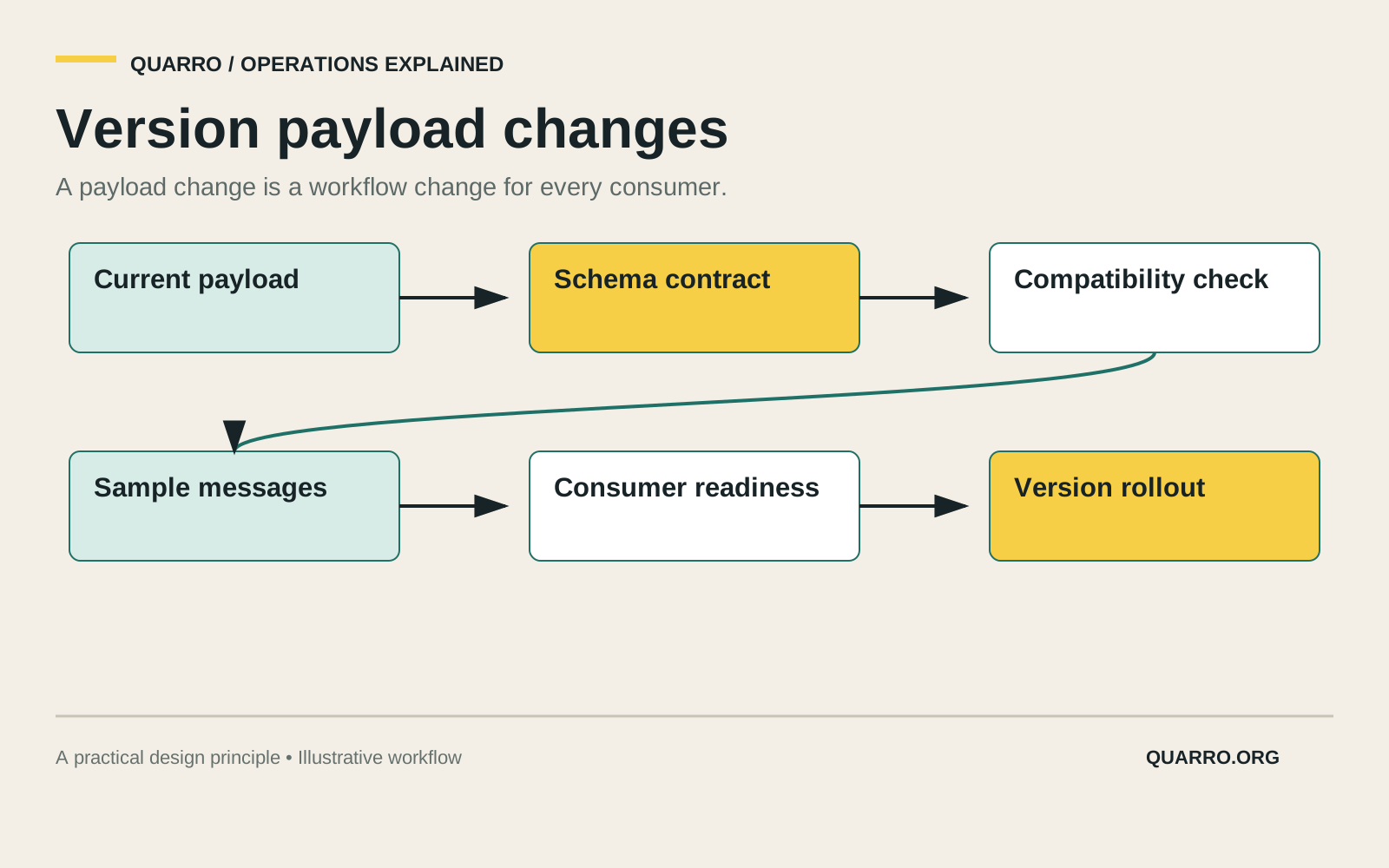
Small payload changes can have large consequences
A producer may see a payload change as housekeeping: rename a field, split a status, move a nested object or send a number instead of a string. A consumer may experience the same change as a broken dashboard, failed import or misrouted task. The risk is highest when the integration has been stable long enough that nobody remembers its assumptions.
Schema versioning makes those assumptions explicit. It gives teams a way to describe the current message, the proposed change, which consumers are ready and how long the old shape remains supported.
Document the shape people actually consume
The OpenAPI Specification defines a standard interface that lets humans and computers understand HTTP API capabilities without reading source code or watching network traffic. That promise depends on the document matching reality. A stale specification can be worse than none because it encourages consumers to trust the wrong contract.
Start by documenting the fields that consumers actually use, including required fields, nullable values, enumerations, date formats and examples. Keep example payloads for common and edge cases. A schema without examples can pass validation while leaving business meaning ambiguous.
Separate compatible additions from breaking changes
Not every change deserves a new major version. Adding an optional field is different from renaming a required one. Expanding an enumeration may still break a consumer that assumes only known values. Changing the meaning of a status can be more dangerous than changing its spelling.
Write compatibility rules in business language. For example: consumers must ignore unknown optional fields, must handle unknown status values as review-required, and must not assume array ordering unless the schema says it is ordered. These rules help producers evolve without relying on accidental consumer behavior.
Roll out with evidence, not hope
A version header, URL path or explicit payload version is only the label. The rollout still needs evidence. Track which consumers have tested the new schema, which sample messages they used and whether any data from the old version is still arriving.
Keep a deprecation window with monitoring. If a legacy payload is still active, someone owns the follow-up. If a consumer cannot move yet, record whether the issue is technical, operational or a business decision. Avoid deleting the old shape simply because the new code works for the producer.
Make failure easy to diagnose
When a consumer rejects a payload, the error should identify the schema version, failing field, reason and message id. That information lets support distinguish a producer defect from a consumer that has not upgraded. Route rejected messages into a review queue rather than dropping them silently.
The takeaway: schema versioning is not ceremony. It is a way to change connected systems without surprising the people and workflows that depend on them.