
Data and reporting
Dashboard permissions need row-level tests before launch
A dashboard permission check is not finished when the page loads for the right people. The real question is whether each person sees only the rows they are supposed to see, especially when a report mixes regions, customers, locations, teams or business units.
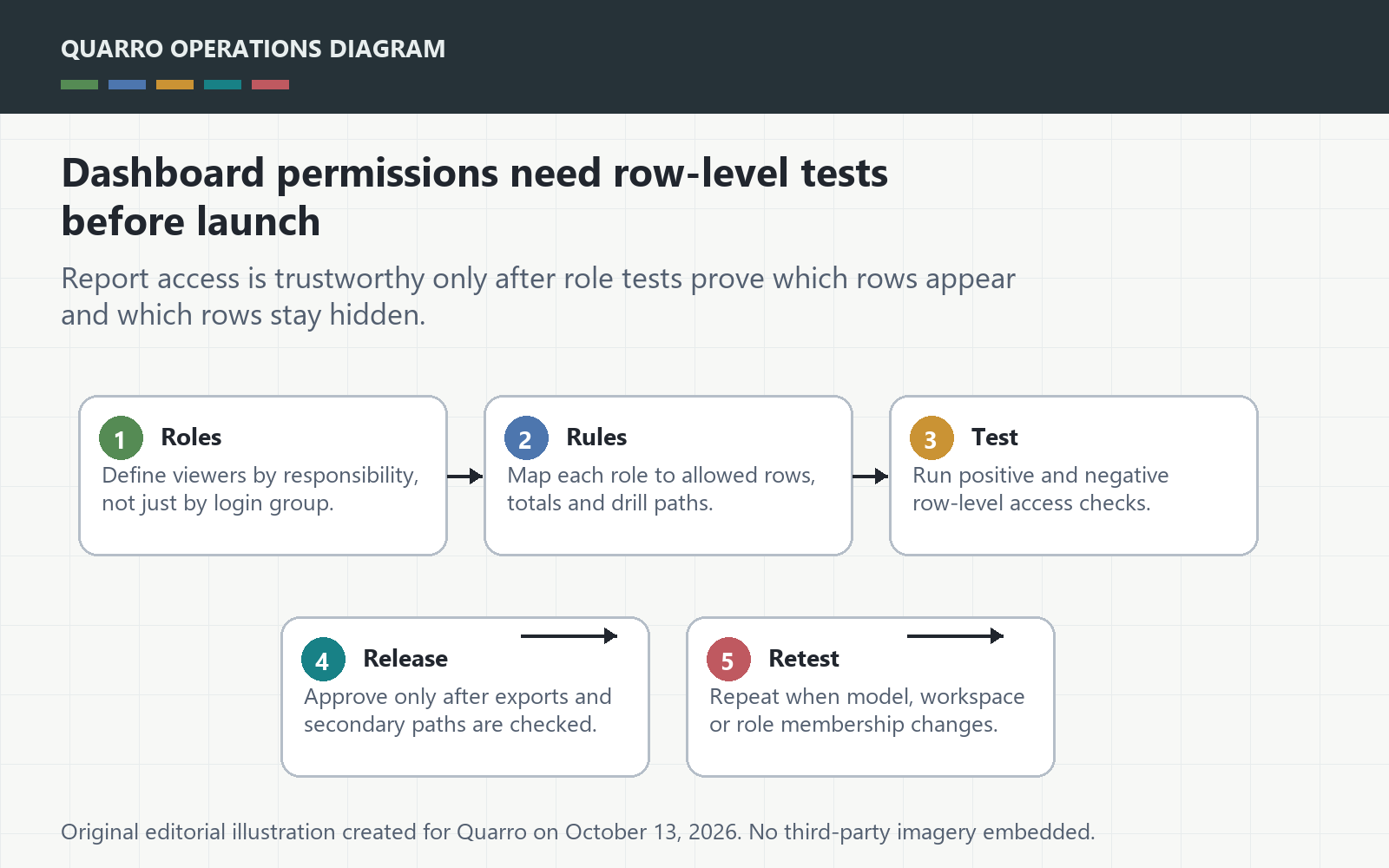
The answer: test the rows, not the login
A dashboard permission check is not finished when the page loads for the right people. The real question is whether each person sees only the rows they are supposed to see, especially when a report mixes regions, customers, locations, teams or business units. Launching without row-level tests can make a polished report quietly overexpose sensitive operational data.
Model the access rule explicitly
Microsoft Learn describes Power BI row-level security as restricting data access for specific users of a semantic model, with filters defined within roles, and includes validation with the Test as role feature. Even if a team uses another reporting stack, the implementation lesson is portable: access belongs in a rule that can be inspected and tested.
Build a permission matrix from real questions
The test matrix should say which roles can see which rows, which totals should change, and which drill-through pages remain available. A regional manager might see every customer in one region but no payroll detail. A support lead might see cases but not revenue. A finance user might see totals that others cannot reconcile from row detail.
Include negative tests
Positive tests confirm the expected data appears. Negative tests confirm forbidden rows do not appear through filters, exports, search, drill-through, bookmarks, cached subscriptions or embedded views. Those paths matter because many dashboard leaks happen through secondary features rather than the first chart on the page.
Keep tests with the report lifecycle
Permissions need retesting when the data model changes, a new role is added, a workspace permission changes or a report is copied. The takeaway: row-level access should be part of release testing, not an admin setting remembered after the dashboard is already trusted.