
Workflow improvement
Vendor onboarding needs payment-data gates before the first invoice
Vendor onboarding should not be treated as a contact form plus a bank field. Before the first invoice is eligible for payment, the workflow needs required tax and payment details, ownership, verification status, exception handling and an audit trail that shows who approved each step.
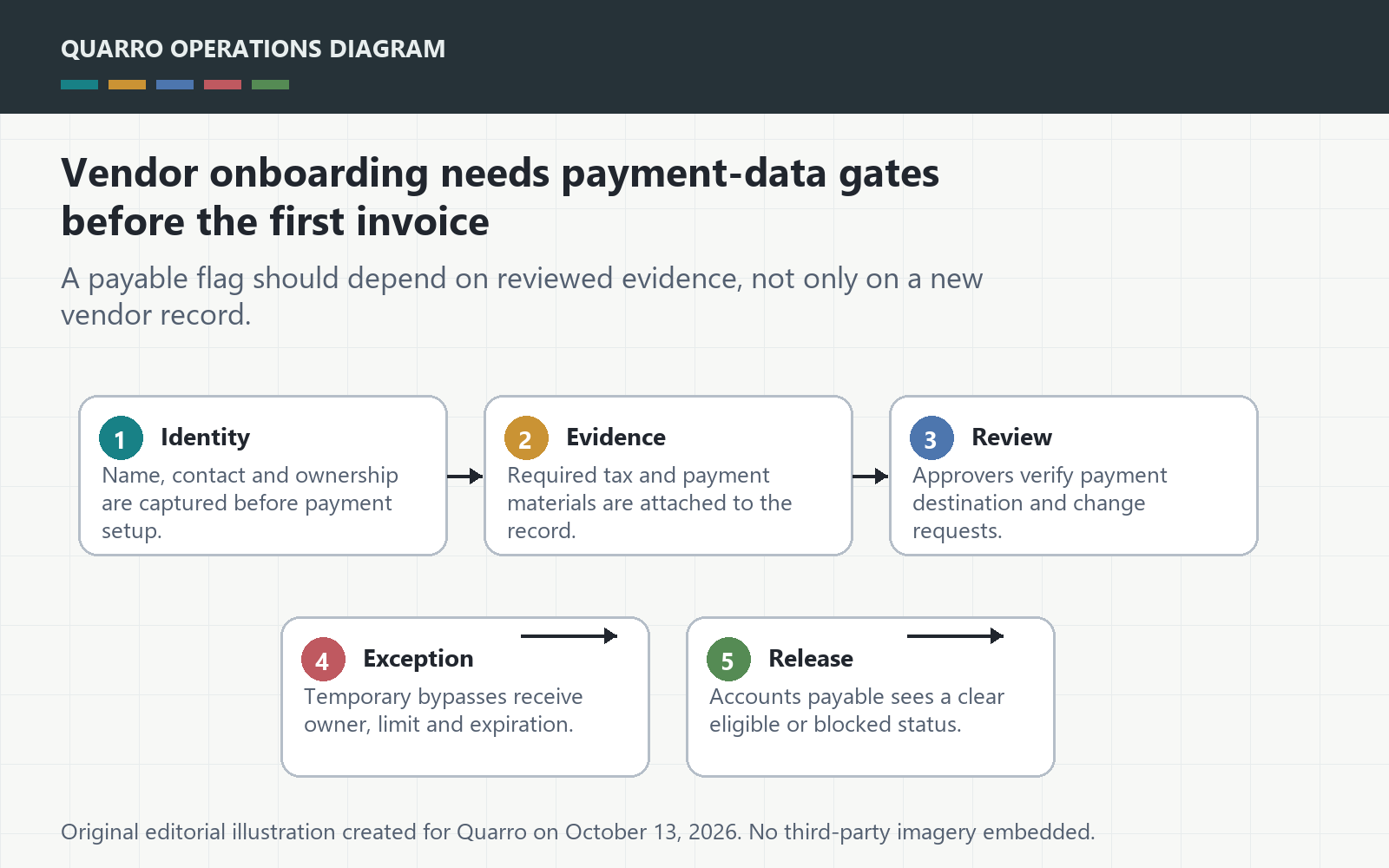
The answer: separate setup from payable status
Vendor onboarding should not be treated as a contact form plus a bank field. Before the first invoice is eligible for payment, the workflow needs required tax and payment details, ownership, verification status, exception handling and an audit trail that shows who approved each step. The practical goal is simple: a vendor can exist in the system before it is ready to receive money.
Consider an illustrative services business that adds vendors from email, a spreadsheet and an accounting tool. If staff can enter bank details and mark the vendor payable in the same screen, a missing form, wrong remittance email or unreviewed payment change can move straight into accounts payable.
Make the required evidence visible
A useful onboarding record distinguishes contact identity, tax documentation, payment destination, approval owner and current payment eligibility. The IRS says Form W-9 is used to provide a correct taxpayer identification number to the requester when an information return may be required. That does not turn every onboarding workflow into tax advice, but it does show why vendor setup should preserve the evidence requested and received.
Gate payment changes as carefully as new vendors
Many teams design a careful new-vendor path and then treat later payment edits as ordinary profile updates. A safer workflow asks what changed, who requested it, what source confirmed it and whether pending invoices should pause until review is complete. Bank account, remittance address and legal name changes should leave a receipt.
Give exceptions a controlled lane
Some vendors will not fit the normal path on day one. The workflow should let staff record a temporary exception, owner, expiration date and allowed payment limit rather than forcing a silent bypass. Expiring exceptions matter because temporary setup shortcuts tend to become permanent when no one owns the follow-up.
Start with the first-invoice checklist
A practical first release can be small: vendor identity, required document status, payment destination review, approval owner and a clear payable/not-payable flag visible to accounts payable. The takeaway: custom workflow is valuable when it prevents setup data from looking complete before the business is actually ready to pay.