
Workflow Reliability
Queue-Backed Workflows Need Retry Ownership
Queues can keep user-facing work fast and background work resilient, but retries only help when messages are idempotent, observable, and owned after they get stuck.
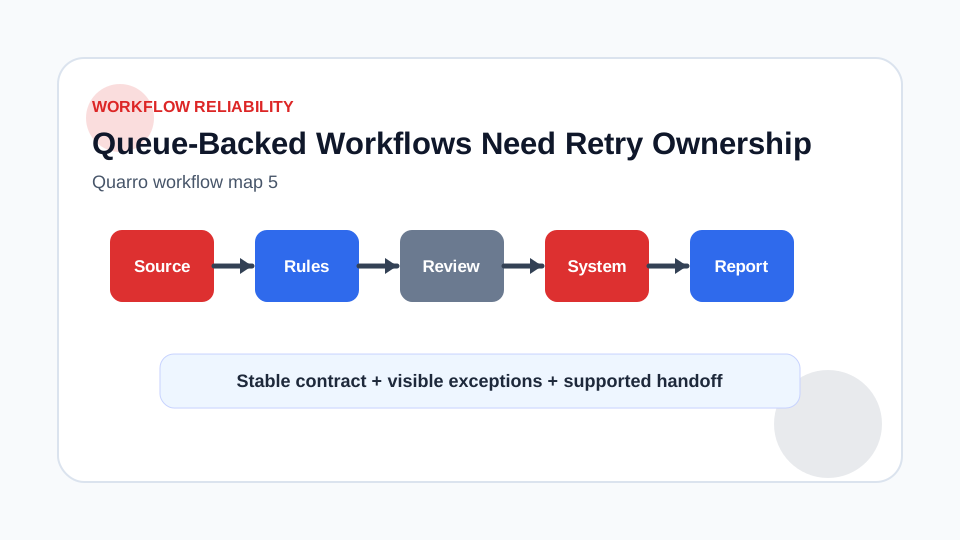
A queue is not a support plan
Moving work into a queue can make an application feel faster and more reliable. The user action can finish while emails, imports, notifications, exports, or system updates happen in the background. But the operational question remains: who knows whether the background work actually completed? A queue-backed workflow should define message identity, retry behavior, idempotency, observability, and ownership. Otherwise the system may simply hide failures until a customer or teammate notices the missing result.
Batching changes the failure shape
Cloudflare Queues documentation describes configurable batch size and batch timeout, where whichever limit is reached first triggers delivery. It also notes that explicit acknowledgement can prevent already processed messages from being redelivered if a later message in the same batch fails. That detail matters for workflow design. If messages change external systems, the consumer should know which individual messages have safely completed. A batch retry should not duplicate emails, payments, records, or notifications because the eighth message failed after the first seven already worked.
Retries need idempotency keys
Every message that can be retried should have a stable key for the intended business action. That might be order ID plus notification type, customer ID plus export period, or source event ID plus target record. The consumer can then check whether the action already happened before doing it again. Cloudflare's queue docs describe retry and delayed retry behavior, including using delays to respond to backpressure such as an upstream rate limit. Those controls are useful only when the message can safely be tried again.
Stuck messages deserve owners
The documentation also notes that failed messages eventually reach the configured maximum retries and are deleted or written to a dead-letter queue if one is configured. Treat that path as an operations surface, not a trash bin. A stuck-message view should show what the message was trying to do, why it last failed, how many attempts occurred, whether retry is safe, and who owns resolution. Some messages should be replayed. Some should be corrected and replayed. Some should be closed with a manual workaround recorded.
Start with one background job that hurts
A useful first queue-backed project often targets one painful background workflow: nightly imports, outbound notifications, report generation, file processing, or a sync to another system. Define the message contract, idempotency key, status view, retry policy, and support playbook. Quarro can help build the narrow workflow and the visibility around it. The goal is not just to add a queue. It is to make background work dependable enough that the team can support it on an ordinary workday.